


Antique British Maritime Scene
An antique british maritime scene captures the enduring relationship between island life and the sea, offering a direct window into coastal commerce, fishing fleets and tidal anchorages.
Antique British Maritime Scene
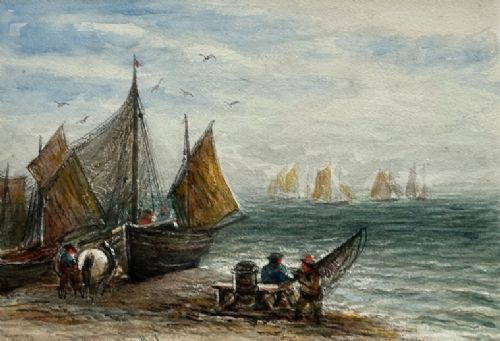
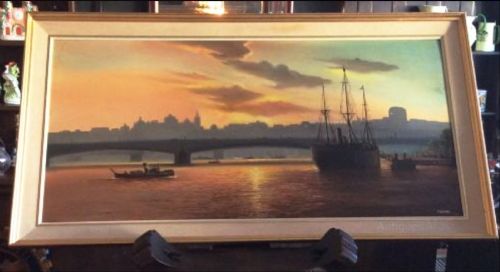
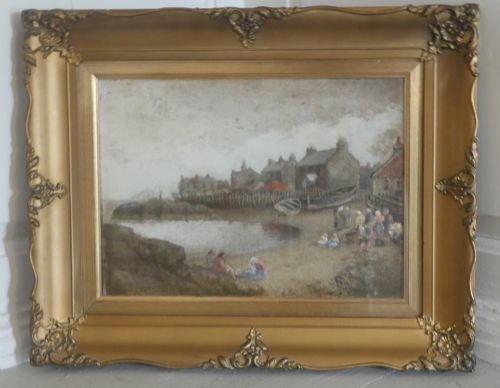
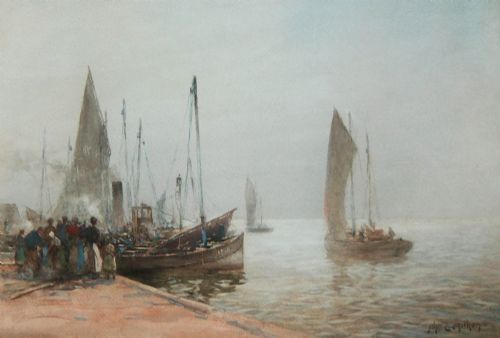
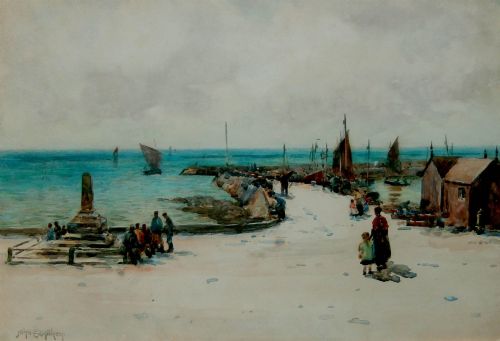
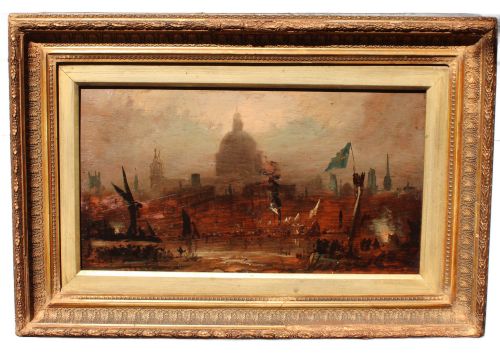
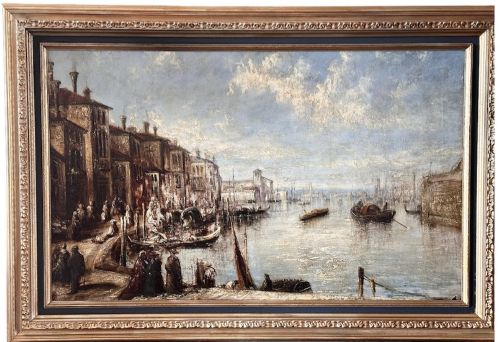
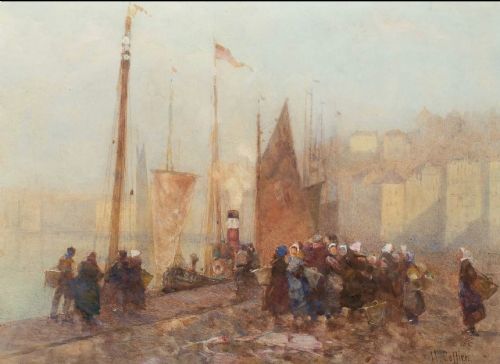
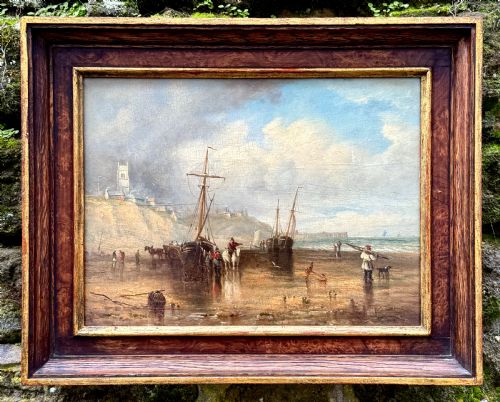
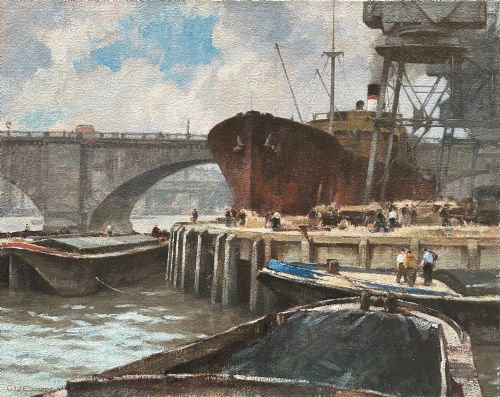
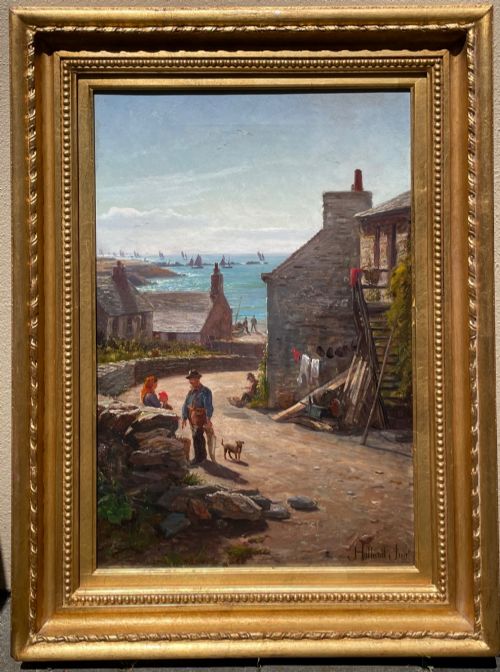
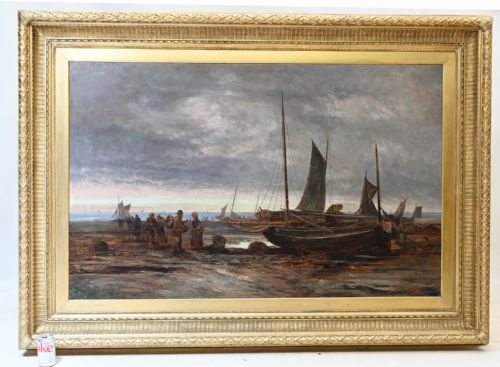
An antique british maritime scene depicts coastal landscapes, harbour views, working vessels and open waters across the nineteenth and twentieth centuries. These works record specific British and European locations, from Cornish fishing villages to the tidal reaches of the River Thames.
The pieces on this page appear primarily as watercolours on paper or oil paintings executed on canvas, wood panel or card. Common formats range from intimate harbour studies to large gallery canvases depicting stormy seas and bustling docks.
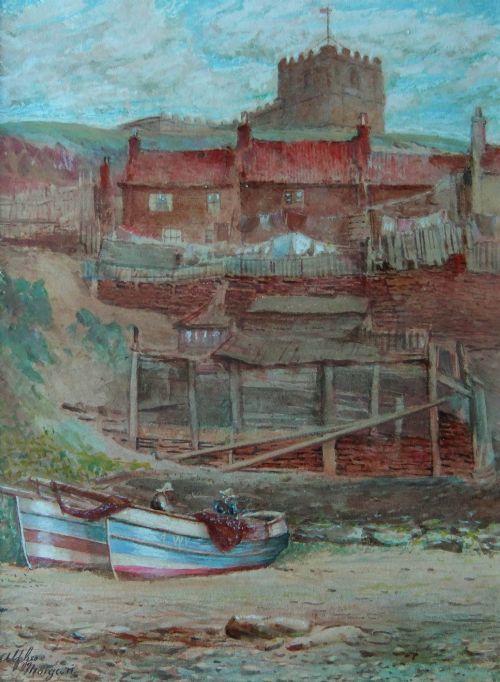
Makers and regional groups represented include nineteenth-century academics, regional watercolorists, and artists associated with the Newlyn School and Staithes. Subjects frequently feature local watercraft, historical townscapes, and the daily labour of coastal communities.
How They Were Made
Paintings in oil utilise heavy pigments applied to primed canvas, wood panel or card, allowing artists to build rich textures and deep tones for stormy skies and dark water. Watercolour pigment is applied to paper with water binders, capturing the transient light of coastal mists and bright estuaries.
Framing often involves wood mouldings, sometimes paired with glass to protect works on paper from atmospheric moisture and handling.
Early artists braved freezing winds and crashing spray to capture authentic harbour grit before the invention of portable tube paint.
What Varies in Quality
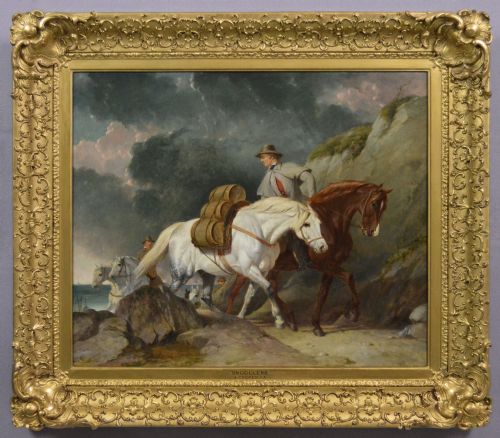
Quality rests in the confidence of the brushwork and the artist's ability to render the weight of water, the play of light on rigging, and the atmosphere of a changing sky. Stronger works demonstrate a secure grasp of perspective and anatomical precision in vessels and figures.
Condition plays a role, with works retaining vibrant pigments and stable grounds holding greater visual clarity than those affected by fading, foxing or heavy restoration.
James Orrock·James E. Aitken·William Banks Fortescue·Francis Moltino·Hector Caffieri·Thomas Creswick·Alfred G. Morgan·Abraham Cooper·John Holland·Frank Kelsey·George F Pennington·William Lee Hankey·James Kyd·Arthur Tucker·Edward Henry Eugene Fletcher·James Watson·William Pitt·Claude Thomas Stanfield Moore·Frederick William Hattersley·Owen Bowen·James Thomas Watts·Leslie Rackham·Charles Harmony Harrison·Kate E Booth·Walter Duncan
The Antique British Maritime Scene Glossary
- Watercolour
- A painting method where fine pigment is suspended in a water-soluble binder and applied to paper. It allows for transparent washes and rapid execution.
- Oil on Canvas
- A technique utilising pigments bound in oil applied to stretched woven fabric. This medium offers durability and a wide tonal range.
- Newlyn School
- An art colony based in Cornwall during the late nineteenth and early twentieth centuries. Painters in this group focused on naturalistic portrayals of local fishermen and coastal life.
- Seascape
- A work of art depicting the sea, ships, or coastal views. These scenes often focus on maritime weather and nautical vessels.
- Woodblock Print
- An image created by carving a design into a block of wood, applying ink, and pressing it onto paper. It produces distinct graphic lines.
Antique British Maritime Scene: Frequently Asked Questions
Are watercolours on paper fragile?
Works on paper require protection from direct sunlight and high humidity to prevent pigment fading and paper discoloration. Glazing with appropriate glass helps shield the delicate washes from environmental pollutants.
Professional framing using acid-free mounts ensures the paper remains stable and supported over decades of display.
What subjects appear in these maritime scenes?
Common subjects include fishing boats at low tide, bustling harbour quaysides, merchant barges on rivers, and dramatic shipwrecks in heavy seas. Artists documented both industrial maritime trade and the quiet routines of coastal inhabitants.
Views range from busy metropolitan river traffic to isolated rural coves along the British coastline.
How do oil paintings and watercolours differ?
Oil paintings utilise thick pigments on canvas or panel, yielding rich textures, deep shadows, and luminous highlights that evoke atmospheric storms or calm waters. Watercolours employ translucent washes on paper, capturing bright daylight and rapid weather shifts.
Both mediums offer distinct aesthetic qualities preferred by different nineteenth and twentieth-century collectors.