
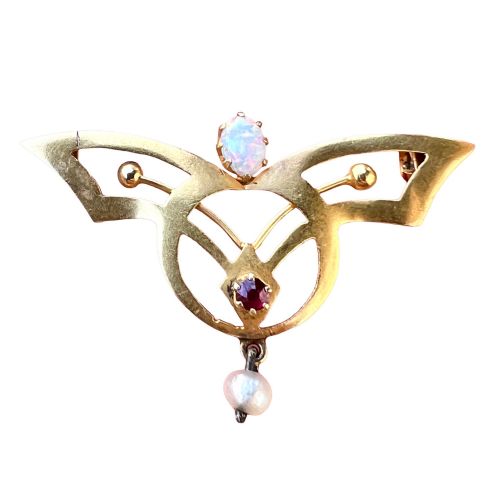


Antique Breastpin Jewellery
Antique breastpin jewellery encompasses centuries of fastenings that transitioned from functional dress pins into decorative centerpieces worn across the bodice and lapel.
Antique Breastpin Jewellery
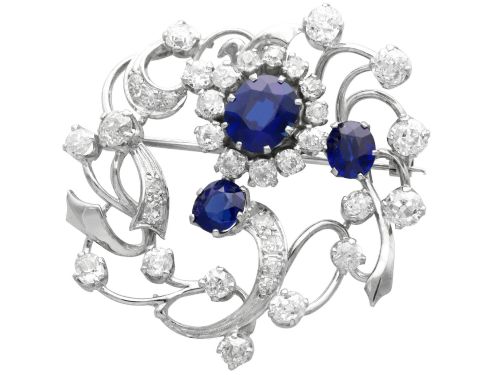
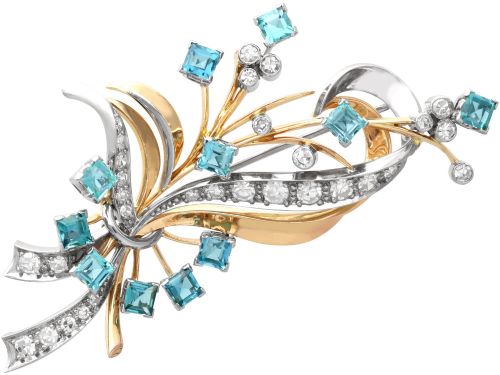
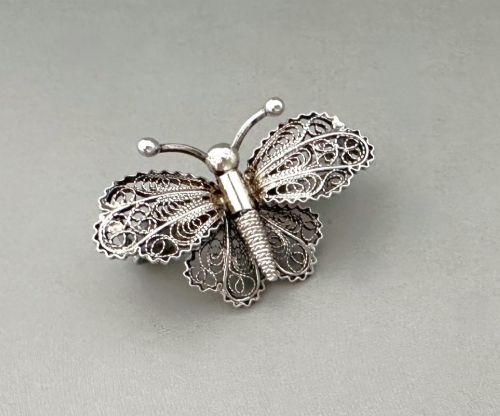
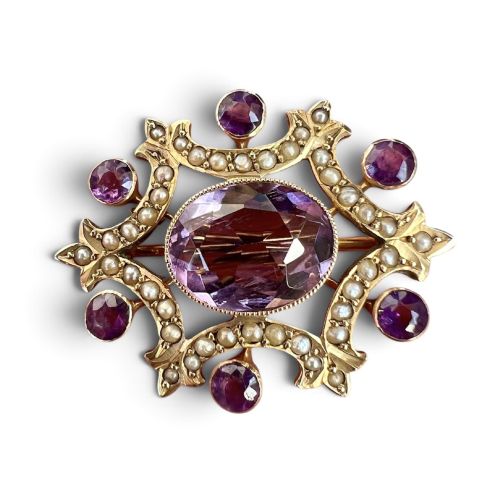
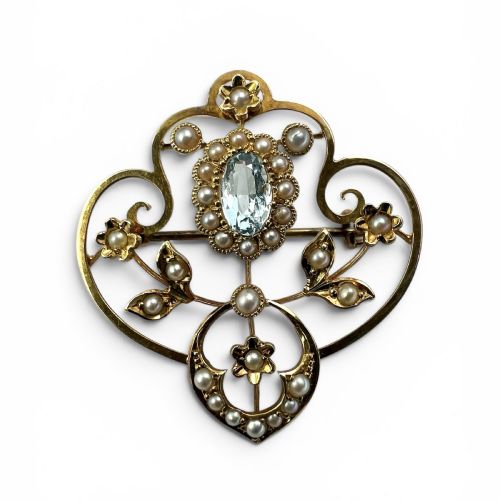
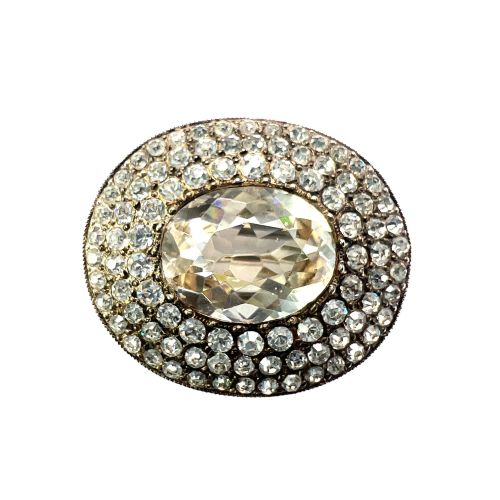
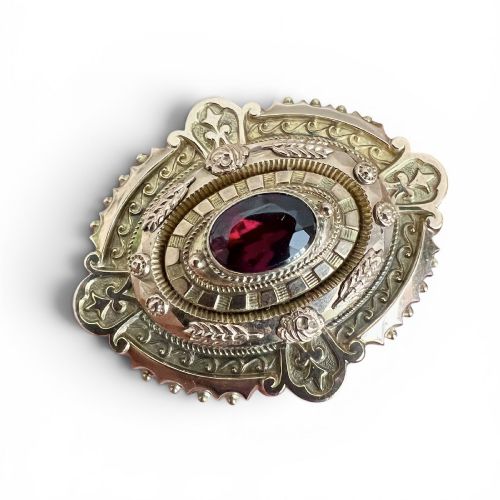
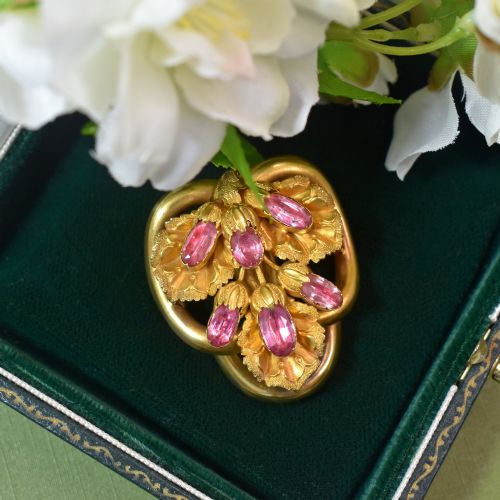
The most common examples on this page hail from the Victorian and Edwardian eras, frequently utilising combinations of gold, amethysts, pearls, and diamonds. Forms range from floral sprays and geometric bows to intricate filigree butterflies and revivalist lockets.
Pieces from later decades introduce platinum settings alongside high-carat zircons and sapphires, shifting the aesthetic from romantic nineteenth-century designs toward clean twentieth-century lines.
Materials and construction methods
Makers shaped these jewels using gold of various purities, ranging from nine to eighteen carats, alongside silver and platinum. Gemstones such as diamonds, amethysts, garnets, topazes, and opals were secured using claw settings, foil backing, or delicate bezel mounts.
Techniques relied heavily on meticulous handiwork, demonstrated through silver filigree work, pierced gold designs, and hand-applied blue enamel. Seed pearls were meticulously drilled and wired or glued into floral and heart motifs, while larger stones relied on precise facet cutting.
The listings span from Georgian and Victorian eras through to the mid-twentieth century, featuring materials like malachite, platinum, and chalcedony.
Assessing craftsmanship and design
Quality in these ornaments rests upon the precision of the metalwork and the integration of the stones. Finer examples display balanced proportions, secure gemstone settings, and well-executed details such as openwork piercing or symmetrical filigree.
The significance of the materials also dictates the standing of a piece, separating standard production from exceptional work. Creator attribution, complex stone combinations like peridots with diamonds, and well-preserved original cases elevate certain examples above standard decorative items.
The Antique Breastpin Jewellery Glossary
- Breastpin
- A decorative pin worn on the breast of a garment, functioning historically as both a fastener and a badge of status. These items evolved from simple functional pins into elaborate jewelled brooches.
- Filigree
- Fine wirework soldered into intricate open patterns, often resembling lace. This technique is frequently seen in silver and gold butterfly or floral designs.
- Seed pearl
- A very small, naturally occurring pearl, often used in clusters to outline hearts, bows, and floral sprays. They require careful setting to maintain their alignment.
- Foil-backed
- A historical method where a thin layer of reflective metal foil is placed behind a gemstone to enhance its colour and brilliance. This is particularly common in Georgian and early Victorian pieces.
Antique Breastpin Jewellery: Frequently Asked Questions
What is antique breastpin jewellery?
Antique breastpin jewellery refers to decorative pins and brooches created during past centuries, primarily worn to adorn garments on the chest or lapel.
These pieces combine precious metals like gold and silver with gemstones, serving both aesthetic and functional purposes across different historical eras.
How do I date a breastpin?
Dating a breastpin involves examining the materials, gemstone cuts, and stylistic clues such as Etruscan revival motifs or Art Deco geometric lines.
Victorian pieces often feature romantic symbolism and amethysts, while Edwardian examples favour delicate platinum, seed pearls, and light gold filigree.
Were these pins used for fastening?
Originally, many breastpins evolved from utilitarian fasteners designed to hold heavy fabrics, shawls, and collars securely in place.
Over time, the functional pin mechanism became secondary to the ornamental face of the brooch, which displayed gemstones and intricate metalwork.
How do I care for antique pins?
Caring for antique breastpins requires gentle handling, avoiding harsh chemical dips that can damage foils, amethysts, or delicate seed pearls.
Store them separately in lined boxes to prevent friction against other items and check the pin hinge and catch periodically for stability.