


Blue Diamond Pin
A blue diamond pin offers concentrated brilliance, spanning periods from Victorian to Art Deco across brooches and spray designs.
Blue Diamond Pin
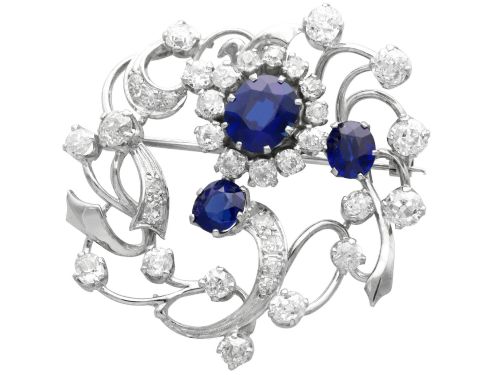
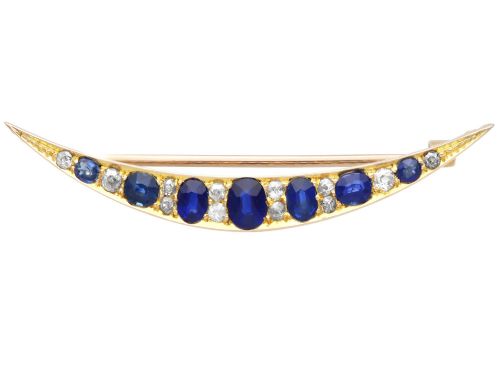
A blue diamond pin sits within a selection of antique and vintage brooches, often incorporating sapphires alongside diamonds in platinum, yellow gold, or silver settings. These pieces range from Victorian crescents and foliate motifs to Edwardian bow brooches and Art Deco geometric creations.
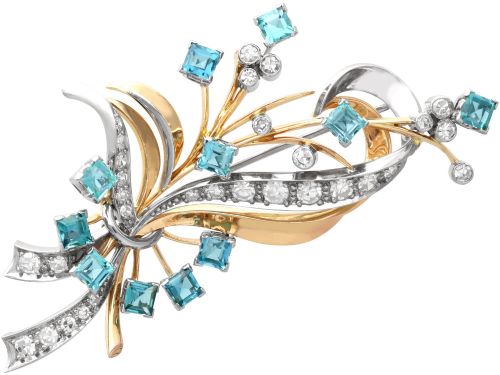
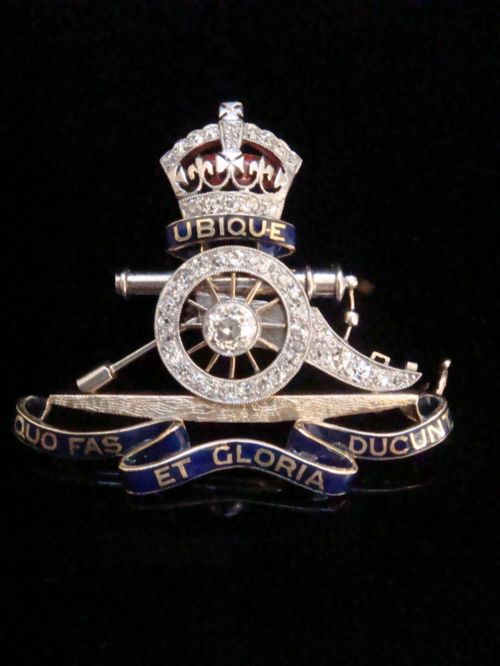
The most frequent examples on this page are Edwardian and Victorian brooches, alongside Art Deco and mid-century pieces set with diamonds and coloured stones. They serve as fastening accessories or lapel ornaments that combine precious metals with old cut stones.
Makers and designers worked within distinct periods such as Art Nouveau and the 1930s, producing hearts, sprays, butterflies, and bar brooches. Each item reflects the prevalent metalwork techniques and gem-setting styles of its decade of origin.
Materials and construction
Craftsmen set diamonds and sapphires into platinum, silver, and various grades of gold including 9ct, 12ct, 14ct, 15ct, and 18ct white or yellow gold. Palladium also appears in later mid-century spray brooches alongside traditional precious metals.
Detailed work involves guilloché enamel, plique-à-jour enamel, and pearl accents complementing old cut diamonds and central sapphire stones. Setting techniques evolved from closed-foil backs in earlier periods to open-backed platinum and gold mountings that maximised light return.
A tiny butterfly brooch manages to smuggle over seven carats of diamonds and a sapphire into a wingspan fit for a lapel.
Assessing quality in antique brooches
Quality depends upon the proportion and carat weight of the central gemstones relative to the supporting diamond melee. Heavier stone weights in platinum or high-karat gold settings denote significant work from periods like the 1930s or Edwardian era.
The integrity of enamel work, such as guilloché or plique-à-jour panels, distinguishes superior examples from standard production. Metal fabrication skill, seen in delicate pierced galleries and secure pin mechanisms, marks the difference between average pieces and finer workshops.
The Blue Diamond Pin Glossary
- Guilloché enamel
- A decorative technique involving precise, intricate mechanical patterns engraved beneath translucent layers of coloured enamel. It adds depth and texture to metal surfaces on Edwardian pieces.
- Plique-à-jour
- An enamelling technique where the enamel is applied within a cellular framework without a backing, resembling miniature stained glass. This lets light pass directly through the coloured sections.
- Old cut diamond
- A precursor to the modern brilliant cut, typically characterised by a smaller table, higher crown, and open culet. These stones were hand-faceted to catch candlelight.
- Basaltic sapphire
- A natural corundum originating from alkali basalt terrains, known for deep saturation. These stones frequently anchor late nineteenth-century brooches.
- Crescent brooch
- A curved ornament shaped like a waxing or waning moon, popular during the Victorian period. They are often pavé-set with pearls and diamonds.
Blue Diamond Pin: Frequently Asked Questions
What periods do these brooches represent?
The pieces span from the Victorian and Edwardian eras through Art Nouveau and Art Deco into the 1940s and mid-century modern periods.
Each era brings distinct motifs, such as foliate scrolls in the nineteenth century and geometric symmetry in the 1930s.
How do I wear an antique brooch?
These pins attach securely to heavy lapels, wool coats, scarves, or structured evening wear using traditional pin stems and safety catches.
Heavier platinum and multiple-carat stone configurations require sturdier fabrics to support the weight properly.
What metals are used in these pieces?
Common metals include platinum, silver, and yellow or white gold ranging from 9ct up to 18ct purity.
Early pieces often combine silver tops with gold backs to enhance stone brightness before platinum became dominant.
How can I distinguish Edwardian from Victorian styles?
Victorian designs favour heavier yellow gold settings, natural motifs like butterflies and crescents, and turquoise or seed pearl accents.
Edwardian work shifts toward lighter platinum and white gold lace-like frameworks with intricate piercing and royal motifs.