




Edwardian Sapphire Brooch
These edwardian sapphire brooch pieces combine blue stones with diamonds and gold or platinum to create fine dress ornaments.
Edwardian Sapphire Brooch
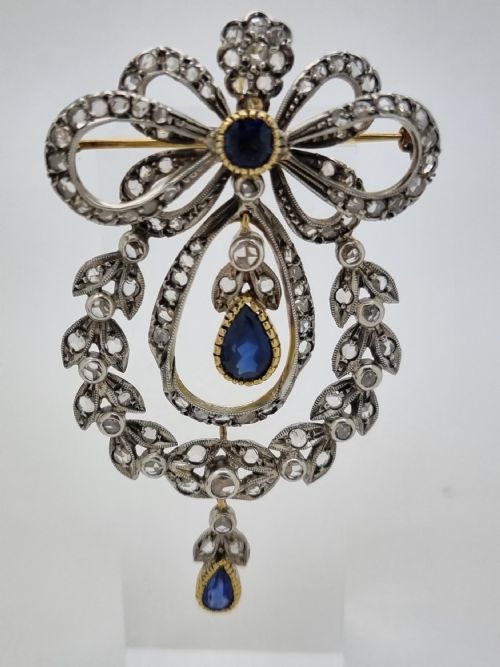
An edwardian sapphire brooch brings together central blue sapphires with supporting diamonds set in yellow gold, white gold, silver, or platinum. The form ranges from bar brooches and bows to crescent shapes and butterfly designs.
While the selection includes pieces spanning the Victorian to mid-century periods, the core focus remains on Edwardian examples alongside related iterations from 1890 through to 1960. Buyers frequently encounter geometric bar layouts and delicate crescent profiles.
How they were made
Maker construction relies on precious metals such as platinum, silver, 9ct yellow gold, 15ct yellow gold, and 18ct gold to mount the stones securely. Metal combinations often feature silver-topped gold or platinum top layers paired with gold backs.
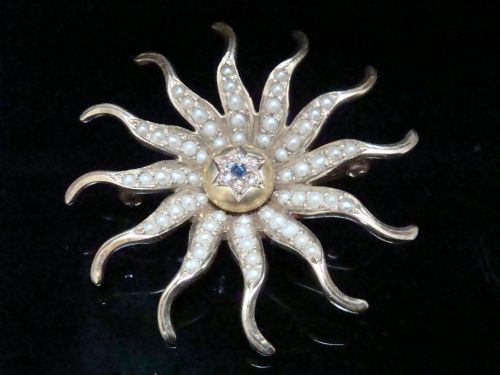
Gemstone setting incorporates old cut diamonds alongside natural sapphires, emeralds, pearls, seed pearls, and paste stones. Metalwork techniques span delicate pierced mounts, bow shapes, and calibre cut stone arrangements.
Listings include platinum, silver, and various gold purities paired with sapphires, diamonds, pearls, and paste across multiple periods.
What varies in quality
The standard of an edwardian sapphire brooch depends on the depth and clarity of the central sapphire and the precision of the diamond cutting. Subtlety of metalwork, such as fine millegrain edges and well-balanced proportions in bows or crescents, distinguishes finer examples.
The choice of high-carat gold and platinum mounts alongside matched pearl or diamond accents elevates the overall execution. Greater refinement is visible in pieces where the structural framework remains light yet rigid.
The Edwardian Sapphire Brooch Glossary
- Bar brooch
- A narrow horizontal pin featuring stones set along a central metal rod. This form was widely produced during the late nineteenth and early twentieth centuries.
- Crescent brooch
- A pin fashioned into the shape of a curved moon, frequently set with graduated pearls, sapphires, or diamonds. It sits neatly on lapels and collars.
- Old cut diamond
- A hand-faceted diamond cut with a smaller table and larger culet typical of older manufacturing methods. These stones display a softer candlelit sparkle.
- Calibre cut
- Gemstones specifically cut and fitted closely together to form continuous geometric lines within the metal setting. This technique requires exceptional lapidary skill.
- Millegrain
- A decorative border of tiny raised metal beads running along the edges of a setting. It softens the transition between metal and stone.
Edwardian Sapphire Brooch: Frequently Asked Questions
How do I wear an edwardian sapphire brooch?
These pieces pin securely to lapels, heavy knitwear, scarves, or collars using traditional pin and C-clasp or safety mechanisms. Their varied shapes allow them to anchor fabric effectively while displaying the central stones.
For daily wear, select sturdy bar or crescent designs, reserving delicate pearl-set bows or convertible pendant-brooches for lighter fabrics and special occasions.
Are all these brooches from the Edwardian period?
The selection includes pieces specifically dated to the Edwardian era alongside Victorian, 1890, 1920, 1940, and 1960 examples. Design motifs often overlap across these neighbouring decades.
Checking the metal types, stone cuts, and construction styles helps identify the exact period of manufacture for each individual piece.
How were convertible pendant brooches used?
Convertible pieces feature a hidden or removable bail alongside a pin fitting, allowing the item to function either as a brooch pinned to clothing or as a pendant suspended from a chain.
This versatility made them popular choices for formal dress where jewellery could transition from daytime pinning to evening suspension.