


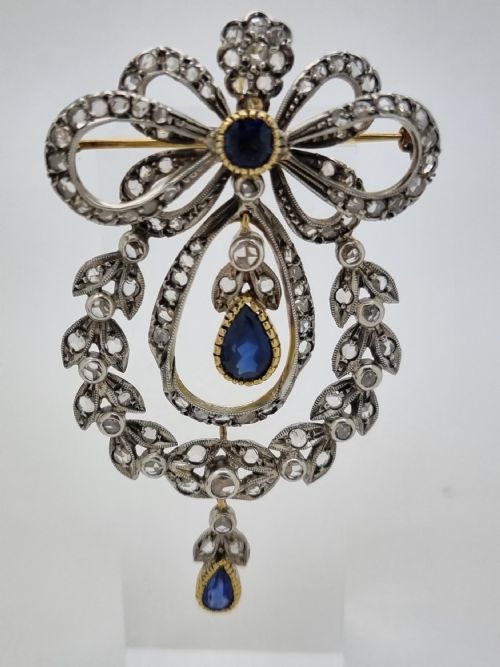


Blue Sapphire Brooch
A blue sapphire brooch brings together deep blue stones and sparkling diamonds, offering the sort of wearable history collectors prize.
What these pieces are
A blue sapphire brooch is a pinned ornament featuring central blue corundum stones framed or accented by diamonds, designed to be fastened to garments.
The versions most commonly met span the Victorian, Edwardian and Art Deco eras, alongside mid-century pieces from around nineteen-forty.
Forms include bar brooches, pendant combinations, bows and naturalistic insect motifs such as butterflies, using metals ranging from silver and yellow gold to platinum and eighteen-carat gold.
How they were made
Craftsmen set blue sapphires alongside diamonds into metals including platinum, silver, twelve-carat, fifteen-carat and eighteen-carat yellow gold.
Older pieces utilise old cut diamonds set within Victorian and Edwardian frameworks, whilst later designs incorporate structural platinum settings typical of nineteen-thirty and nineteen-forty work.
Retail Price Guide 2026
Typical UK retail prices for blue sapphire brooch, calculated from the Sellingantiques database of over a million retail prices indexed since 2003. This retail price guide relies exclusively on Sellingantiques data; no external sources or auction records are used, so the figures do not describe the wider market.
One butterfly brooch even manages to squeeze an emerald into the mix alongside the sapphires and diamonds.
What varies in quality
Quality rests in the weight and presence of the stones, moving from modest carat counts up to substantial multi-carat sapphires and diamonds.
The ambition of the design dictates the tier, separating simpler bar brooches from elaborate butterfly forms set with emeralds and heavy diamond clusters.
The Blue Sapphire Brooch Glossary
- Old cut diamond
- A hand-faceted diamond shape typical of older jewellery, featuring a smaller table and higher crown than modern brilliant cuts.
- Bar brooch
- A narrow horizontal pin format popular across multiple antique periods, often centring on a single gemstone or cluster.
- Platinum
- A dense, strong white metal favoured in twentieth-century jewellery for secure stone settings.
- Basaltic sapphire
- A natural corundum originating from volcanic geological environments, noted for its deep saturation.
Frequently Asked Questions
How do I wear an antique brooch?
Fasten it securely to heavy fabrics like wool coats, structured lapels or heavy knit scarves to support the weight of the metal and stones.
Ensure the safety catch or pin mechanism is firmly locked before venturing out.
Are these brooches also pendants?
Some specific pieces are built with hidden loops or hinges that allow them to transition between a pinned brooch and a neck pendant.
Check the reverse of the piece for hinged loops that accommodate a chain.
How do I date a sapphire brooch?
Examine the metal choices and cutting styles, noting that platinum and geometric lines point to the nineteen-thirties, whilst yellow gold and natural motifs suggest Victorian origins.
The specific mix of old cut diamonds and gold purities like twelve or fifteen carat offers further clues to the decade.
How should I clean my brooch?
Use warm soapy water and a soft brush to remove dust from behind the sapphire and diamond settings without scratching the metal.
Avoid harsh chemical dips that might damage softer metals or historical foil backs.