




Gold Sapphire Brooch
A gold sapphire brooch brings together deep blue corundum and warm precious metal in designs spanning Victorian, Edwardian and Art Deco periods.
Forms and periods of the gold sapphire brooch
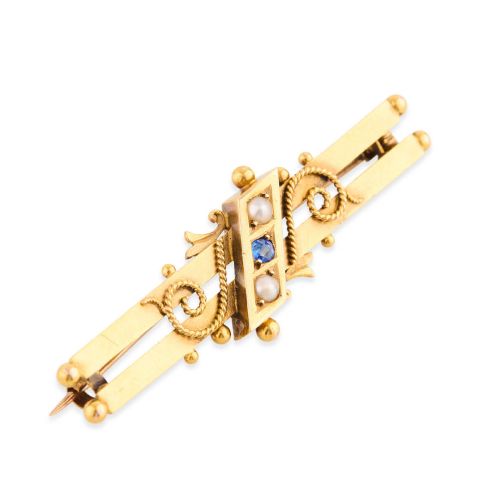
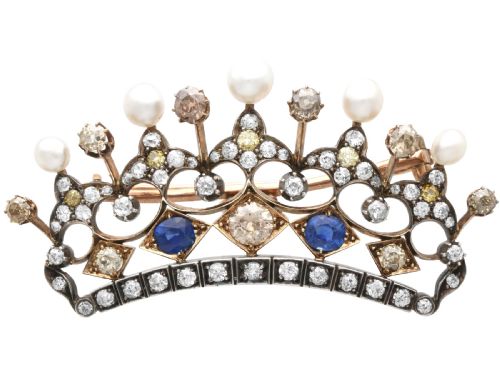
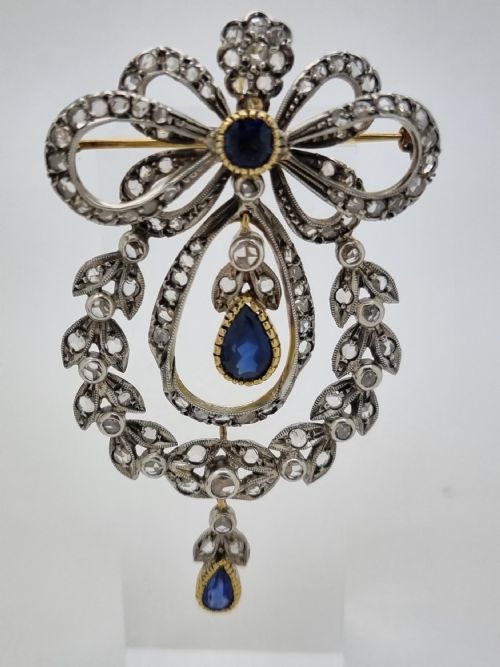
A gold sapphire brooch serves as a pin or pendant, taking shapes from simple bar settings to elaborate botanical and insect motifs. When searching for a gold sapphire brooch, buyers encounter pieces fashioned during the Victorian, Edwardian, and Art Deco eras.
The materials paired with sapphires in these items include diamonds, emeralds, pearls, and rubies, set in yellow gold, white gold, platinum, or silver. Surviving examples range from nine-carat to eighteen-carat gold foundations, often incorporating multiple gemstones in a single mounting.
Victorian and Edwardian versions lean towards foliate motifs, crescents, wheat sheaves, and insect forms such as butterflies and dragonflies. Later Art Deco iterations favour geometric arrangements, calibre-cut stones, and combinations of gold and platinum.
Materials and construction methods
Craftsmen built these jewels using varied gold purities, predominantly nine-carat, fifteen-carat, and eighteen-carat yellow and white gold, occasionally backed with silver or platinum. Stones were secured using collet settings, claw mounts, or flush settings tailored to the individual shape of each gem.
Gemstone selection involved matching sapphires with old-cut or rose-cut diamonds, seed pearls, emeralds, and rubies. Metalwork techniques encompassed hand-fabrication, wire-bending for bar brooches, and intricate piercing to create openwork frames for floral and insect designs.
Retail Price Guide 2026
Typical UK retail prices for gold sapphire brooch, calculated from the Sellingantiques database of over a million retail prices indexed since 2003. This retail price guide relies exclusively on Sellingantiques data; no external sources or auction records are used, so the figures do not describe the wider market.
Some Victorian makers hid tiny rubies and emeralds inside musical acrostic brooches to spell out secret messages through gemstone initials.
Distinctions in craftsmanship and materials
The distinction between standard and superior pieces rests on the origin and treatment of the sapphires, such as unheated stones or specific geographic provenances like Burma and Ceylon. Weight and clarity of accompanying diamonds alongside the precision of stone-setting elevate certain items above others.
Structural complexity dictates the tier of execution, distinguishing simple bar brooches from multi-stone figurative pieces like butterflies, crescents, and musical motifs. The integration of mixed metals, including platinum-topped gold, points to higher-grade workshop production.
The Gold Sapphire Brooch Glossary
- Bar brooch
- A slender horizontal metal rod set with gemstones or decorative motifs. This form was widely produced across the Victorian and Edwardian periods.
- Calibre-cut
- Stones specifically shaped and cut to fit tightly together without visible metal settings between them. This technique is frequently seen in Art Deco jewellery.
- Foliate motif
- A design scheme employing leaf and plant forms. Victorian makers frequently used this style for naturalistic brooches.
- Lovers' knot
- A decorative twist or tie symbolising attachment and affection. It appears often in Victorian gold wirework jewellery.
Frequently Asked Questions
How do I date a gold sapphire brooch?
Dating relies on stylistic clues, metal standards, and setting techniques. Victorian pieces often use lower-carat yellow gold and naturalistic motifs like insects or leaves.
Edwardian and Art Deco items frequently introduce platinum-topped settings, white gold, and geometric or calibre-cut arrangements.
Were these pieces worn as pendants too?
Many brooches from the nineteenth and early twentieth centuries included retractable loops or removable pins. This allowed the wearer to pin the item to clothing or suspend it from a chain.
Convertible mounts remain common across Victorian and Edwardian examples.
What stones accompany the sapphires?
Diamonds are the most frequent companion stones, appearing alongside seed pearls, emeralds, rubies, and occasionally garnets or turquoises.
Cluster designs and crescent brooches typically highlight the contrast between deep blue sapphires and sparkling white diamonds.
How should I care for antique gold jewellery?
Antique settings require gentle cleaning with a soft brush and warm soapy water, avoiding harsh chemical dips that can damage pearls or foil-backed stones.
Store each piece separately in a lined box to prevent scratching softer gems like pearls and opals.