


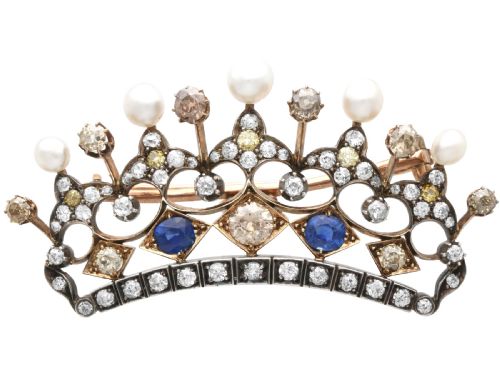


Sapphire Diamond Pin
When choosing a sapphire diamond pin, you are selecting a piece of wearable history crafted to catch the light from every angle.
Sapphire Diamond Pin
A sapphire diamond pin combines blue or pink corundum with sparkling stones in wearable antique forms. The selection here leans strongly toward brooches, bar pins and figurative designs created across the late nineteenth and mid twentieth centuries.
Makers shaped these items into natural motifs, geometric bars and delicate bows, using precious metals to hold the stones securely. Pieces range from late Victorian yellow gold creations to sleek platinum mountings from the Art Deco period.
How they were made
Goldsmiths and platinum smiths set brilliant, old cut or baguette diamonds alongside sapphires using traditional claw, bezel and pavé techniques. Metal choices evolved from early yellow gold bases to the white platinum settings favoured in later decades.
Craftsmen built complex frameworks by hand, incorporating open galleries and millegrain edges to maximise light reflection through the gemstones.
Sapphire Diamond Pin Retail Price Guide 2026
Typical asking prices for sapphire diamond pin among the pieces listed under this phrase on Sellingantiques today, from the lower quarter to the upper quarter. They describe what is for sale here now, not the wider market.
Among the fauna recorded in these archives, jewelled owls and butterflies keep a watchful eye over the collection.
What varies in quality
The distinction lies in the saturation and clarity of the sapphires, paired with the cut and brilliance of the surrounding diamonds. Heavier carat weights and documented provenance elevate certain examples above standard workshop production.
Design complexity also defines the tier, shifting from simple bar configurations to intricate figurative subjects such as owls, butterflies and crowns.
Gubelin
The Sapphire Diamond Pin Glossary
- Bar brooch
- A horizontal pin shaped like a slender bar, often set with evenly spaced gemstones. This form became particularly popular during the Edwardian and later vintage periods.
- Old cut
- A diamond facet arrangement predating the modern brilliant cut, typically characterised by a smaller table and a higher crown. These stones emit a softer, candlelit shimmer.
- Millegrain
- A decorative technique involving a row of tiny raised metal beads along the edge of a setting. It provides a soft, textural border common in Edwardian and Art Deco jewellery.
- Basaltic sapphire
- A sapphire originating from alkaline basalt volcanic deposits, known for deep and saturated colour profiles. These stones bring rich tone to nineteenth century pieces.
- Navette
- A boat shaped setting that tapers to sharp points at either end, designed to elongate the appearance of the piece on fabric.
Sapphire Diamond Pin: Frequently Asked Questions
How should I wear an antique brooch?
Pin these items securely through heavy fabrics like wool or tweed, ensuring the safety clasp is fully engaged. Using a backing disc can help distribute the weight of heavier stone clusters.
For lighter silks or cottons, anchor the pin through an internal lining or structural seam to prevent the fabric from sagging under the weight of the platinum and gold.
Were these pins worn daily?
In their original eras, many of these pieces served as daytime accessories for fastening collars, scarves or lapels. Wealthy owners often matched them to specific outfits or seasonal gatherings.
Heavily jewelled examples with larger carat weights were typically reserved for evening wear and formal events, reflecting the changing social customs of the twentieth century.
How do I date a brooch style?
Victorian and Edwardian examples often feature yellow gold backings, natural motifs like insects or bows, and rose cut diamonds. Art Deco pieces introduce geometric lines, platinum settings and baguette cuts.
Mid century designs incorporate retro curves and heavier yellow or white gold structures, marking a shift toward bolder, sculptural forms after the Second World War.
Can these brooches convert into pendants?
Certain examples are constructed with hidden loops or folding bails on the reverse, allowing them to hang from a chain as well as pin to a garment. These convertible designs offered versatility to historical owners.
Examining the reverse side reveals whether a hinged loop was included by the original maker for chain suspension.