


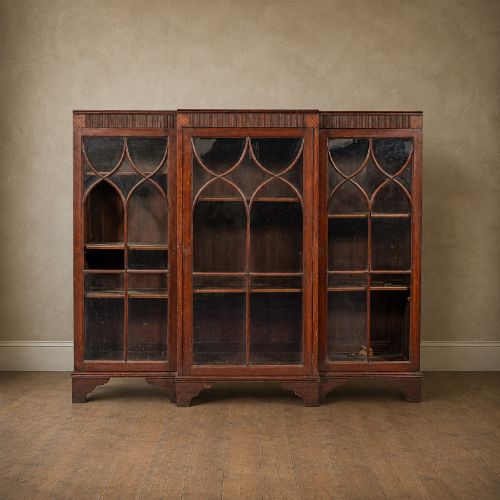
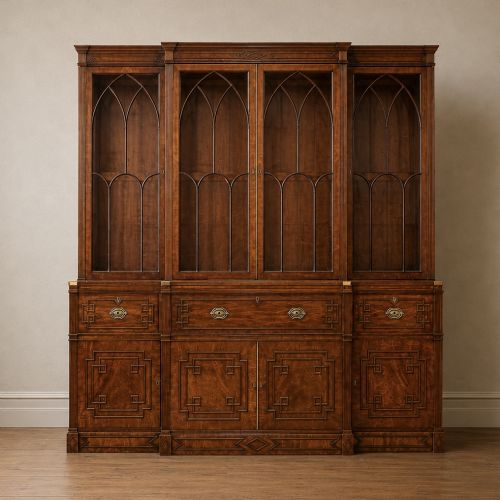
Antique Breakfront Cupboard
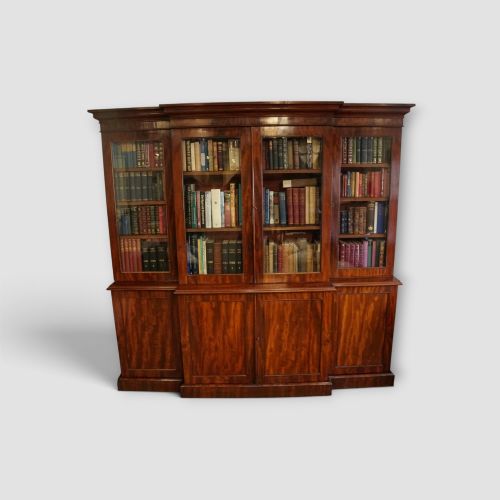
An antique breakfront cupboard is a monumental piece of furniture offering generous storage and stepped architectural presence.
Antique Breakfront Cupboard
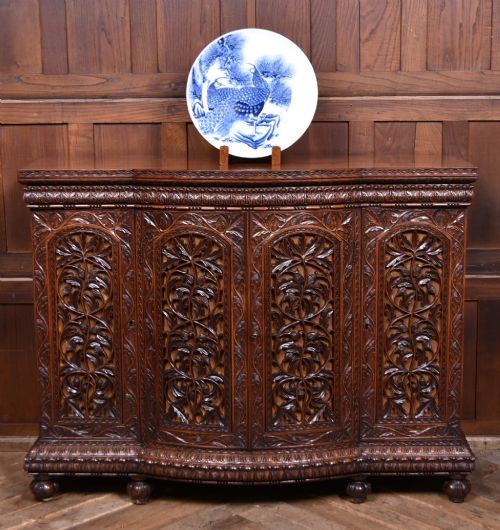
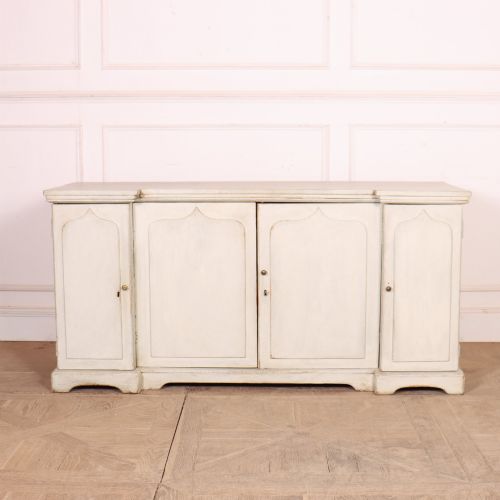
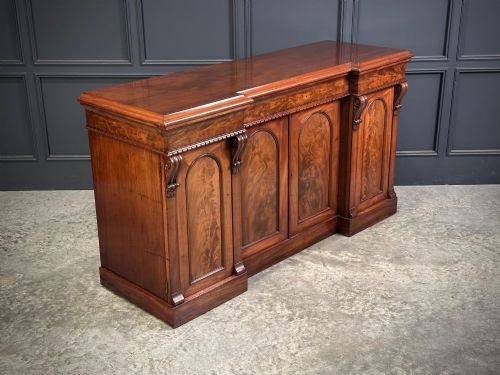
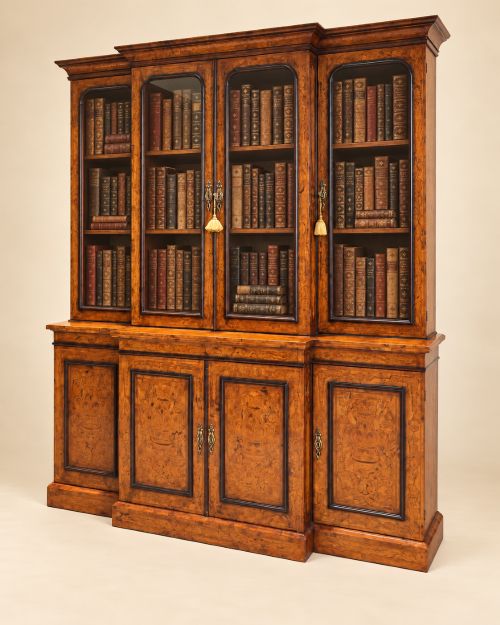
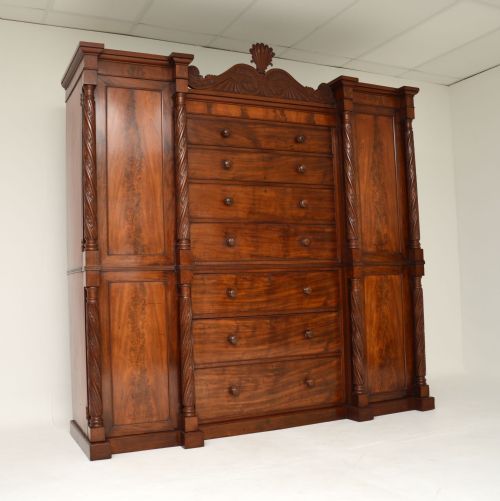
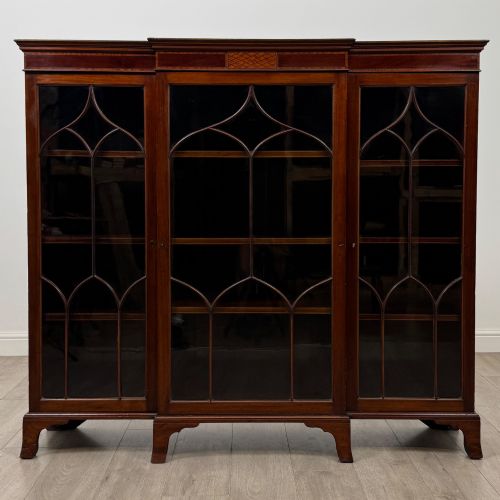
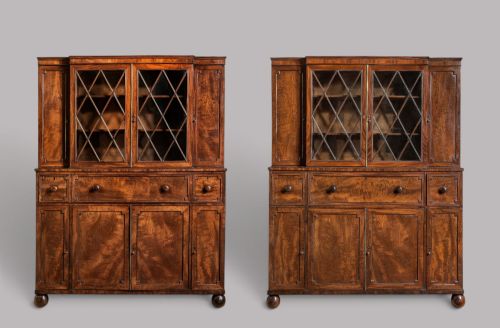
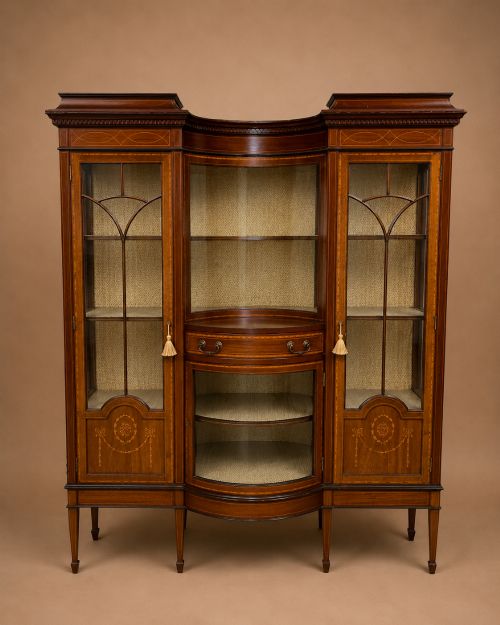
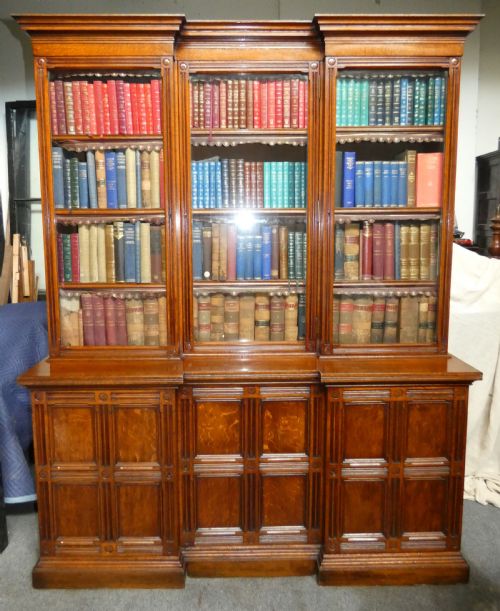
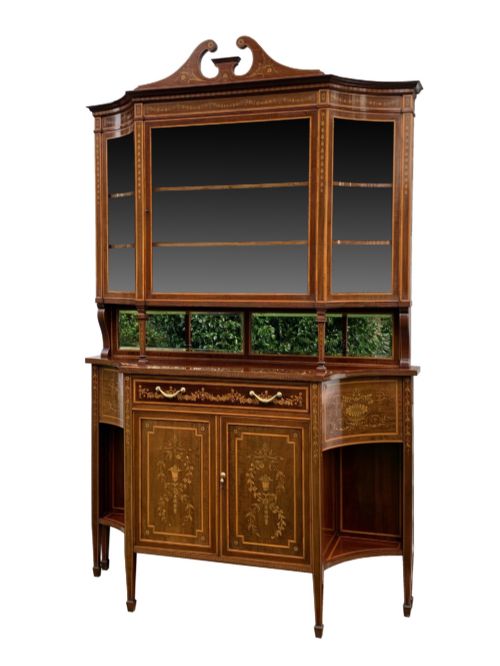
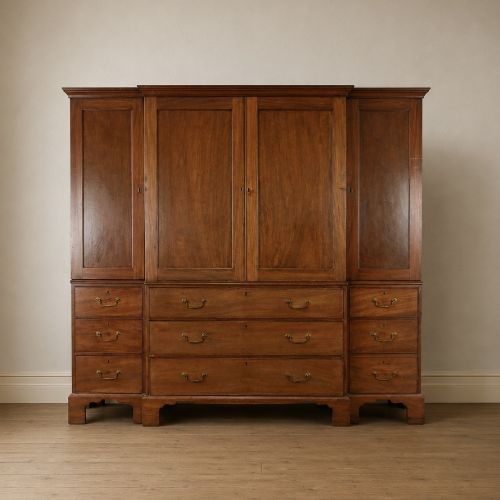
An antique breakfront cupboard presents a distinctive recessed central section flanked by projecting outer wings, creating a commanding facade that has suited formal libraries, dining rooms and grand hallways for centuries. When searching for an antique breakfront cupboard, buyers typically encounter large bookcases, sideboards, dressers and display cabinets spanning the Georgian, Regency, William IV, Victorian and Edwardian periods.
The timber selection is paramount to the character of these items, with robust woods like mahogany, oak, walnut and rosewood forming the primary carcasses, often embellished with satinwood inlay, brass mounts and glass panels. Pieces range from dwarf glazed bookcases to monumental library cabinets fitted with multiple doors, cupboards and drawers.
How they were made
Cabinet makers constructed these substantial carcasses using solid timbers alongside finely figured veneers, notably flame mahogany and walnut, applied to stable underlying wood bases. Joinery relied on traditional methods such as dovetailing for drawers and mortise and tenon joints for structural frames, ensuring the enduring stability of heavy shelving and large doors.
Surface ornamentation involved intricate marquetry, crossbanding in contrasting woods like satinwood, and hand-carved details, complemented by cast brass hardware and fitted glass for display sections.
The archive and active listings show breakfront forms functioning across multiple furniture categories, including bookcases, sideboards, dressers and triple wardrobes.
What varies in quality
The calibre of an antique breakfront cupboard rests largely on the choice and matching of timber veneers, where symmetrical flame patterns and carefully aligned grain across multiple doors indicate superior craftsmanship. The precision of the joinery, the subtlety of hand-carved mouldings and the integration of secondary woods all separate standard workshop production from works attributed to prominent cabinet makers.
Proportions also dictate distinction, with top-tier examples maintaining harmonious architectural balance across their projecting sections, alongside original hardware, undamaged glass and well-executed marquetry.
Jas Shoolbred·Gillows·Edwards and Roberts·James Winter and Sons
The Antique Breakfront Cupboard Glossary
- Breakfront
- A cabinetry design where the central section projects forward from the flanking wings, creating a layered architectural silhouette. This arrangement breaks up the flat expanse of large bookcases and sideboards.
- Marquetry
- Decorative inlay work using various coloured wood veneers to form pictorial or geometric patterns on the surface of furniture. It is commonly found on Edwardian and late Victorian pieces.
- Flame mahogany
- A veneer cut from the fork of a mahogany tree, yielding a distinctive ripple pattern resembling flickering flames. Cabinet makers prized this figure for central door panels.
- Crossbanding
- A narrow strip of veneer laid around the border of a panel with the grain running at right angles to the main surface. It frames the central timber and adds visual depth.
- Glazed bookcase
- A cabinet fitted with glass-fronted doors designed to protect library books while keeping them visible. These range from dwarf heights to monumental library installations.
Antique Breakfront Cupboard: Frequently Asked Questions
How do I identify a Victorian breakfront piece?
Victorian examples often feature dark, heavily figured timbers like flame mahogany or walnut, sometimes incorporating Gothic revival carvings, glass-panelled doors or satinwood inlay. They tend to be substantial in scale and heavy in construction.
Checking the interior construction, secondary woods and drawer dovetailing helps confirm the nineteenth-century origin of the carcass.
Where were breakfront cupboards used?
These grand pieces were traditionally placed in formal reception rooms, dining rooms and libraries of large country houses and town residences. Their imposing scale required spacious high-ceilinged interiors.
Sideboards served dining spaces, while large glazed versions functioned as library bookcases or display cabinets for valuables.
How do I care for antique mahogany furniture?
Protect antique timber by keeping pieces away from direct sunlight and maintaining steady room humidity to prevent veneer lifting or wood splitting. Regular dusting with a soft, dry cloth maintains the finish.
Avoid silicone-based sprays and instead apply appropriate wax sparingly when the wood appears dry to nourish the antique surface.