




Antique Brass Music Rack
An antique brass music rack offers both functional paper storage and polished metal character for a traditional room.

How they were made
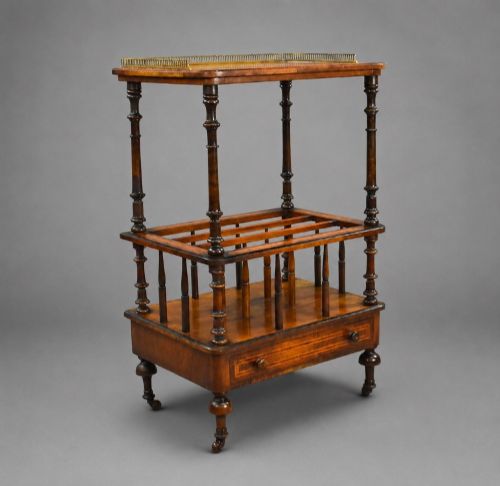
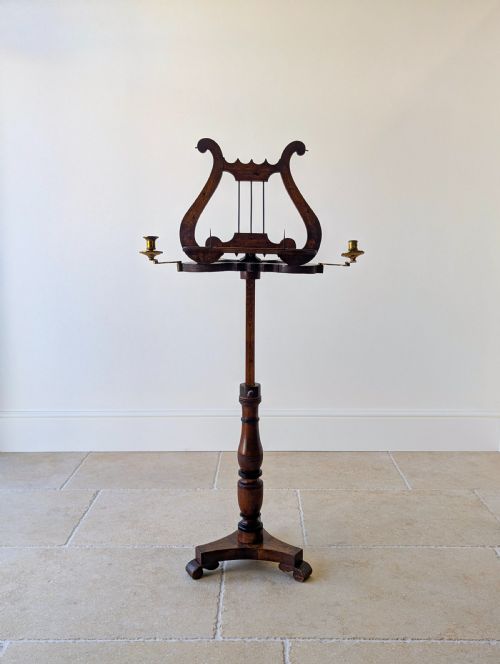
Cabinetmakers utilised dense timbers such as mahogany, rosewood, and burr walnut, frequently enhancing surfaces with satinwood inlay or glass panels. Wood was selected for grain pattern and strength, then shaped into slender uprights, carved legs, and delicate divisions.
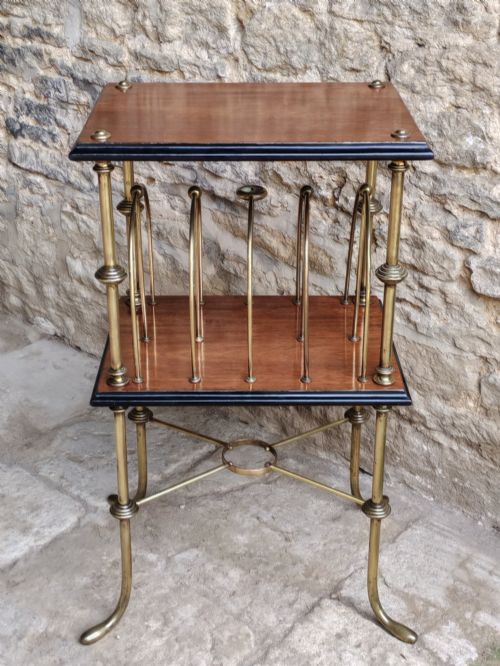
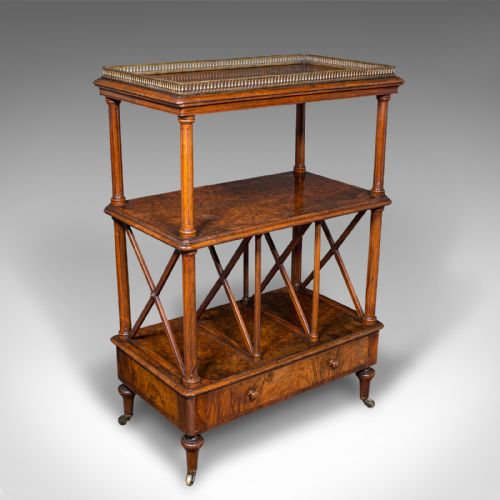
Brass formed a crucial structural and decorative element, appearing in castors, carrying handles, pierced galleries, and adjustable music rests. Metal components were cast and polished, securing to the wooden frames with small screws to withstand regular adjustment and movement.
What varies in quality
The refinement of the timber carving and the crispness of the brass details set finer examples apart from simpler utilitarian pieces. Superior items display well-figured grain veneers, intricate inlay work, and robust joinery that keeps multi-division racks rigid.
Proportion and hardware integration also dictate quality, where heavy brass castors and well-cast lyre motifs elevate the overall design. Pieces with original turning, intact brass galleries, and balanced proportions represent the higher tier of these furnishings.
Some Victorian canterburys feature enough compartments to misplace several volumes of sheet music simultaneously.
Gillows of Lancaster·J.C.Loudon·Harrods
The Antique Brass Music Rack Glossary
- Canterbury
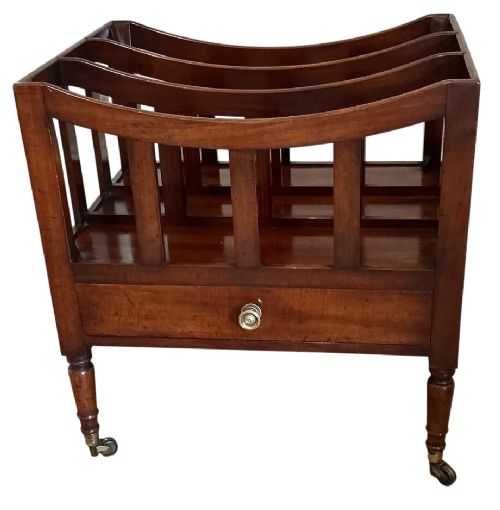
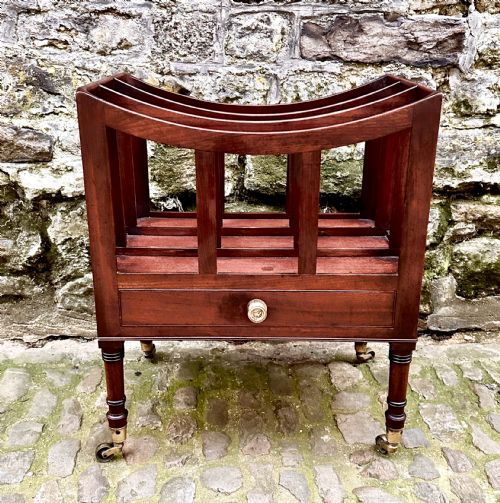
- A low, partitioned stand designed for holding sheet music, folios, or newspapers, often fitted with castors and a small drawer below. Originating in the late eighteenth century, these pieces became staple furnishings in Victorian drawing rooms.
- Lyre-form
- A decorative motif shaped like an ancient stringed instrument, commonly used for the central music rest on stands and tables. This classical shape appeared frequently in Regency and William IV furniture designs.
- Etagere
- A set of open shelves for displaying small objects, sometimes combined with a canterbury or music cabinet base. These tiered pieces allowed for both storage and display in fashionable interiors.
- Folio stand
- A large rack designed to hold oversized prints, drawings, or bound music folios in a vertical or slightly slanted position. Country house proportions made these substantial pieces suitable for extensive collections.
Antique Brass Music Rack: Frequently Asked Questions
What is the difference between a canterbury and a music stand?
A canterbury is a low, partitioned stand primarily used for sorting and holding sheets, magazines, or folios in upright compartments. They often include low legs with castors and occasionally a small drawer.
Music stands focus on holding a single score at an adjustable reading angle, frequently incorporating a lyre-shaped rest and a central pillar. Some hybrid designs combine both functions into a single piece of furniture.
How do I date a mahogany music stand?
Dating relies on observing the stylistic details and construction methods typical of specific periods, such as Regency curves or Victorian burr walnut veneers. Georgian and Regency pieces tend to show lighter mahogany tones and classical motifs like reeded legs.
Later Victorian examples often incorporate heavier ebonised finishes, turned spindles, and more complex multi-tier structures. Examining the type of brass fixings and timber grain helps narrow the decade of manufacture.
Were brass music racks meant for heavy daily use?
These pieces were built for functional use in period drawing rooms and music rooms, designed to hold paper scores and heavy folios securely. The combination of dense hardwood and solid brass hardware provided the necessary durability for daily page-turning and relocation.
Adjustable brass fittings on music stands allowed musicians to alter the height and reading angle as needed. Over time, the brass components developed a natural patina while retaining their structural integrity.
How do I care for inlaid walnut and brass?
Maintaining these pieces involves regular dusting with a soft, dry cloth to protect delicate veneers and prevent grime buildup in carved details. Avoid placing timber furniture in direct sunlight or near heat sources to keep the burr walnut and inlay stable.
Brass elements can be left with their natural aged patina or gently cleaned with a non-abrasive metal polish if brighter highlights are preferred. Ensuring the surrounding room humidity remains stable preserves both the wood and the metal fixings.