

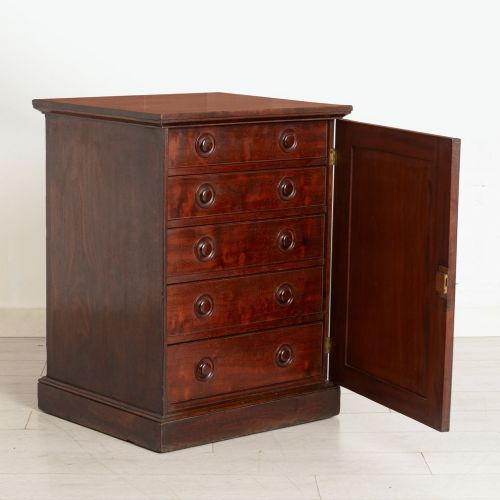


Mahogany Sheet Music Chest
A mahogany sheet music chest is a purpose-built cabinet designed to store scores and folios, mostly originating from the Victorian and Edwardian periods.

Mahogany Sheet Music Chest
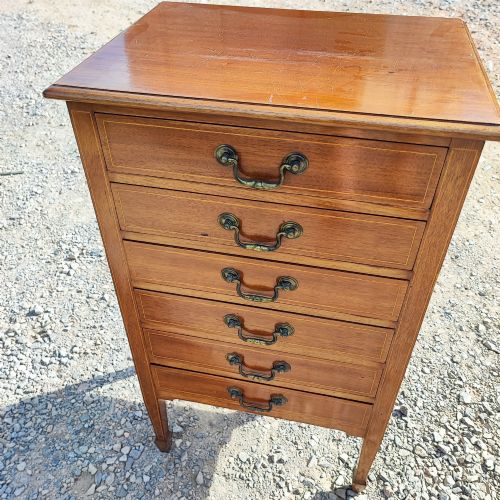
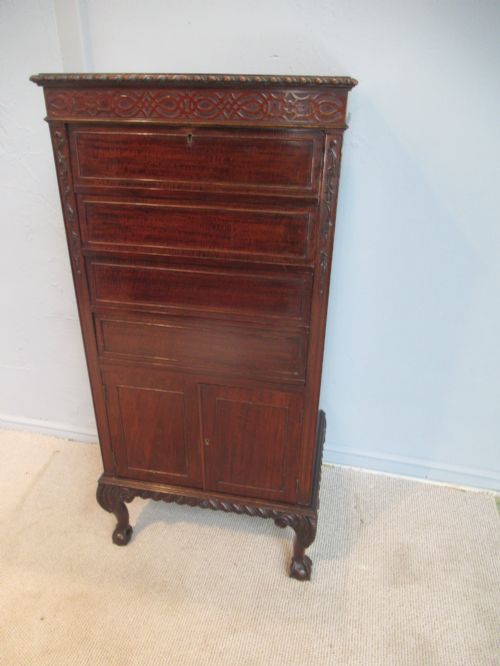
A mahogany sheet music chest is a tall, narrow cabinet designed specifically to keep scores, folios, and sheet music orderly. The pieces on this page span the Victorian and Edwardian eras through the 1920s and 1930s, alongside nineteenth-century examples and late nineteenth-century designs.
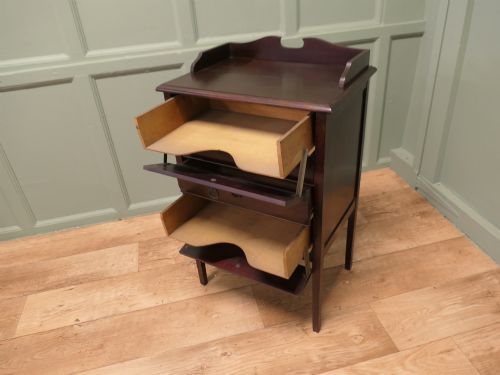
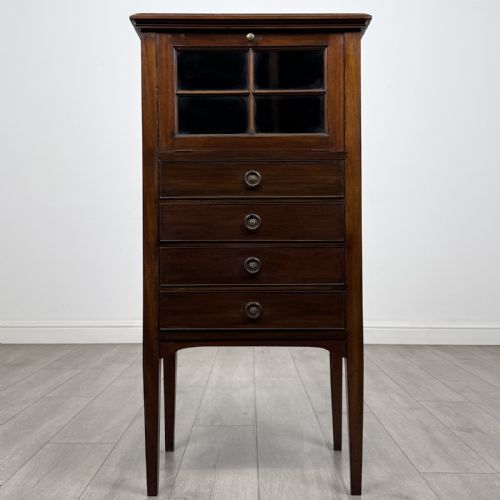
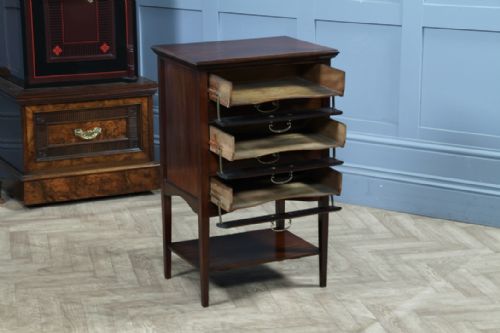
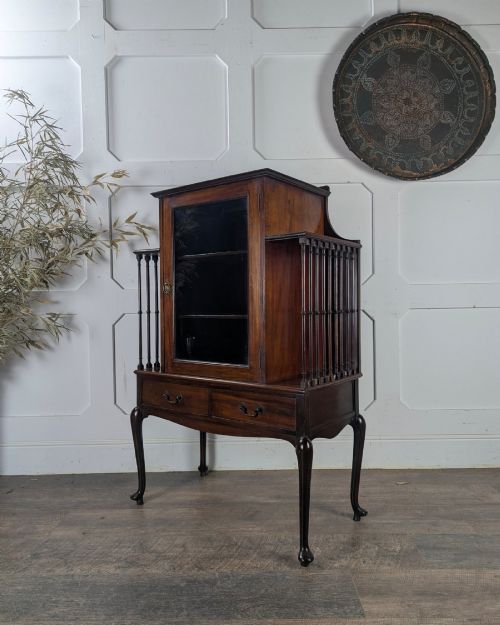
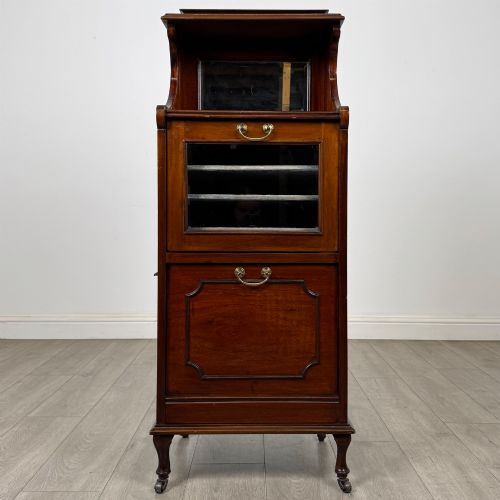
You will most commonly encounter Edwardian and Victorian forms built from mahogany, often featuring drop-front drawers that tilt forward for easy access to paper sheets. Many examples incorporate satinwood inlay, boxwood details, brass hardware, or glass doors, shifting between plain storage and display functions.
How they were made
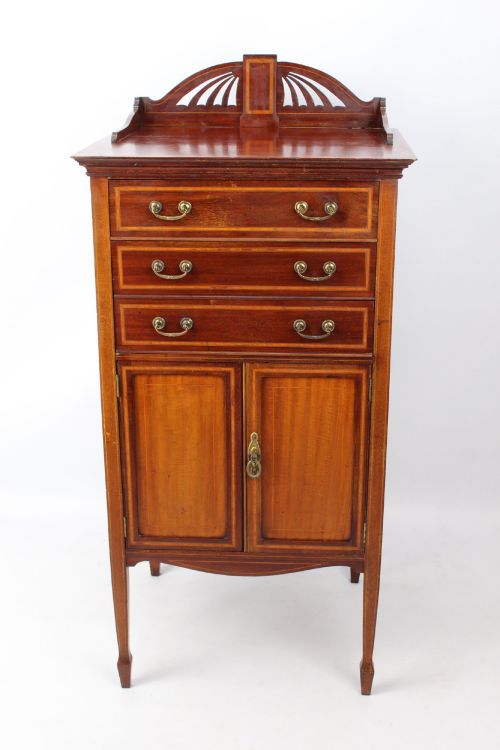
Makers constructed these cabinets primarily using solid mahogany and mahogany veneers over secondary timbers, shaping tall frames to house banks of shallow drawers or fall-front compartments. Surfaces frequently display contrasting satinwood inlay, boxwood stringing, and marquetry details.
Hardware played a functional and decorative role, with cast brass drop handles, key escutcheons, and occasional brass galleries fitted to the upper sections. Interior layouts relied on drop-front mechanisms or multiple narrow drawers to keep paper flat without bending.
Mahogany Sheet Music Chest Retail Price Guide 2026
Typical asking prices for mahogany sheet music chest among the pieces listed under this phrase on Sellingantiques today, from the lower quarter to the upper quarter. They describe what is for sale here now, not the wider market.
Current listings feature Edwardian and Victorian pieces alongside items from 1890 through 1930, built in mahogany with glass, brass, and satinwood inlay.
What varies in quality
The refinement of the timber and the crispness of the inlay separate standard examples from finer ones, with superior pieces displaying carefully selected mahogany grain and precise satinwood or boxwood work. The complexity of the cabinetwork also matters, distinguishing simple drawer carcases from elaborate fall-front mechanisms and glazed display sections.
Construction methods dictate longevity, particularly the joinery of the drawer linings and the smooth operation of drop-front hinges. Makers like Keeble of London and Fyne Ladye represent specific tiers of workshop production recorded in the archive and current listings.
Keeble London·Fyne Ladye
The Mahogany Sheet Music Chest Glossary
- Drop-front
- A drawer or compartment front hinged at the bottom so it tilts outward for sorting music sheets. This mechanism prevents paper from curling inside deep enclosures.
- Marquetry
- Decorative woodwork forming pictorial or geometric patterns using various coloured veneers. Craftsmen set these thin wood sections directly into the primary mahogany surface.
- Satinwood inlay
- Contrasting yellowish wood inserted into channels cut into the mahogany carcass. It provides delicate borders and decorative motifs on Edwardian pieces.
- Music Canterbury
- A low stand or cabinet fitted with vertical partitions for holding sheet music and folios. These often include carrying handles and lower drawer sections.
- Folio cabinet
- A storage piece built to hold large, unbound paper sheets and documents. These share similar shallow proportions with standard music chests.
Mahogany Sheet Music Chest: Frequently Asked Questions
What is a music cabinet used for?
These cabinets served domestic musicians by holding sheet music, scores, and songbooks flat and organised within specialised shallow drawers or drop-front compartments.
Today, the internal dimensions suit modern paperwork, art prints, and folios just as effectively as nineteenth-century musical scores.
How do I tell Edwardian from Victorian models?
Victorian examples tend to display heavier proportions, darker timber tones, and occasional marquetry or brass detailing, reflecting nineteenth-century taste.
Edwardian pieces often look lighter and brighter, frequently incorporating satinwood inlay, boxwood stringing, and simpler lines influenced by the turn of the century.
How do drop-front drawers work?
The drawer front is hinged along its lower edge so that pulling the handle lets the entire front tilt downward at an angle.
This drop action opens the top of the drawer, allowing you to slide music sheets in and out without bending the paper edges.
Can these cabinets hold vinyl records?
The internal height and depth of many music chest drawers accommodate standard twelve-inch LP vinyl records and sleeves comfortably.
Their sturdy mahogany construction supports the weight of record collections while keeping them vertically sorted or flat.