


Antique Brass Mortar
An antique brass mortar is a heavy functional vessel built to grind, and these pieces bring robust tactile weight to any surface.
Antique Brass Mortar
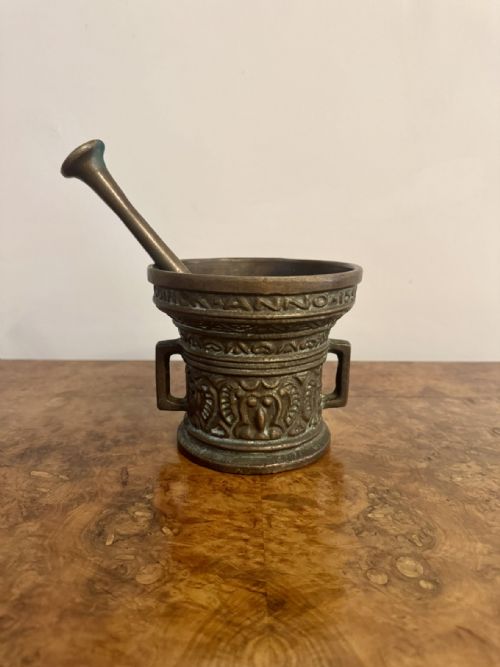
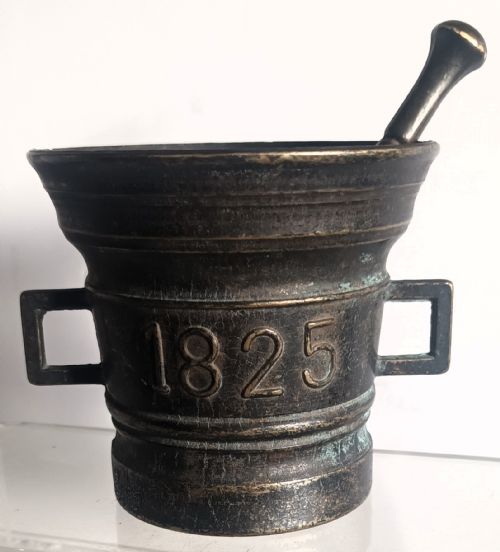
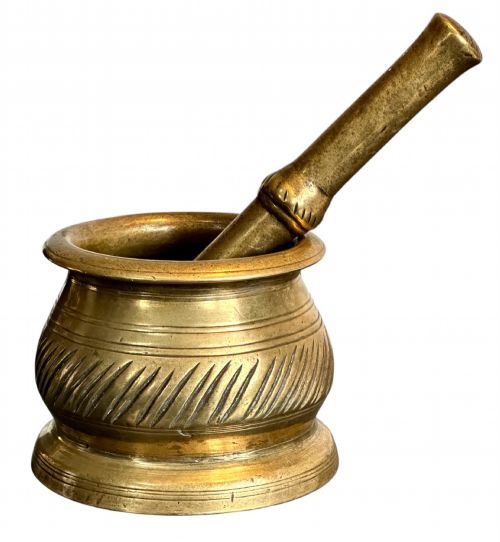
When you search for an antique brass mortar, you encounter robust kitchen and apothecary vessels designed for crushing herbs, chemicals, and spices. The pieces appearing here span from the seventeenth century through the Victorian era, encompassing domestic kitchen implements and chemist shop tools.
You are most likely to meet Georgian and nineteenth-century examples cast in heavy metal, frequently accompanied by their matching pestles. The selection ranges from plain utilitarian workshop grinders to decorative items featuring Tudor rose motifs and Gothic revival styling.
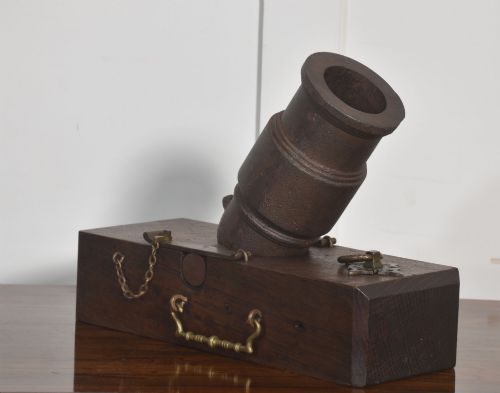
Alongside conventional grinding vessels, the listings include related forms such as signal mortars mounted on oak carriages and substantial trade signs shaped like the tool itself. These objects reflect centuries of daily utilitarian service in English kitchens and dispensaries.
How they were made
Metalworkers produced these vessels primarily through traditional casting techniques, pouring molten brass, bronze, bell metal, or cast iron into moulds. This method created the thick walls and substantial bases required to withstand the downward force of a heavy pestle during grinding.
Many items received additional surface finishing, including turned lathe lines, moulded rims, and applied decorative details such as Tudor rose stamps. Companion pestles were shaped to match the interior curvature of the mortar for efficient crushing.
Antique Brass Mortar Retail Price Guide 2026
Typical asking prices for brass mortar among the pieces listed under this phrase on Sellingantiques today, from the lower quarter to the upper quarter. They describe what is for sale here now, not the wider market.
Listings feature vessels cast in bronze, brass, bell metal, and cast iron, spanning periods from the seventeenth-century seventeenth century to the Victorian era.
What varies in quality
The distinction between ordinary utility items and superior examples lies in the crispness of the cast ornamentation and the integrity of the metal surface. Better pieces display clean lines, well-defined decorative motifs, and a satisfying heft that signals substantial metal content.
The presence of an original matching pestle elevates an object considerably, particularly when the pairing shows uniform wear and consistent period manufacture. Age brings a natural patination to the metal, and superior surfaces retain a warm, unpolished glow rather than harsh chemical cleaning.
The Antique Brass Mortar Glossary
- Mortar and pestle
- Mortar and pestle. A heavy bowl paired with a club-shaped tool used for pounding and grinding substances.
- Bell metal
- Bell metal. A hard alloy of copper and tin traditionally used for casting bells and high-grade mortars.
- Apothecary
- Apothecary. A historical practitioner who prepared and sold medicines, often utilising heavy metal vessels for compounding remedies.
- Signal mortar
- Signal mortar. A small cannon or thick-walled iron vessel mounted on a wooden carriage to produce loud reports for celebrations or alerts.
- Trade sign
- Trade sign. A large physical representation of an object displayed outside a shop to advertise the trade conducted within.
Antique Brass Mortar: Frequently Asked Questions
What were antique brass mortars used for?
These vessels served primarily in kitchens and apothecaries for crushing dry spices, grinding medicinal herbs, and compounding chemical mixtures. The heavy walls contained the ingredients while the pestle worked them into powders or pastes.
Over time, many of these utilitarian grinding bowls transitioned from active workbenches to decorative display pieces in domestic interiors.
How do I identify a Georgian mortar?
Georgian examples often feature flared rims, stepped bases, and clean classical proportions characteristic of eighteenth-century design. They are frequently cast in bronze or brass with straightforward utility in mind.
Examining the casting texture and the wear patterns inside the bowl helps distinguish these domestic kitchen tools from later Victorian reproductions.
Are pestles always original to the mortar?
Many surviving sets retain their matching pestles, though separation occurred frequently over centuries of domestic use. Finding a pair with identical metal composition and matching wear is a notable advantage.
When a pestle is described as unusual or later, it reflects the common practice of reuniting compatible grinding tools from the same period.
How should I clean my mortar?
Maintenance requires only a soft cloth to remove dust, preserving the natural patination built up over centuries of handling. Abrasive polishes strip away the aged surface character that collectors value.
Keeping the metal dry prevents corrosion and maintains the warm tone of the brass or bronze.