
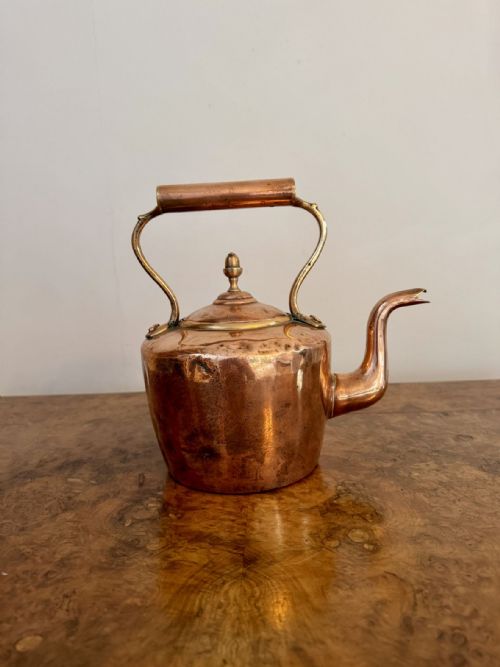
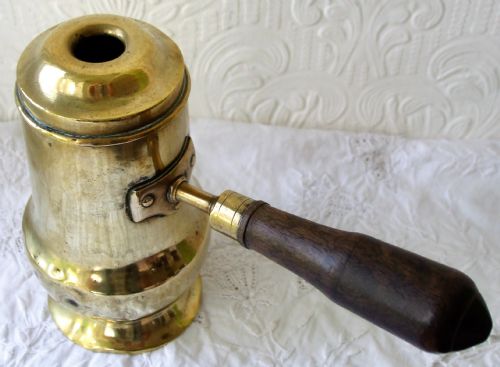
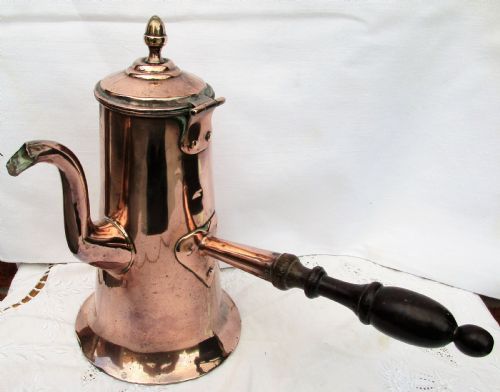
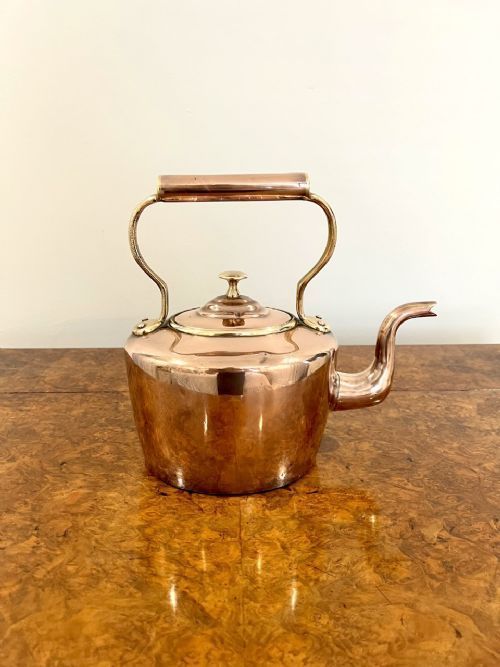


Antique Brass Kitchenware
Antique brass kitchenware brings functional domestic metalwork into the modern interior, offering rich warm tones and centuries of utilitarian history.
What these pieces are
Antique brass kitchenware comprises domestic utensils, preparation tools and hearth vessels fashioned from copper alloy for daily culinary use. Buyers searching for antique brass kitchenware encounter practical forms intended for food preparation, preservation and service across several centuries.
The selection on this page centres on 18th Century and 19th Century specimens, encompassing Georgian chocolate pots, Victorian saucepans, spice shakers and dairy utensils. These objects derive from Rustic Country, Victorian Country House and Indo-Persian traditions, alongside Dutch or English workshop origins.
Object types range from individual dairy skimmers and mortar sets to large heavy saucepans and multi-piece collections incorporating pewter and tin. Each item reflects the robust requirements of historic kitchens before mass-produced aluminium and stainless steel displaced traditional metalware.
How they were made
Construction relies primarily upon brass, often paired with wood for handles, alongside supporting elements of iron, copper, pewter and tin. Metalworkers formed vessels through casting, hammering and joining sheet metal, shaping utilitarian objects designed to withstand heavy hearth use.
Surface finishing includes decorative engraving and functional turning, particularly on turned wooden elements attached to cream skimmers and spice dredgers. The interaction of brass with iron handles or tin linings demonstrates traditional multi-metal fabrication methods appropriate to each specific kitchen task.
Retail Price Guide 2026
Typical UK retail prices for brass kitchenware, calculated from the Sellingantiques database of over a million retail prices indexed since 2003. This retail price guide relies exclusively on Sellingantiques data; no external sources or auction records are used, so the figures do not describe the wider market.
Historic cooks relied on dedicated spice dredgers to dust sweet dishes, ensuring uniform flavour before the invention of the modern shaker.
What varies in quality
Quality rests upon the heft of the metal and the integrity of the original construction, distinguishing heavy utilitarian saucepans from lighter decorative items. The presence of fine decorative chasing or well-turned wooden components elevates certain domestic tools above standard workshop output.
Survival of original surface patination and uncompromised form dictates desirability, separating pieces retaining their original structural harmony from heavily restored examples. Maker intent and material thickness determine whether a survival remains a robust kitchen implement or a refined display object.
The Antique Brass Kitchenware Glossary
- Brass
- An alloy of copper and zinc used historically for durable kitchen vessels and utensils. Its warm metallic hue deepens with age and handling.
- Chocolate Pot
- A tall vessel featuring a lid with an aperture for a stirring stick, designed for heating and frothing chocolate. Georgian examples show refined proportions suited to hearth service.
- Spice Shaker
- A perforated container used for dusting food items with sugar or powdered spices. Also known as a dredger, this form requires precise piercing of the metal top.
- Dairy Utensil
- Equipment dedicated to milk processing, cream separation and butter production. Skimmers represent a typical surviving form from this category.
- Mortar and Pestle
- A heavy bowl and club set used for crushing and grinding dry ingredients or spices. Brass versions offer sufficient mass and durability for kitchen pounding.
Frequently Asked Questions
How do I clean antique brass?
Historic metalware benefits from minimal intervention to preserve its accumulated patination and honest surface wear.
Harsh chemical polishes strip away age, so gentle dusting and occasional soft waxing maintain the metal safely.
Can I use these for cooking?
Most historic kitchenware serves best as decorative display or dry storage rather than active daily culinary use.
Modern food safety standards and historic construction methods, such as worn interior linings, mean these pieces suit the collector's interior.
How are 18th century pieces identified?
Early pieces typically exhibit hand-forged or cast characteristics, heavier metal gauges, and specific form profiles associated with Georgian domestic life.
Construction details and traditional fastening methods separate these earlier items from later 19th century factory production.
What is a cream skimmer?
A cream skimmer is a flat, perforated or solid shallow utensil fitted with a long handle for lifting cream from milk.
Victorian examples often combine a bright brass blade with a turned wooden grip for kitchen comfort.