


Antique Bowfront Table
An antique bowfront table delivers curved elegance to a room, offering a practical surface with softened corners that suit smaller spaces.
Antique Bowfront Table
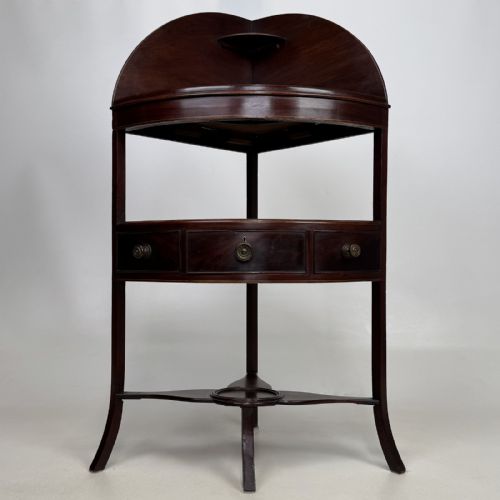
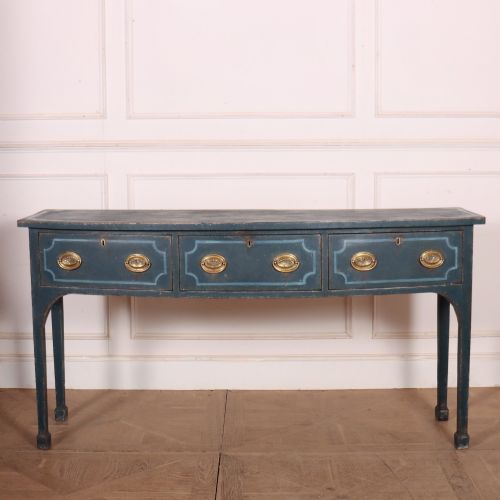
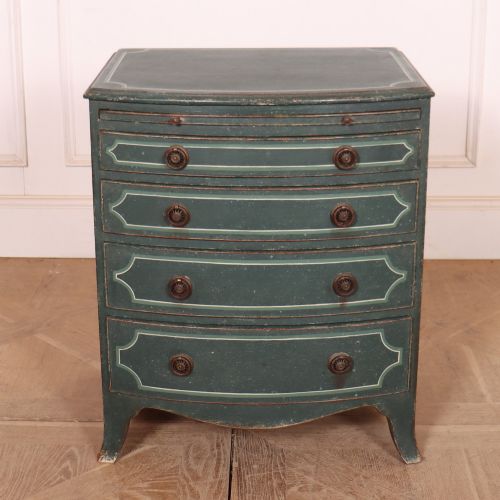
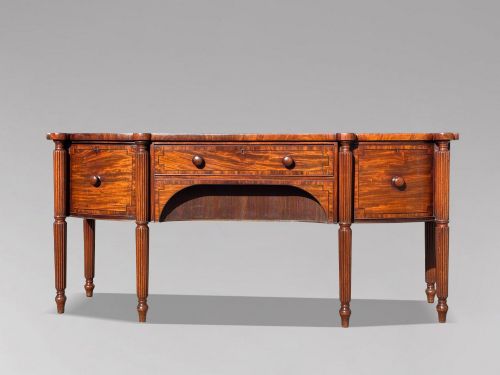
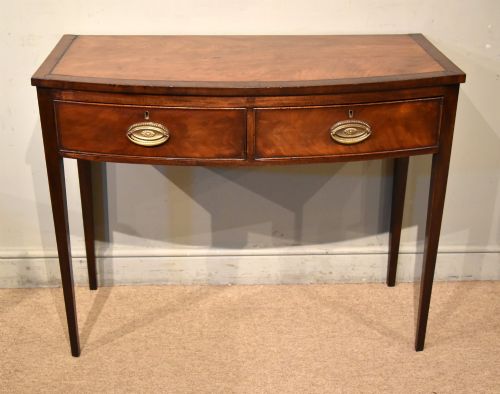
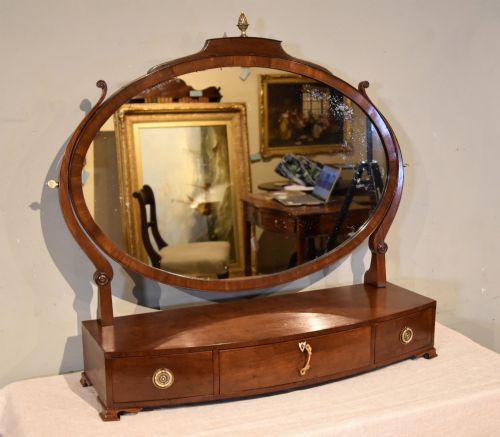
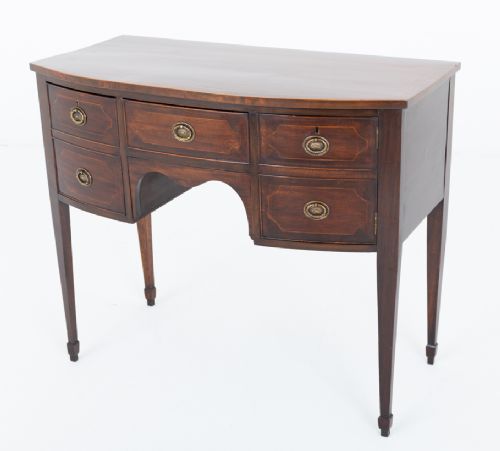
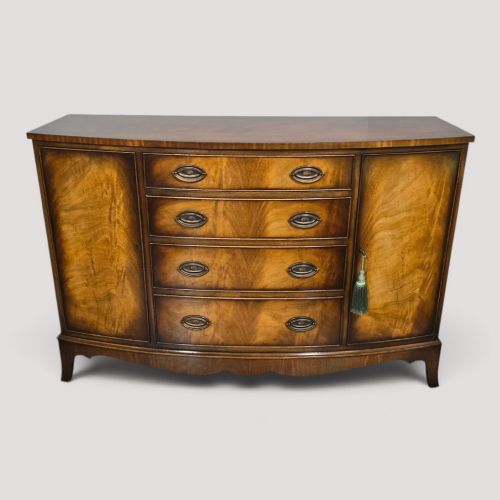
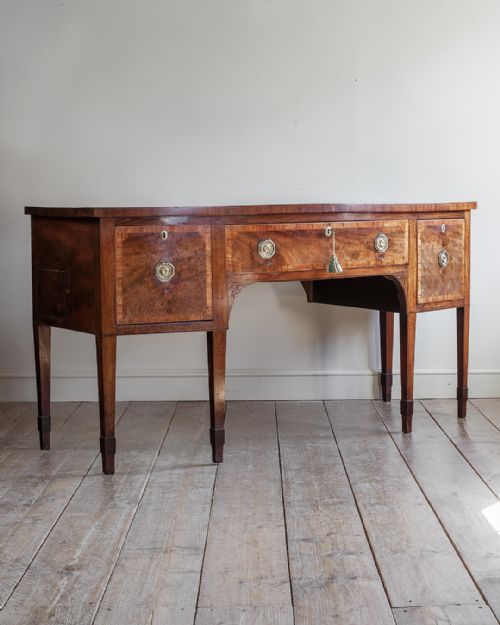
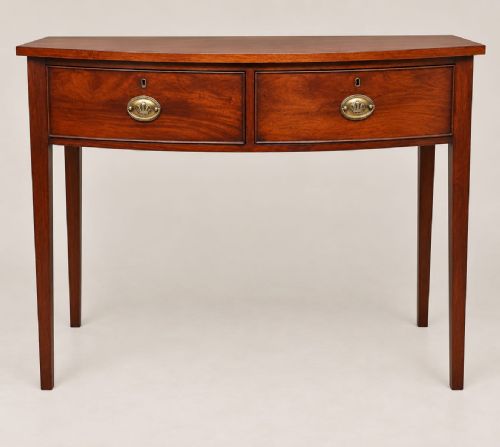
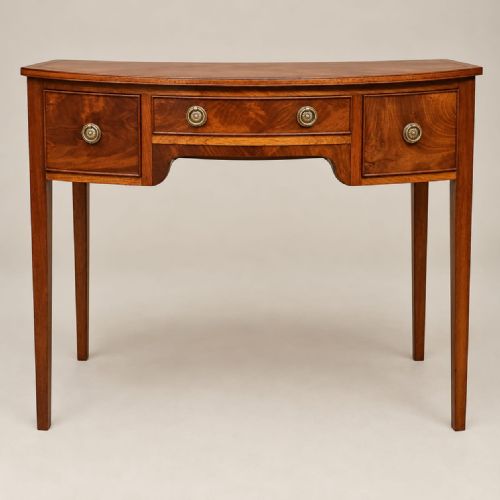
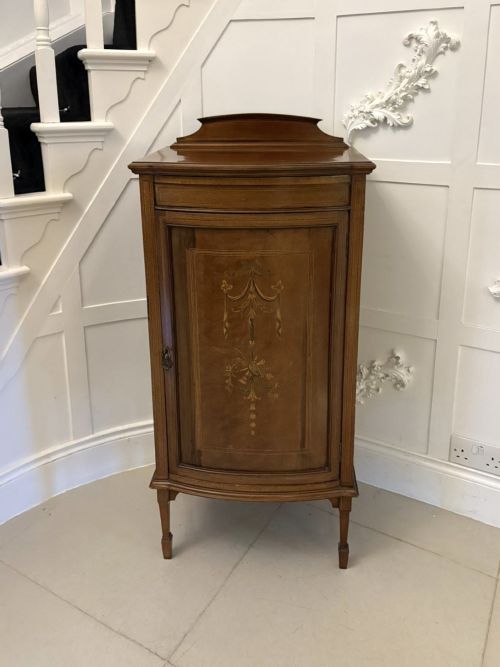
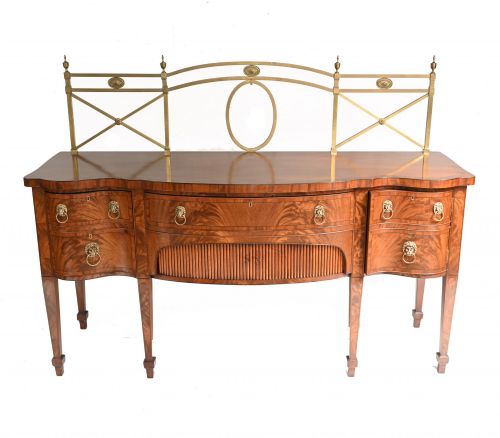
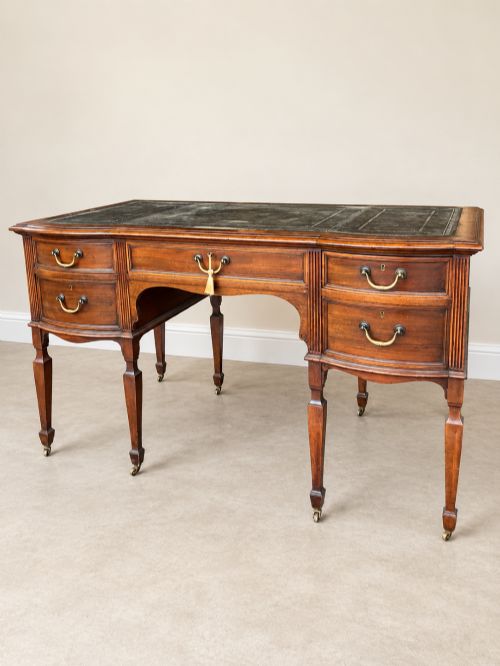
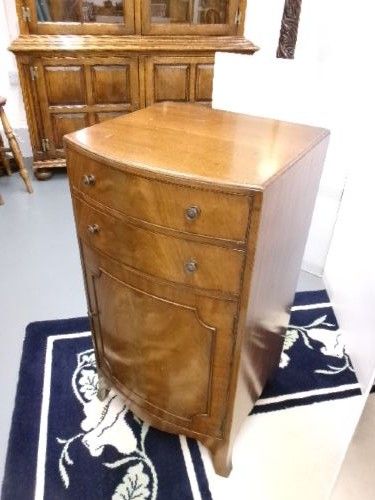
When you search for an antique bowfront table, you encounter a variety of forms rooted in the Georgian, Regency, and Victorian periods. Sideboards and side tables dominate the selection, alongside smaller pieces such as bedside cabinets, dressing tables, and console tables.
The pieces on this page span the eighteenth, nineteenth, and early twentieth centuries, reflecting both original period construction and later revivals in the Sheraton and Georgian styles. Most examples rely on the classic sideboard or side table format, designed to fit snugly against a wall while softening the room's geometry with a rounded front.
Judging quality
Quality in these pieces rests upon the selection of timber and the precision of the cabinetwork required to shape a curved front. Finer examples display carefully matched flame mahogany veneers and crisp, neat boxwood or satinwood inlay that follows the difficult curve without buckling or misalignment.
Proportion and scale also dictate value, particularly among smaller sideboards and side tables where balancing the prominent bowfront requires great skill. The integration of original brass hardware and the crispness of the secondary timbers inside the drawers reveal the original maker's standard of work.
Antique Bowfront Table Retail Price Guide 2026
Typical asking prices for bowfront table among the pieces listed under this phrase on Sellingantiques today, from the lower quarter to the upper quarter. They describe what is for sale here now, not the wider market.
The inventory ranges from large dining sideboards to compact bedside cabinets and dressing table mirrors.
Maples
The Antique Bowfront Table Glossary
- Bowfront
- A furniture front that curves outward in a convex arc. This shape gained popularity in the late eighteenth century to soften room angles.
- Crossbanding
- A narrow strip of veneer laid around the border of a tabletop or drawer front with the grain running perpendicular to the surrounding wood.
- Inlay
- A technique where pieces of contrasting wood or other materials are inserted into recessed portions of a base timber to form a decorative pattern.
- Flame mahogany
- A highly figured wood veneer sliced from timber where the branch meets the trunk, producing a rippled, flame-like pattern.
- Sideboard
- A long dining room table or cabinet designed for serving food and storing tableware, frequently built with a bow front during the Georgian era.
Antique Bowfront Table: Frequently Asked Questions
How do I date an antique bowfront table?
Dating relies on examining the construction methods, timber choice, and stylistic details of the piece. Eighteenth-century examples often feature fine hand-cut dovetails and subtle inlay, whereas later nineteenth-century or revival pieces show different secondary woods.
Looking closely at the drawer linings, handle types, and the specific style of inlay helps place the piece within the Georgian, Regency, or Edwardian eras. Comparing the proportions against known period designs also clarifies its age.
Where should I place a bowfront table?
These tables suit hallways, living rooms, and dining spaces where a shallow surface is required alongside a wall. Their curved profile prevents them from blocking walkways while offering a practical surface for lamps or display.
Sideboard and console variations work well in dining rooms and living areas, while smaller bedside cabinets and dressing tables fit neatly into bedrooms. The rounded front naturally draws the eye, making them effective focal points in smaller spaces.
Are these tables solid mahogany?
Most pieces combine solid mahogany frames with mahogany veneers applied to secondary woods for the flat and curved surfaces. Cabinetmakers used veneers to display striking figures like flame mahogany without risking the warping that large solid boards might cause.
Inlay work typically incorporates contrasting timbers such as boxwood and satinwood. Examining the secondary woods inside the drawers reveals the underlying construction methods used by the maker.