



Edwardian Bow Front Table
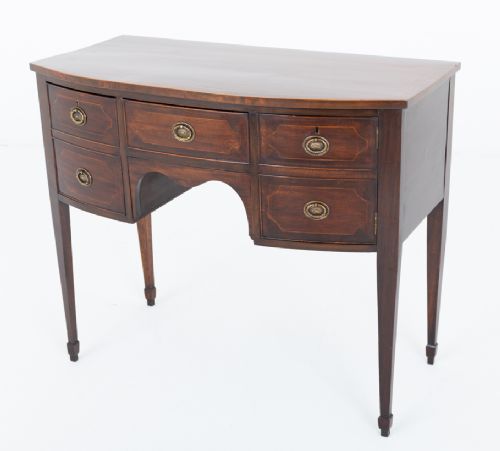
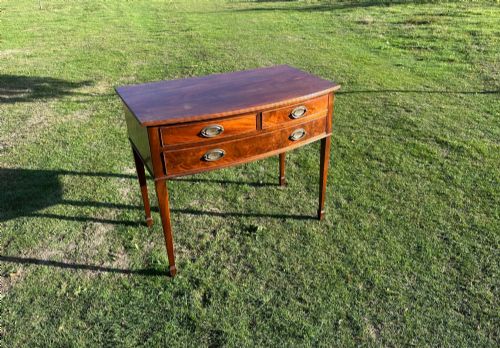
An Edwardian bow front table brings graceful curves and warm mahogany tones into a room.
Edwardian Bow Front Table
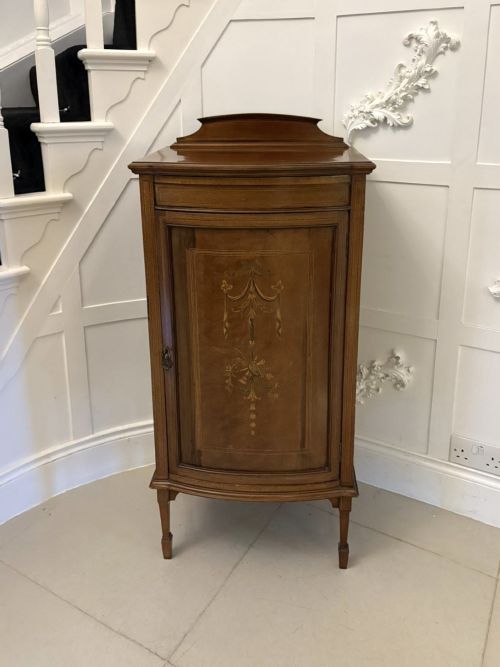
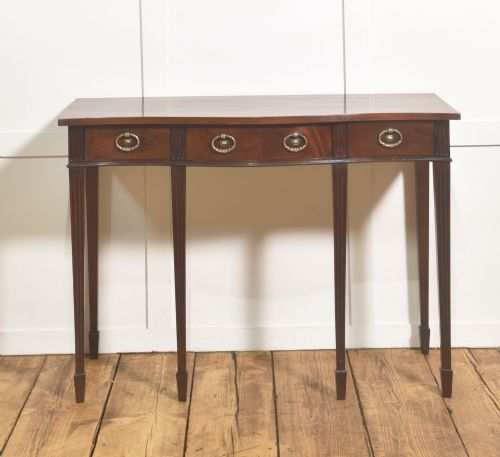
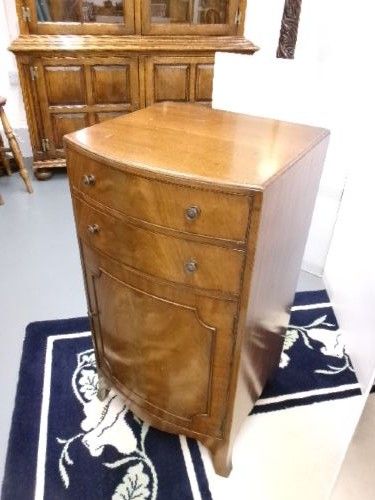
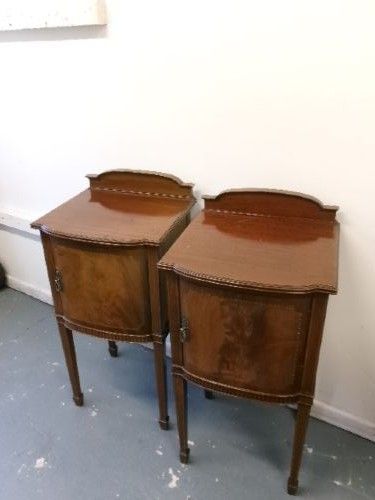
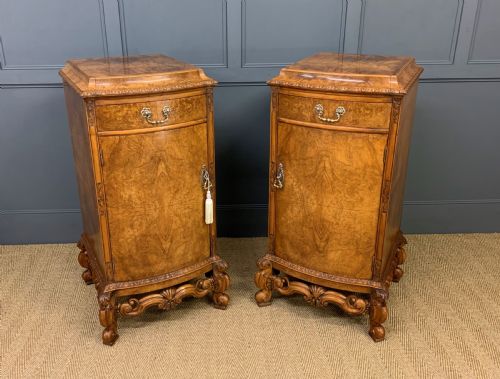
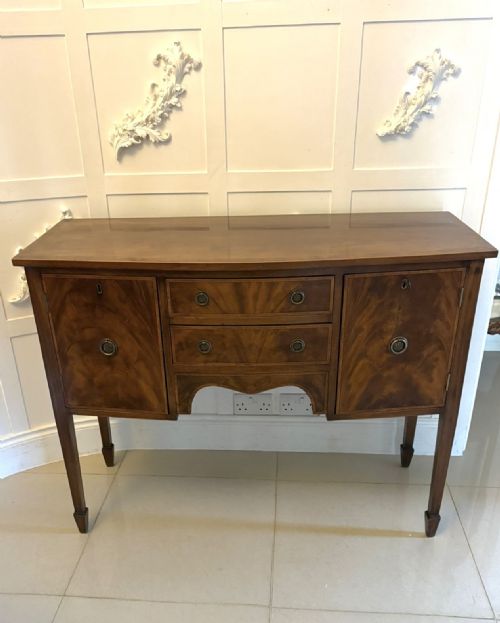
When you search for an edwardian bow front table, you enter a field defined by curving cabinetry and warm timber surfaces. The pieces here range from compact side tables and bedside cabinets to larger sideboards and writing desks.
Mahogany remains the dominant wood, often paired with contrasting inlay work. You will encounter side tables and cupboards that span the Edwardian era, alongside pieces reflecting Georgian and Regency revivals.
Materials and construction
Cabinet makers built these pieces using solid mahogany and mahogany veneers, frequently enhanced with satinwood inlay and boxwood stringing. Brass handles and leather writing inserts appear on desk surfaces.
The characteristic curved front required precise woodworking to shape the timber smoothly. Joinery relied on traditional methods to secure the framework while accommodating the sweeping line.
Edwardian Bow Front Table Retail Price Guide 2026
Typical asking prices for edwardian bow front table among the pieces listed under this phrase on Sellingantiques today, from the lower quarter to the upper quarter. They describe what is for sale here now, not the wider market.
Distinctions in craftsmanship
The finesse of the inlay work marks the difference between standard production and finer examples. Crisp, tight banding and delicate stringing show the hand of a skilled cabinet maker.
Timber selection also shapes the piece, with well-figured mahogany and burr walnut elevating the visual depth. Proportion and the smoothness of the curved drawers indicate the level of care taken during construction.
The Edwardian Bow Front Table Glossary
- Bow front
- A convex, outward-curving front facade characteristic of certain tables and sideboards. This shape softens the corners of a room.
- Inlay
- Decorative wood or other materials set flush into the surface of a larger piece. Satinwood and boxwood are common choices for this detail.
- Sheraton Revival
- A late nineteenth and early twentieth century style drawing on the lighter neoclassical designs of the eighteenth century. It frequently employs fine banding and tapered legs.
- Pedestal cupboard
- A tall, narrow freestanding cabinet designed to stand beside a bed or in a corner. These units often feature a single door enclosing internal shelving.
Edwardian Bow Front Table: Frequently Asked Questions
How do I date an edwardian bow front table?
Examine the timber, secondary woods inside the drawers, and construction methods. Edwardian pieces often display lighter mahogany veneers and crisp inlay.
Compare the style against revival periods listed in the design, such as Sheraton Revival or Georgian influences, which provide broader contextual clues.
Where should I place a bow front table?
These tables suit hallways, living rooms, and bedrooms where their curved profile prevents sharp corners from jutting into walking paths. Side tables and bedside cabinets fit well against flat walls while offering useful surface space.
Larger sideboard and buffet variations work effectively in dining areas to store and display serving items.
How do I care for mahogany surfaces?
Dust regularly with a soft, dry cloth to prevent grit accumulation on the polished wood. Avoid placing furniture in direct sunlight or near heat sources to prevent the timber from drying out.
Apply a quality beeswax polish periodically to maintain the lustre of the mahogany grain.
What is the difference between a side table and a sideboard?
Side tables are generally smaller, lighter pieces with simple legs, designed for display or holding lamps. Sideboards are substantial cabinets featuring multiple drawers and cupboards intended for storage.
Bow front variations exist across both categories, sharing the characteristic curved front profile.