
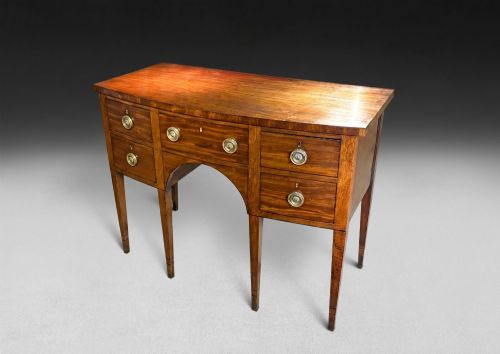
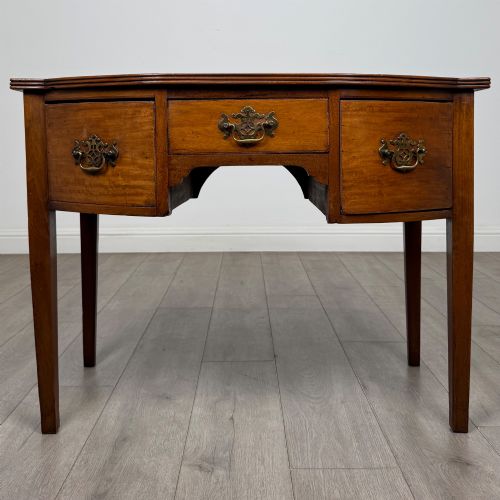
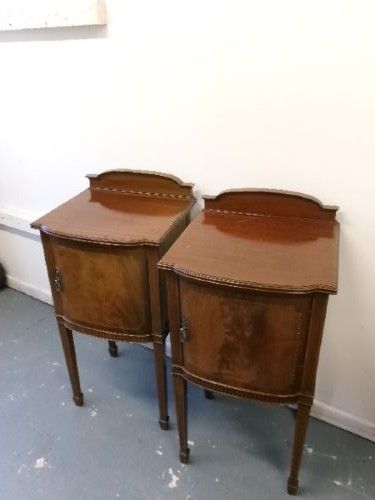
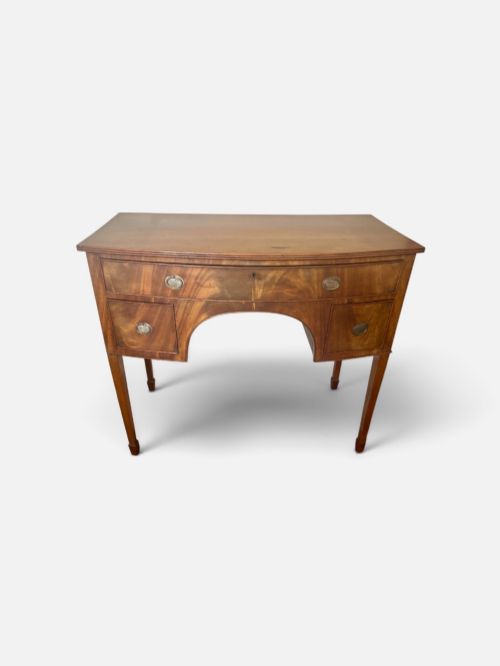
Antique Bow Front Table
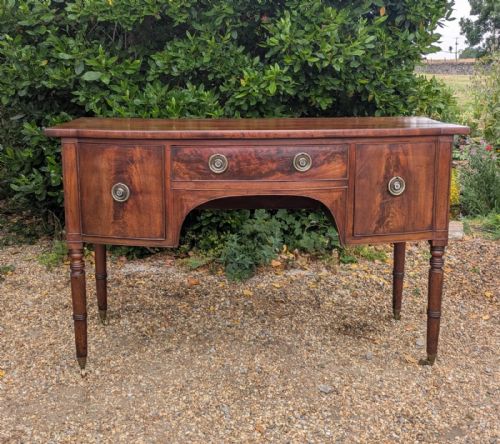
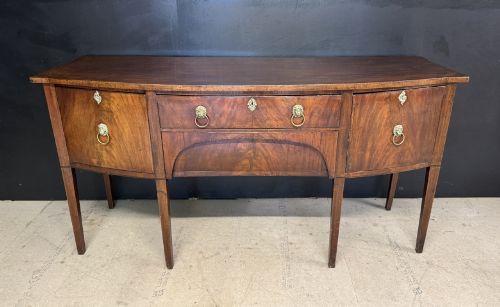
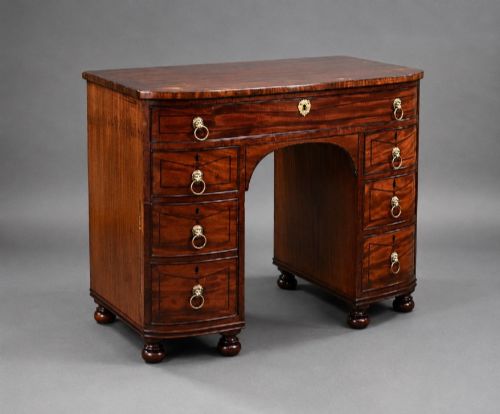
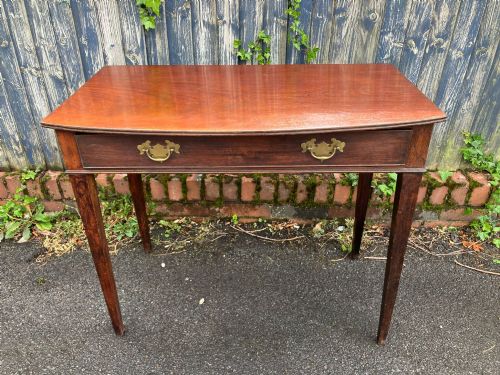
When you search for an antique bow front table, you are looking at curved-front timber furniture shaped to soften room corners and add elegance.
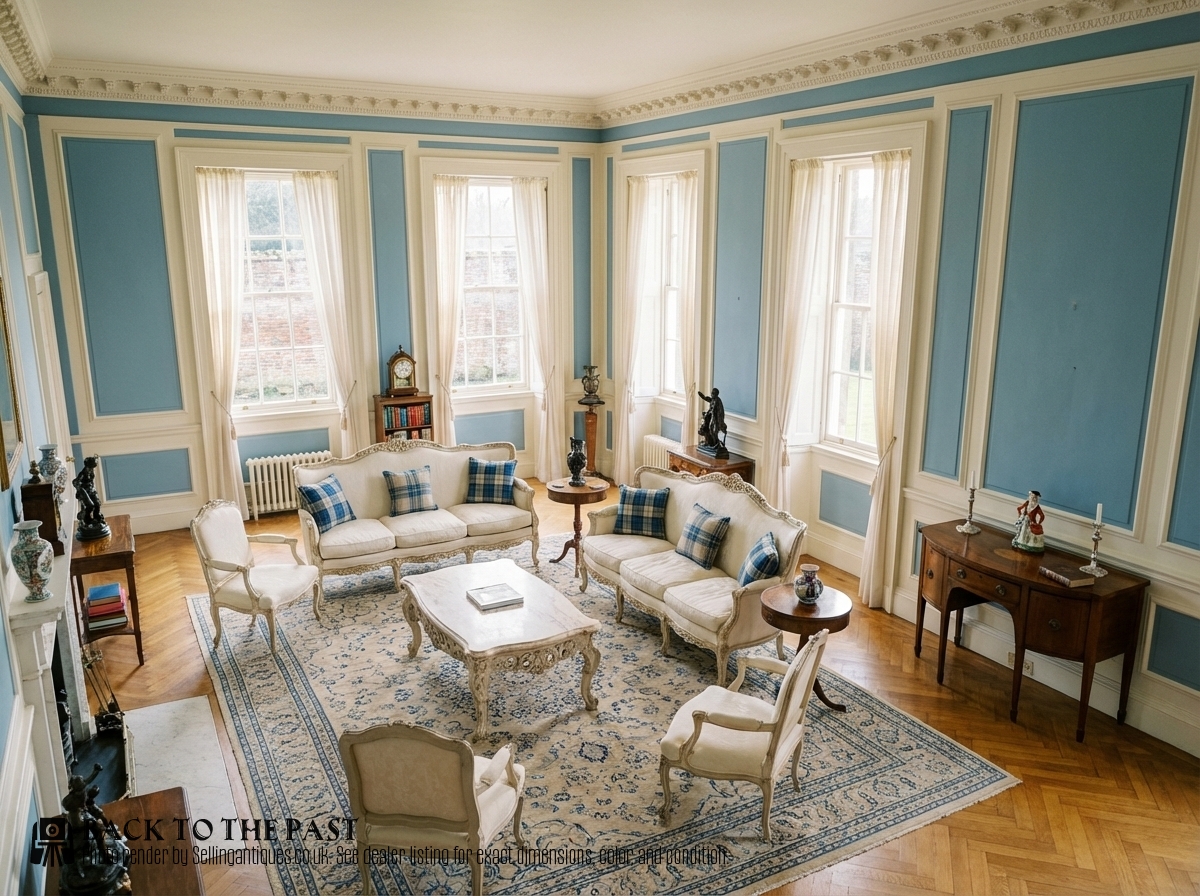
Antique Bow Front Table
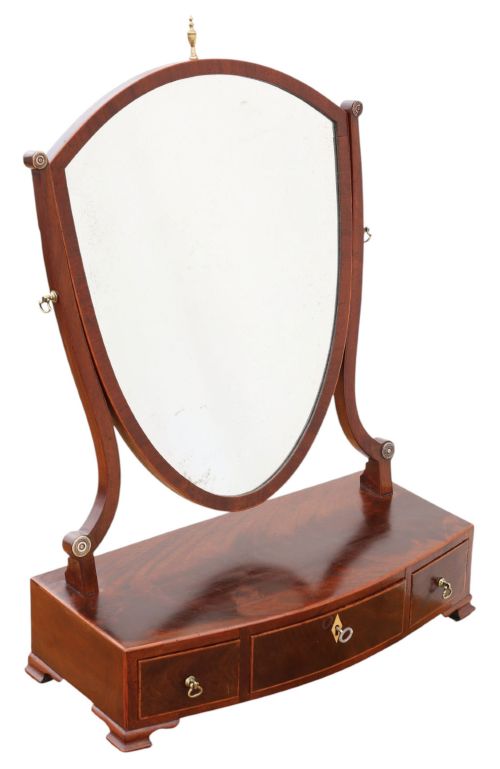
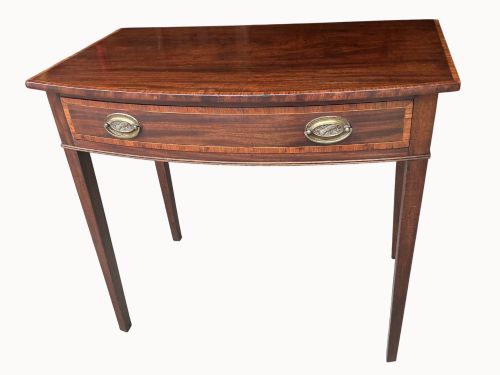
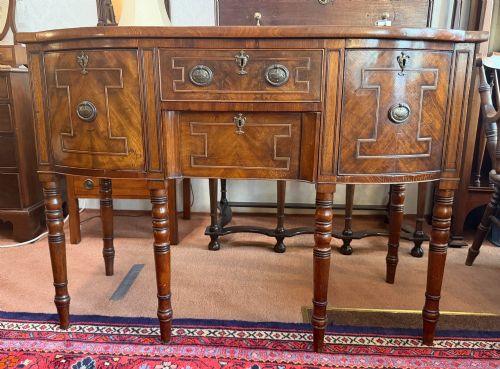
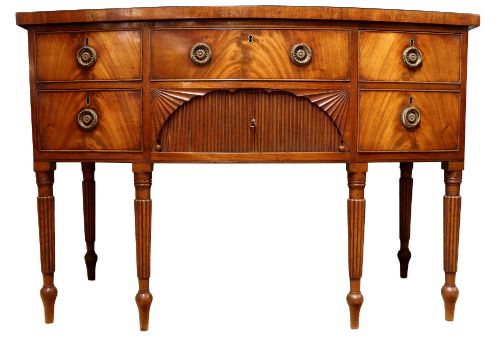
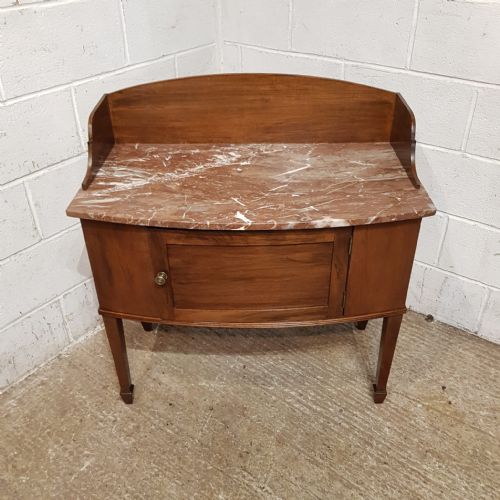
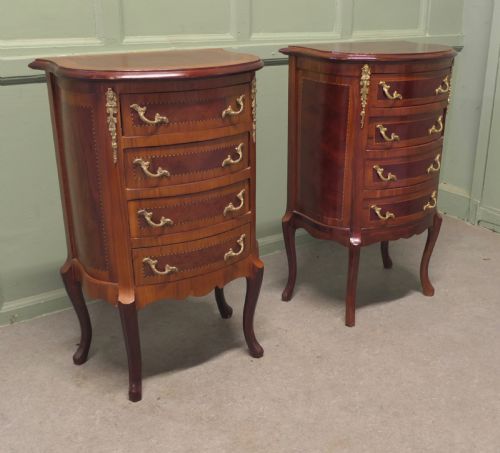
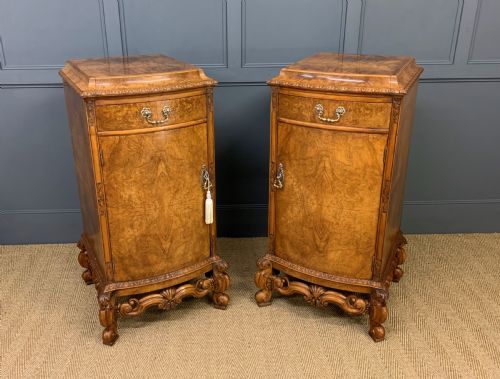
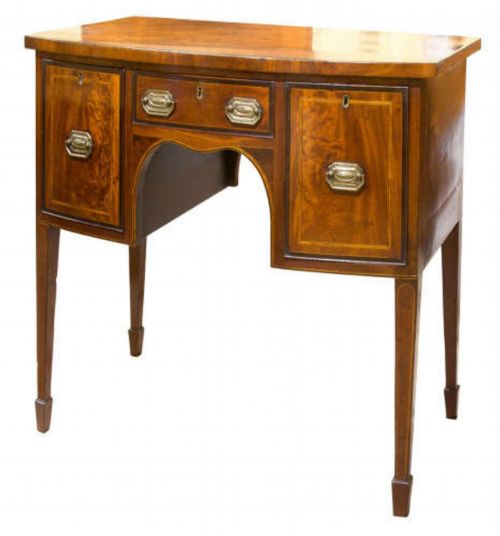
The antique bow front table category encompasses a diverse range of forms designed with a convex, curved front that projects outward into the room. Side tables and sideboards dominate the selections, alongside writing desks, console tables, dressing tables, and bedside cabinets.
You will most frequently encounter Georgian and Regency examples, alongside 19th-century pieces and later Edwardian or 1920s revivals. These utilitarian and formal pieces served dining rooms, bedrooms, and halls across British homes.
Makers and cabinetmakers built these tables to combine practical storage with the aesthetic grace of the curved line. The surviving pieces demonstrate how domestic furniture evolved from the 18th century through the Victorian era and into the early 20th century.
What varies in quality
Quality in an antique bow front table is visible in the choice of timber figures, such as highly figured flame mahogany or burr walnut, and the precision of contrasting satinwood or boxwood inlay work.
The handling of the curved drawers dictates the standard of the piece, with finer examples showing tight dovetail joints, smooth movement, and matching grain patterns across the front facade.
Proportion and execution elevate certain pieces, distinguishing standard regional workshop production from the refined work associated with notable periods like the George III or Sheraton eras.
Antique Bow Front Table Retail Price Guide 2026
Typical asking prices for bow front table among the pieces listed under this phrase on Sellingantiques today, from the lower quarter to the upper quarter. They describe what is for sale here now, not the wider market.
Some gentleman's chests include clever internal compartments designed to keep hidden items safe from wandering eyes.
Maples·Denby and Spinks·Heals
The Antique Bow Front Table Glossary
- Bow front
- A convex, outwardly curving furniture front that softens the linear angles of a room.
- Flame mahogany
- A distinctive veneer cut from the branch forks of the mahogany tree, creating a flickering, flame-like grain pattern.
- Inlay
- The technique of inserting contrasting strips of wood, such as boxwood or satinwood, into recesses to create decorative borders.
- Sideboard
- A long table or cabinet used for serving food and storing dining utensils, frequently built with a curved bow front.
- Dovetail
- A traditional wood joint formed by interlocking wedge-shaped fingers, used extensively in drawer construction.
Antique Bow Front Table: Frequently Asked Questions
What rooms suit an antique bow front table?
These pieces function well in dining rooms as serving surfaces, in hallways as console tables, or in bedrooms as dressing tables and bedside cabinets.
The curved profile allows the furniture to project outward while softening the visual impact in tighter spaces.
How do I identify a Georgian bow front table?
Georgian and George III pieces generally feature solid mahogany timbers, hand-cut dovetails, and restrained inlay work without excessive ornamentation.
Proportions tend to be balanced and structural elements reflect the classic cabinetmaking standards of the 18th and early 19th centuries.
What is the difference between a side table and a sideboard?
Side tables are lighter, often smaller pieces with one or more drawers designed for occasional surface use in halls or reception rooms.
Sideboards are substantially larger case pieces built specifically for dining room storage, featuring multiple drawers and cupboards.
Are marble top bow front tables original?
Marble tops appear primarily on washstands, console tables, and specific wash or dressing furniture from the 19th century onward.
They provided a durable, water-resistant surface for washing and grooming tasks in bedrooms.