

Antique Bow Front Chest
An antique bow front chest brings a curved silhouette and generous storage to a room, uniting practical function with Georgian and Regency elegance.
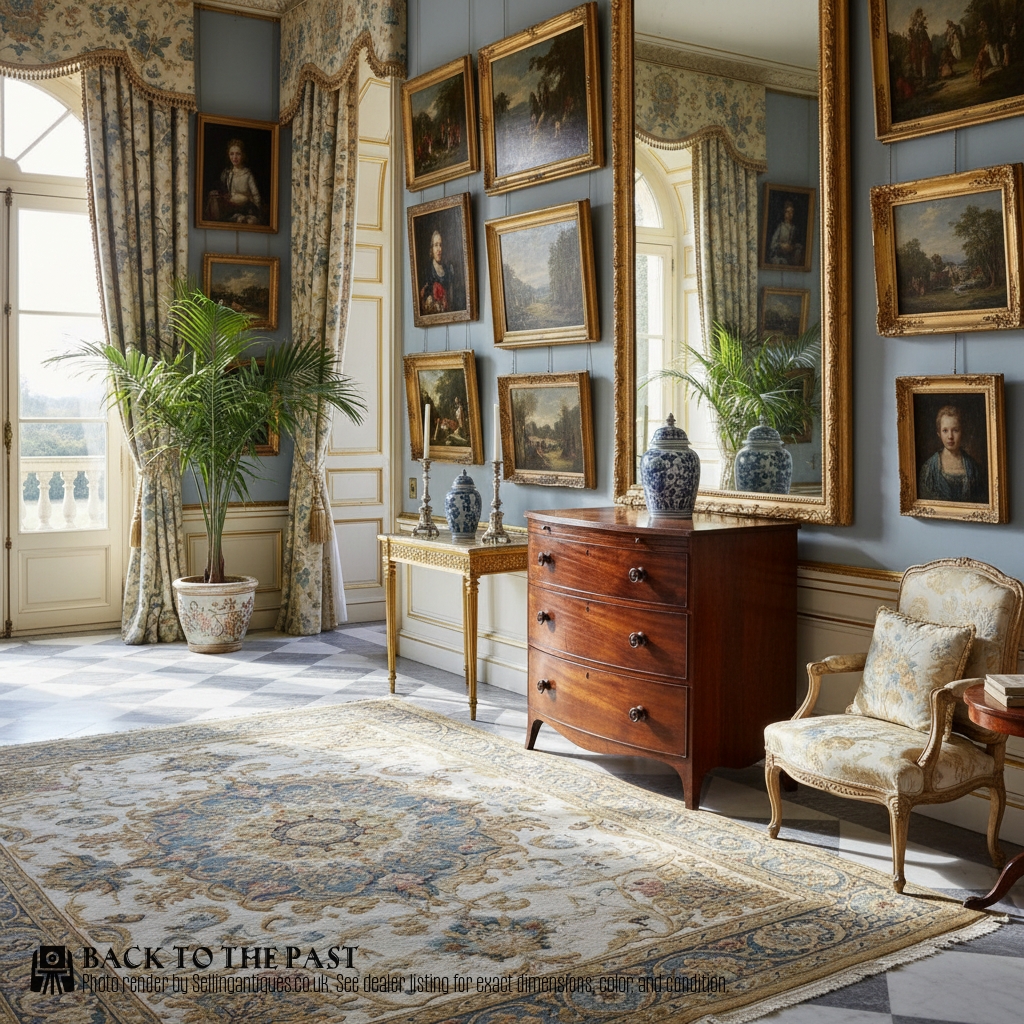
Antique Bow Front Chest
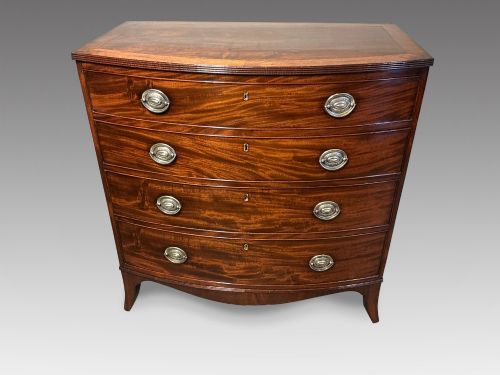
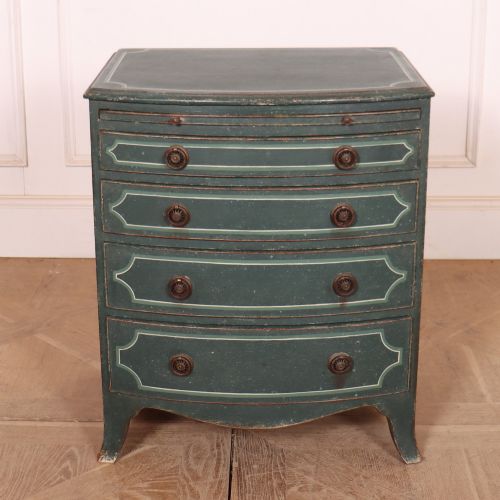
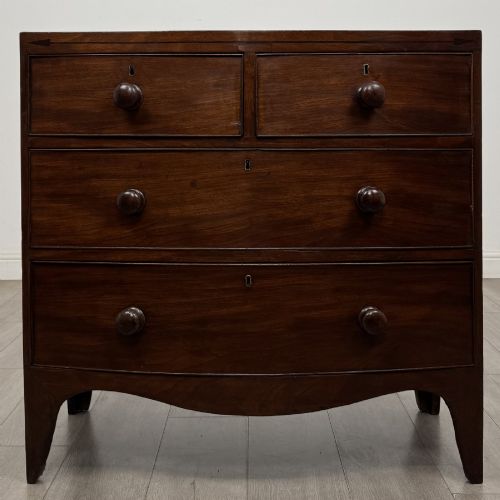
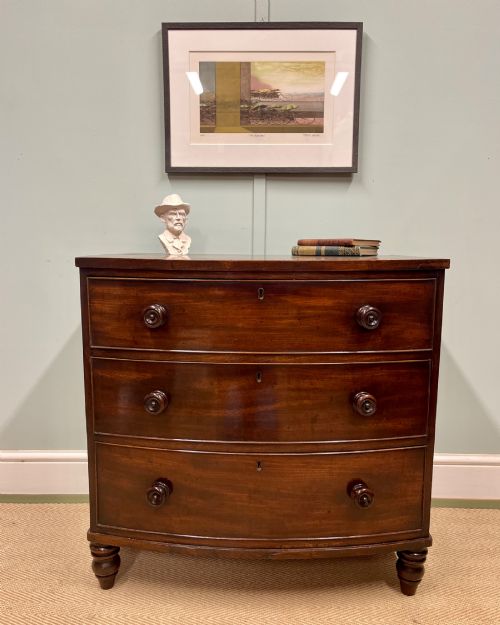
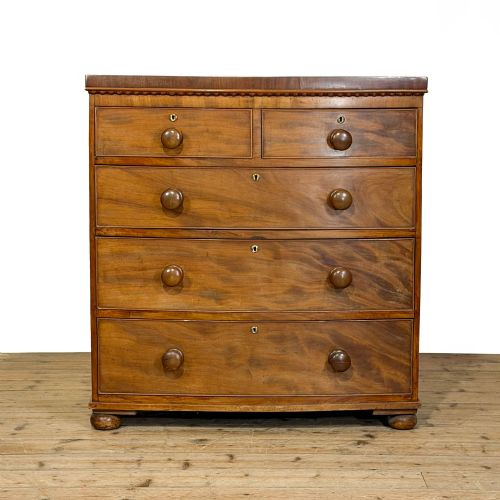
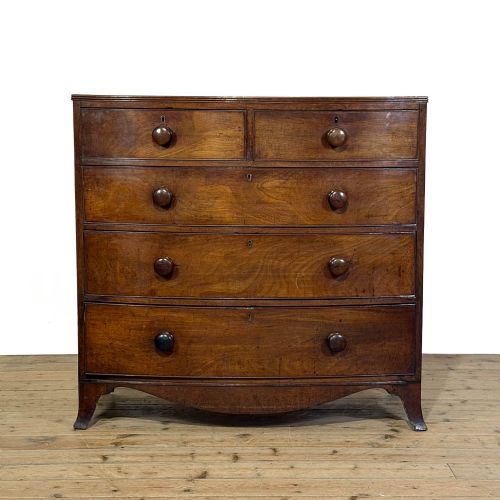
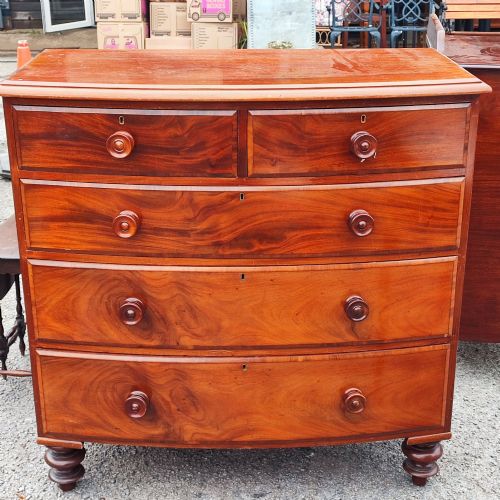
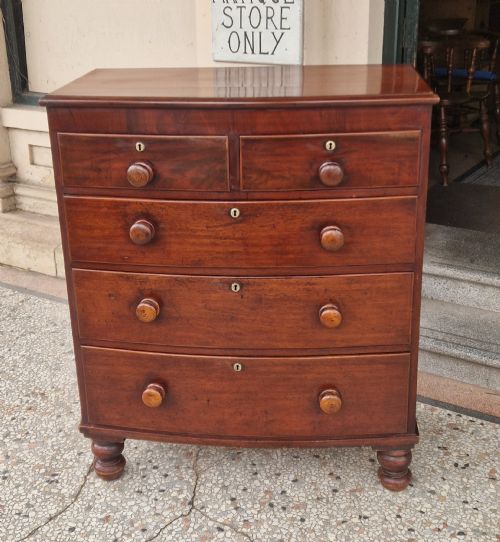
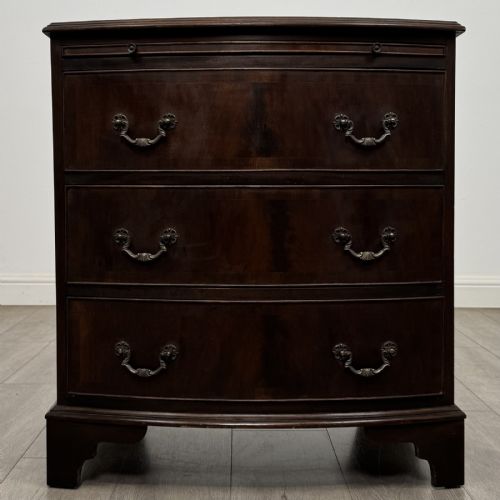
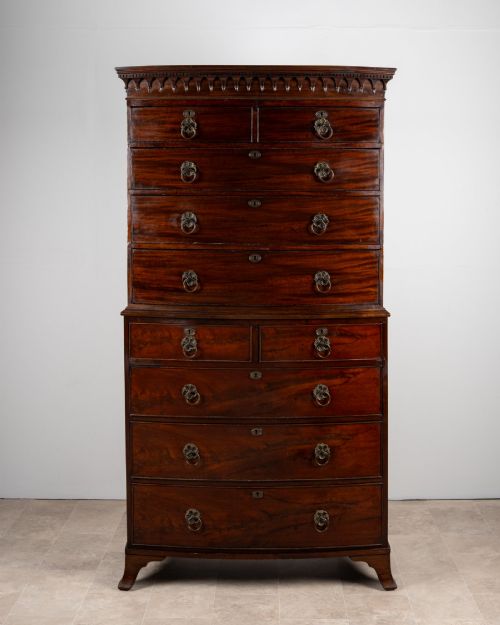
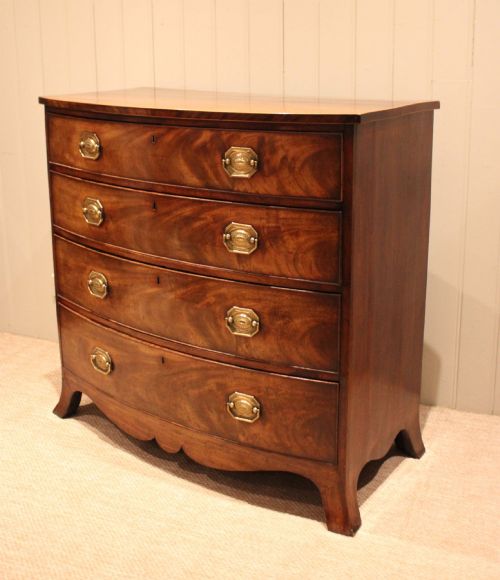
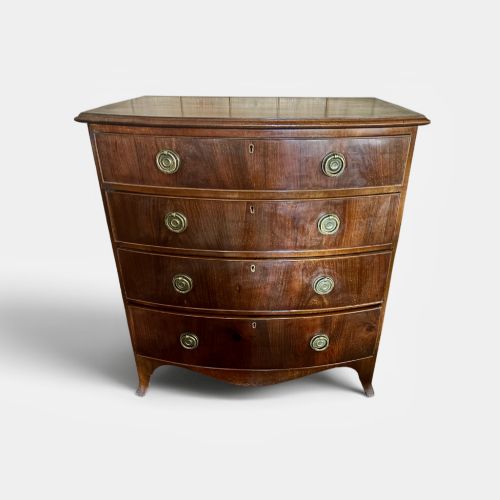
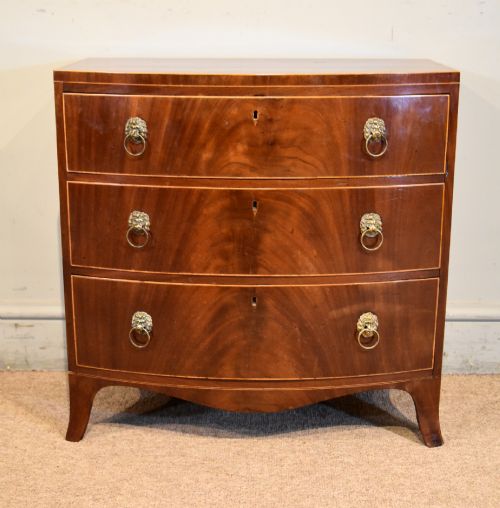
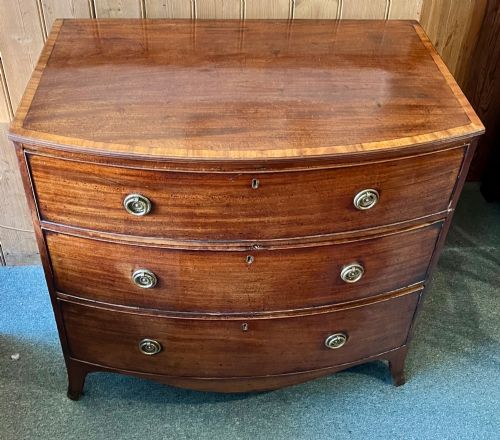
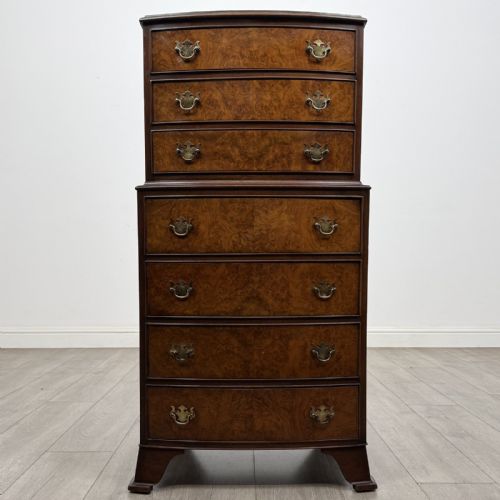
An antique bow front chest provides stacked drawer storage behind a distinctive convex curved facade that softens the corners of a room. These pieces appear primarily as chests of drawers, alongside occasional tallboys, sideboards and dressing pieces from the Georgian, Regency and Victorian eras.
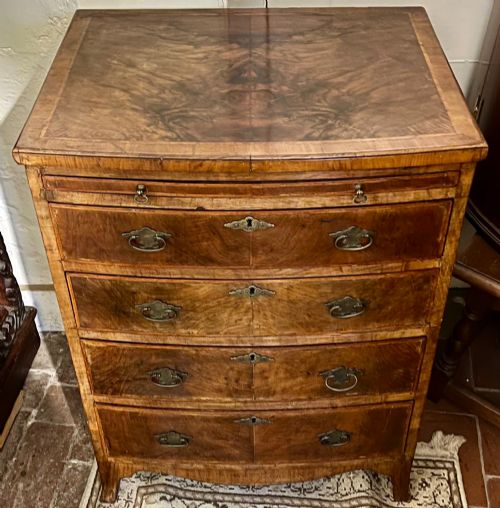
The selection on this page centres heavily on mahogany timbers, frequently enhanced by satinwood banding, flame veneers or walnut. Buyers encounter both standard multi-drawer configurations and smaller compact proportions suited to tighter spaces.
How they were made
Cabinet makers constructed these carcases using solid foundational timbers like pine and oak, applying finely figured mahogany, walnut or satinwood veneers to the exterior surfaces. The curved front required specialist bending and shaping techniques to ensure the grain followed the sweeping contours of the drawers.
Detailing often included contrasting crossbanding, decorative brass drawer pulls and occasionally specialised compartments such as secret drawers or fitted dressing interiors. Construction relied on traditional joinery methods designed to maintain structural stability across the curved facade over centuries.
Antique Bow Front Chest Retail Price Guide 2026
Typical asking prices for bow front chest among the pieces listed under this phrase on Sellingantiques today, from the lower quarter to the upper quarter. They describe what is for sale here now, not the wider market.
Listings feature mahogany, walnut, satinwood, and oak timbers across Georgian, Regency, and Victorian periods.
What varies in quality
Quality rests in the choice of timber and the precision of the veneer work, where highly figured flame mahogany or burr walnut elevates a piece significantly above plain surfaces. The crispness of the curved drawer fronts and the alignment of the grain across the tiers indicate superior craftsmanship.
Proportion and scale also define the better examples, particularly smaller or neat variations that retain balanced dimensions. Original brass hardware, clean drawer linings and intact secondary woods further distinguish finer items from standard production.
The Antique Bow Front Chest Glossary
- Bow front
- A convex curved front projecting outward from the centre, characteristic of these chests. This shape was popular during the Georgian and Regency periods.
- Flame mahogany
- A veneer showing a distinctive flame-like pattern derived from specific cuts of mahogany timber. It provides a highly decorative surface figure.
- Crossbanding
- A narrow strip of veneer laid perpendicular to the surrounding grain along the edges of a drawer or top. This technique frames the primary wood.
- Tallboy
- A tall chest of drawers made in two sections, often combining a chest on chest or a chest on a stand. These offer substantial vertical storage capacity.
- Caddy top
- A raised or moulded table top profile resembling the lid of a tea caddy. It adds architectural definition to the upper edge of the cabinet.
Antique Bow Front Chest: Frequently Asked Questions
How do I date an antique bow front chest?
Dating relies on observing timber choices, construction methods, hardware styles and overall proportions typical of periods like the Georgian or Regency eras. Secondary woods inside the drawers and the type of dovetailing offer further clues to age.
Changes in aesthetic preferences across the nineteenth and early twentieth centuries also help distinguish eighteenth-century origins from later revivals.
Where should I place a bow front chest?
These pieces suit bedrooms, hallways or living rooms where the curved front softens linear room layouts and provides accessible surface space. Their varied dimensions allow them to fit both expansive walls and narrower alcoves.
Placing them away from direct heat sources helps protect the delicate veneers and solid timber carcases from drying out.
How do I care for mahogany and walnut veneers?
Maintenance involves dusting with a soft, dry cloth and occasionally applying a suitable quality wax to nourish the timber. Avoiding direct sunlight prevents the rich tones of the mahogany and walnut from fading.
Keeping indoor humidity stable protects the underlying wood and prevents the decorative veneers from lifting or cracking.