
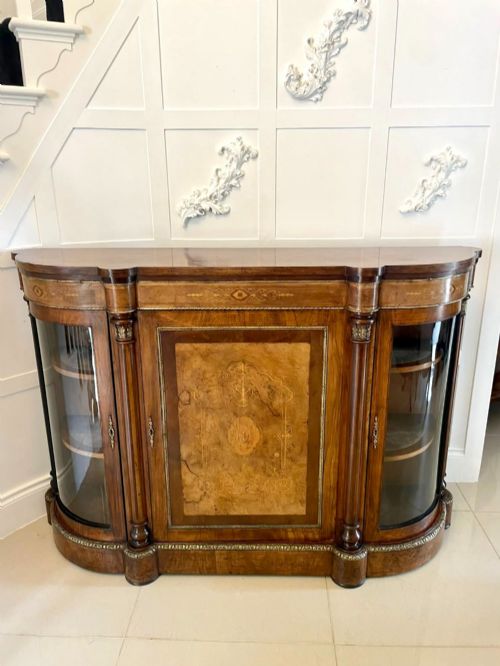
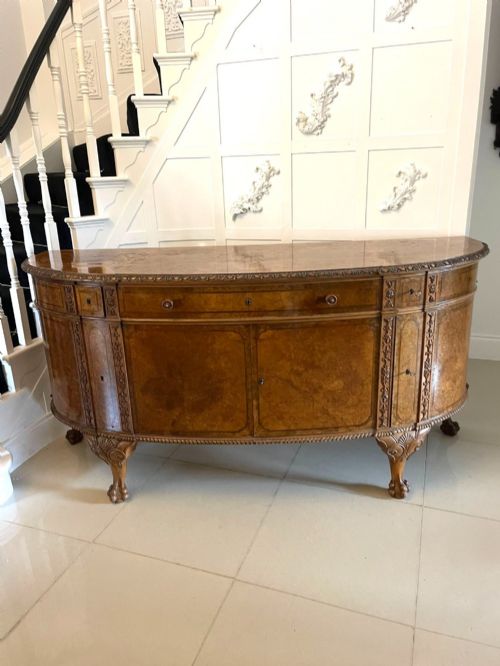
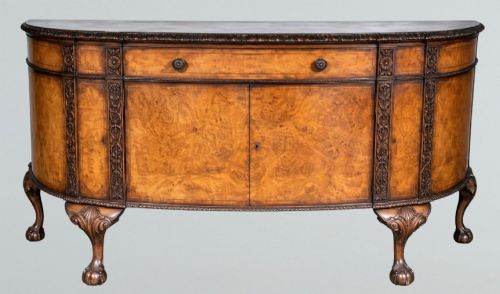
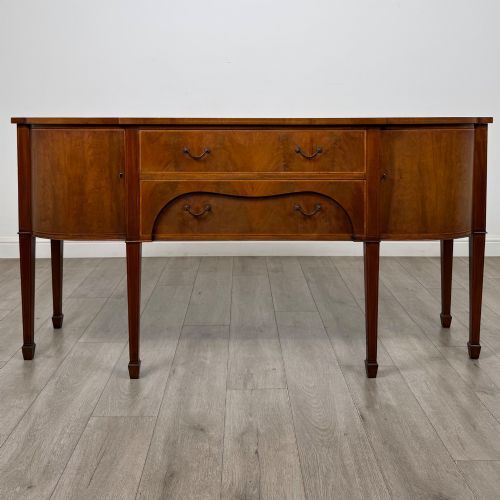
Antique Bow Front Buffet
An antique bow front buffet offers generous storage and sweeping curved lines, making it a striking dining room focal point.
Antique Bow Front Buffet
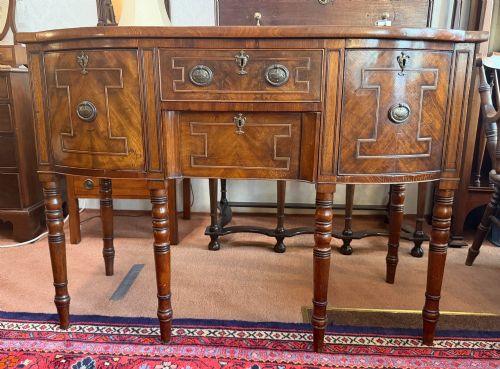
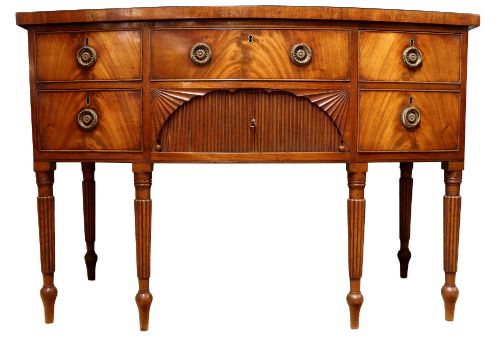
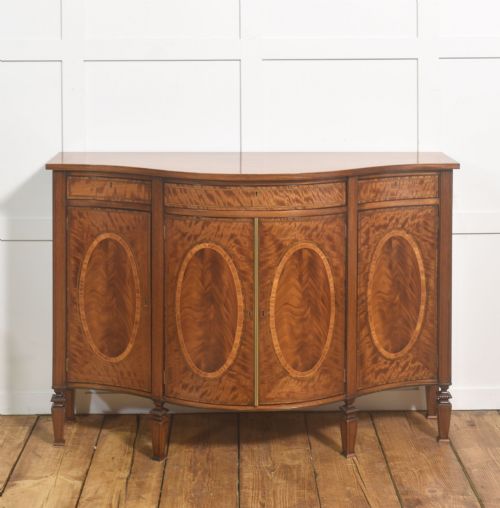
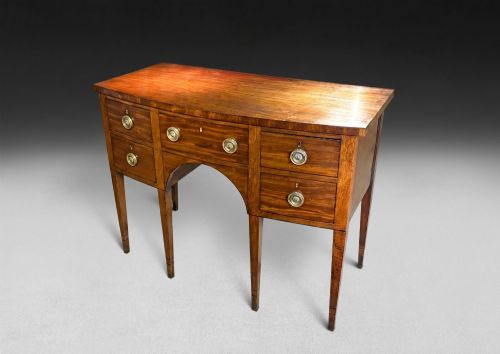
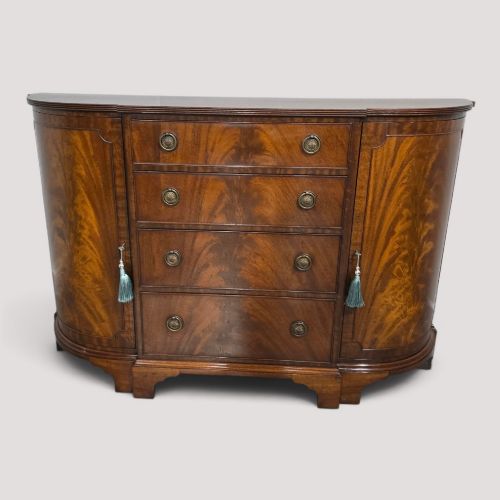
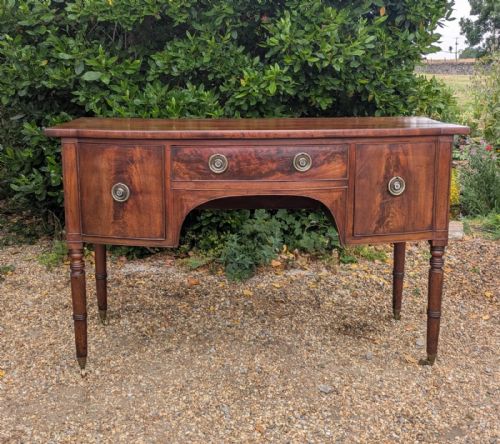
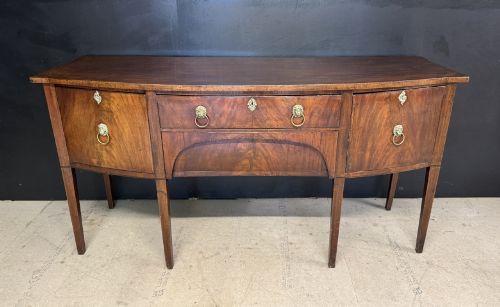
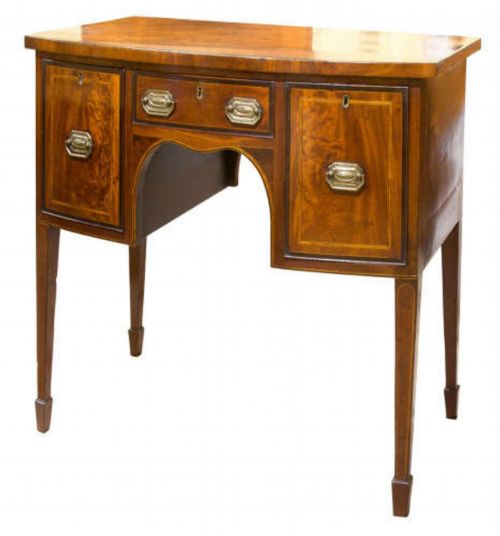
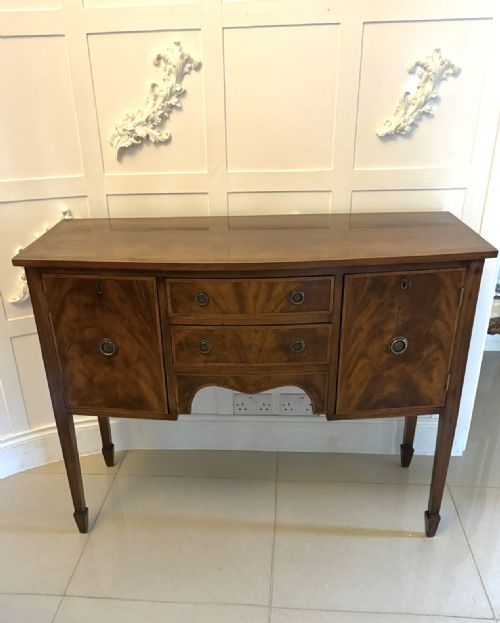
When you search for an antique bow front buffet, you are looking at substantial dining room storage pieces characterised by their convex curved fronts. The pieces on this page span several centuries, with George III, Regency, and Victorian examples appearing most frequently alongside Edwardian revivals.
Makers utilised these forms primarily as serving surfaces and storage cabinets in dining rooms and grand hallways. Alongside traditional sideboards, the evidence includes related forms such as side cabinets, servers, cupboards, and credenzas.
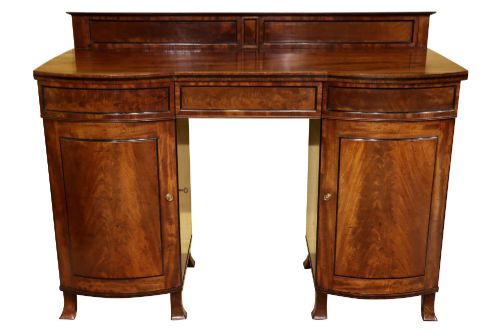
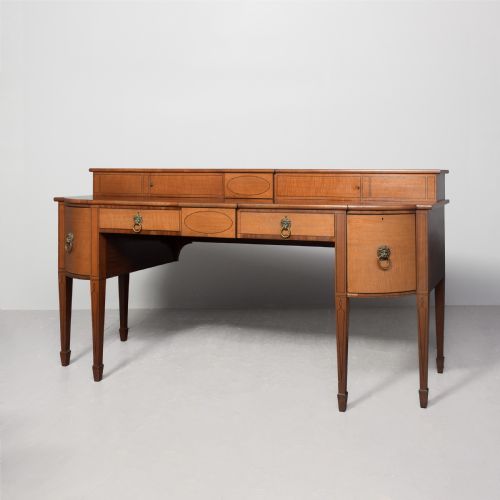
The proportions range from neat, compact proportions suitable for smaller rooms to large, imposing stage-back and pedestal designs. Mahogany dominates the selection, frequently enhanced with contrasting veneers and stringing.
How they were made
Cabinet makers built these pieces using solid timbers and supportive secondary woods, applying figured mahogany, burr walnut, or satinwood veneers to the curved exterior surfaces. Craftspeople shaped the characteristic bow fronts by steaming wood or constructing layered laminated frames before applying fine face veneers.
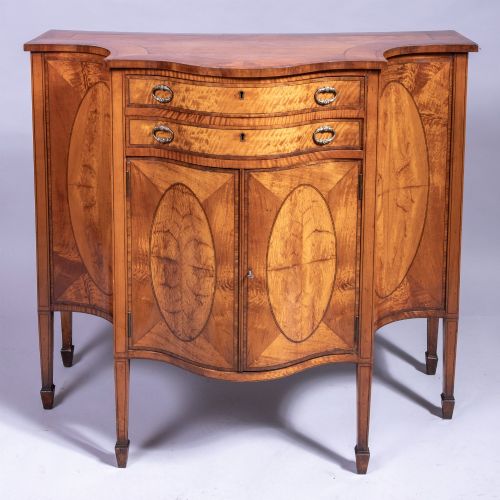
Decoration relied heavily on precision woodworking techniques such as boxwood stringing, marquetry inlays, and parcel gilt highlights. Brass hardware, including ring pulls and escutcheons, completed the construction, while occasional pieces incorporated marble tops.
One unexpected sideboard arrives with its own twelve-piece cutlery set tucked inside, ready for a dinner party two centuries in the making.
What varies in quality
The quality of an antique bow front buffet rests largely on the selection of timber and the precision of the cabinet work. Finer examples display carefully matched flame mahogany or burr walnut veneer grains that flow seamlessly across the curved drawers and doors.
Construction details such as hand-cut dovetails in the drawer construction and tight, flush joints separate superior workshops from mass-produced or later revival pieces. Additionally, the subtlety of stringing inlays and the weight and original state of the brass mounts indicate the tier of craftsmanship.
Maple and Co
The Antique Bow Front Buffet Glossary
- Bow front
- A convex curved cabinet front that swells outward in the centre. This shape softens the room's geometry and requires advanced woodworking skill to construct.
- Stringing
- Thin inlay lines of a contrasting wood, such as boxwood, embedded into the primary timber. It creates a crisp border around drawers and panels.
- Pedestal sideboard
- A form featuring distinct side pedestals or cupboards flanking a central section. These often date to the Regency period and offer substantial internal space.
- Stage-back
- A raised section at the rear top of a sideboard used for displaying serving platters. This feature is particularly associated with larger Georgian dining furniture.
- Marquetry
- Decorative patterns formed by fitting together small pieces of tinted or textured veneer. It transforms plain wooden surfaces into elaborate pictorial designs.
Antique Bow Front Buffet: Frequently Asked Questions
Where should I place a bow front buffet?
These pieces suit dining rooms, large hallways, or spacious living areas where their curved profiles can be appreciated without obstructing walkways. Their shallow ends and deeper centres allow them to sit flush against walls while offering deep central storage.
Ensure you measure the clearance space for drawers and cabinet doors to open fully, particularly in narrower rooms.
How do I distinguish George III from Victorian pieces?
George III pieces typically exhibit lighter, more restrained proportions with subtle stringing and high-grade mahogany timbers. Victorian examples often feature heavier construction, bolder carvings, and darker finishes or burr walnut veneers.
Examining the internal drawer construction and secondary woods will further help confirm the period of manufacture.
What maintenance do these wooden surfaces require?
Keep antique timber surfaces away from direct sunlight and strong heat sources to prevent the wood and delicate veneers from drying out. Dust regularly with a soft, dry cloth and apply a quality beeswax sparingly when the finish appears dry.
Avoid silicone-based polishes, as they can penetrate porous historic finishes and damage the wood over time.
Can I use a buffet as a media console?
Many buyers repurpose these cabinets as media consoles or hallway storage units because of their generous interior capacity. You should check the internal shelf depths and drawer dimensions to ensure your equipment fits comfortably.
Consider running discreet cable management behind the piece without altering original backboards.