
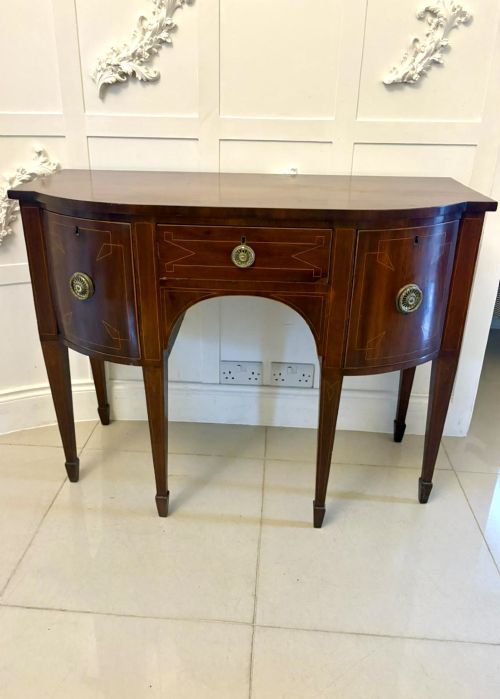
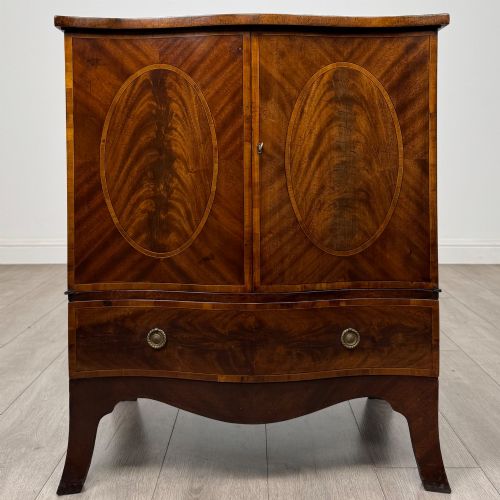
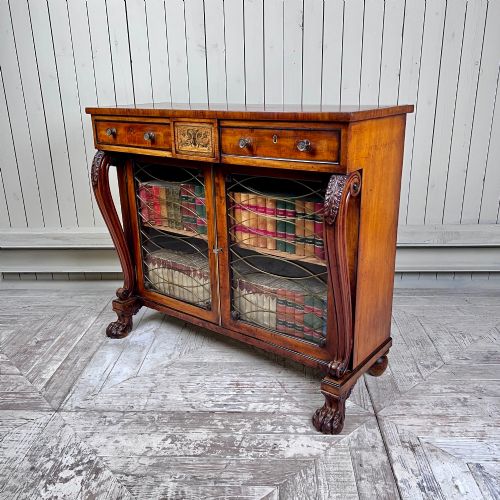
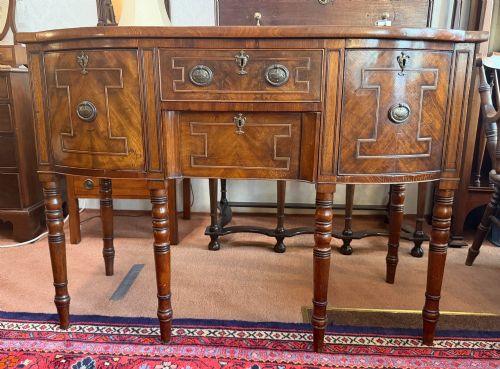
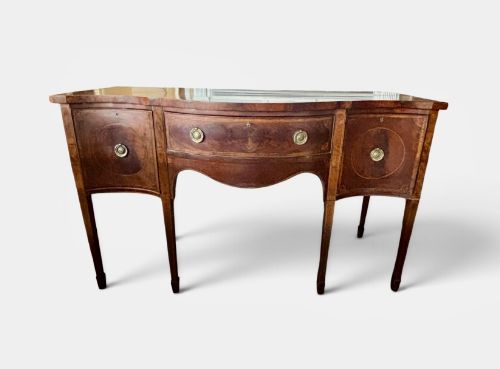
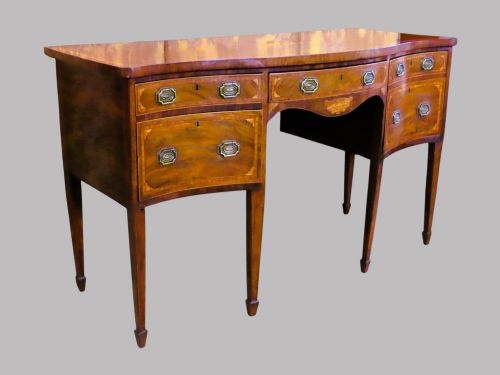
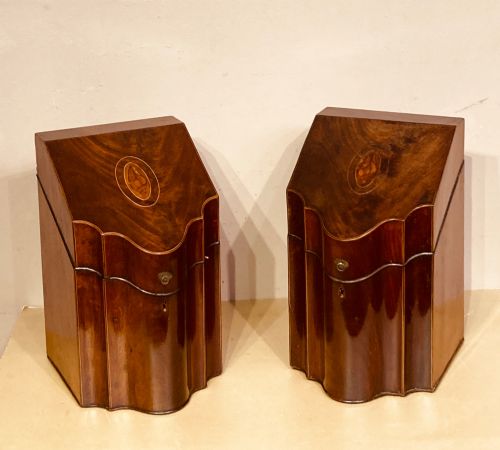
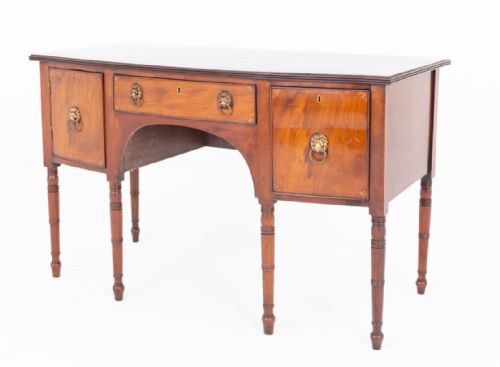
Georgian Inlaid Mahogany Sideboard
A georgian inlaid mahogany sideboard offers disciplined proportion and rich timber figure, uniting functional dining room storage with cabinet-making craft.
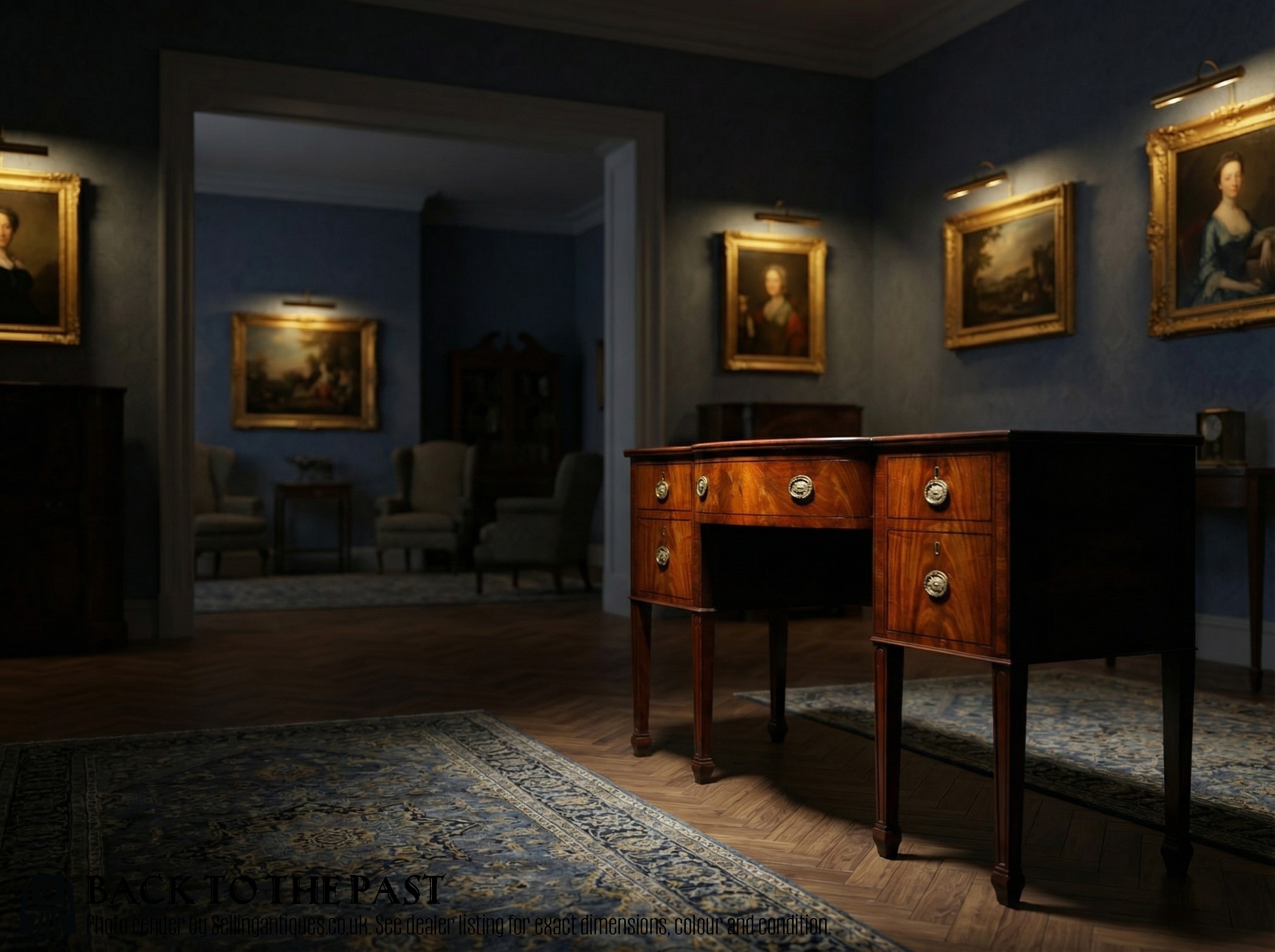
Georgian Inlaid Mahogany Sideboard
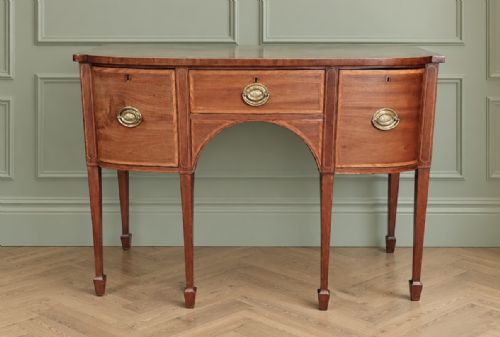
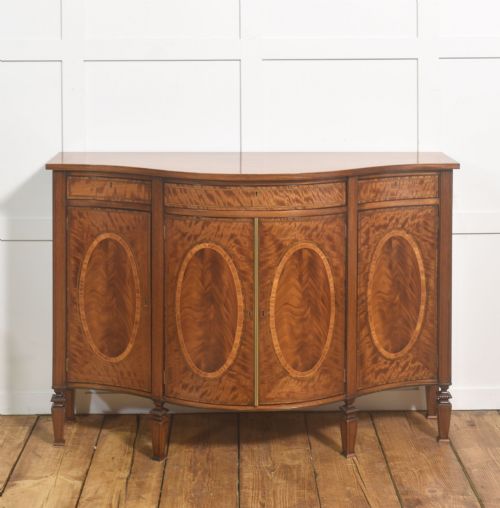
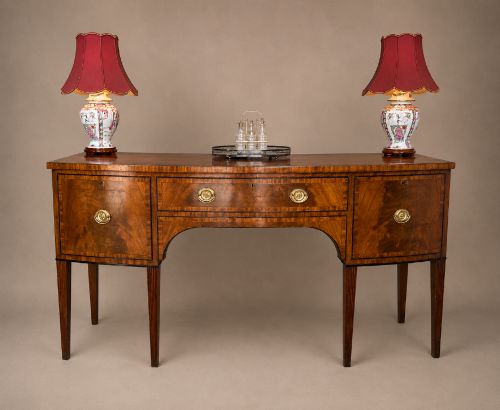
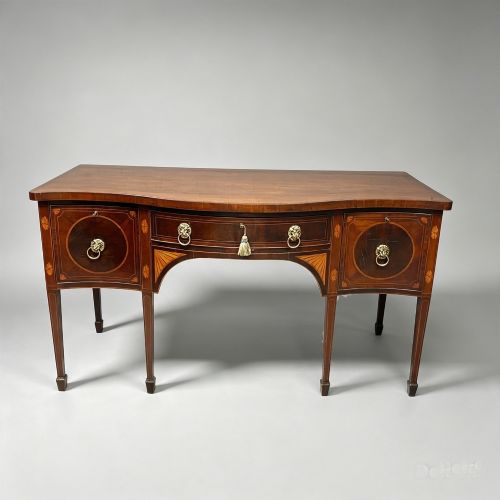
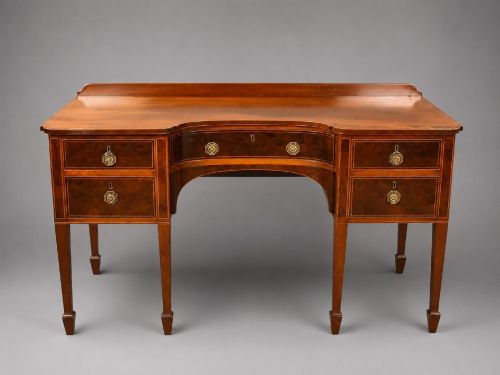
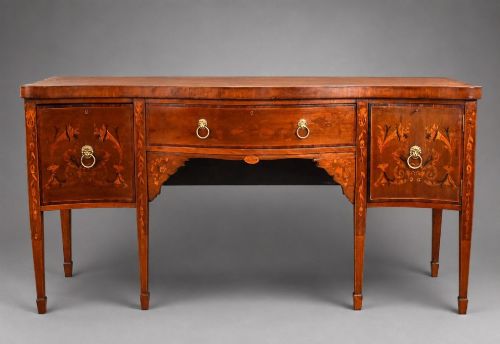
A georgian inlaid mahogany sideboard combines linear grace with practical serving surfaces, taking the form of straight-fronted, bow-fronted or serpentine carcasses designed for the formal dining room. These pieces emerge predominantly from the late eighteenth and early nineteenth centuries, encompassing George III and Regency eras alongside later Edwardian revivals.
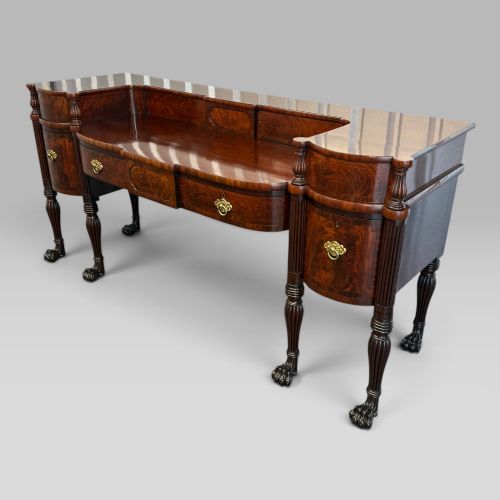
The most common examples on this page feature bow-fronted or straight carcasses supported by tapered legs, often accented with contrasting boxwood and satinwood stringing. Larger formats include breakfront designs, stage-backs, and pedestal arrangements that reflect the grand scale of period entertaining.
Timber and Technique
Cabinet-makers relied on solid and veneered mahogany, frequently selecting flame mahogany for drawer fronts to create mirrored grain patterns. Carcasses incorporated secondary softwoods or oak for internal framing and drawer linings.
Decoration relied on precise inlay and marquetry, utilising boxwood, satinwood, and ebony to form geometric stringing, fans, and shell motifs. Brass fittings such as lion paw feet, handles, and gallery rails completed the construction.
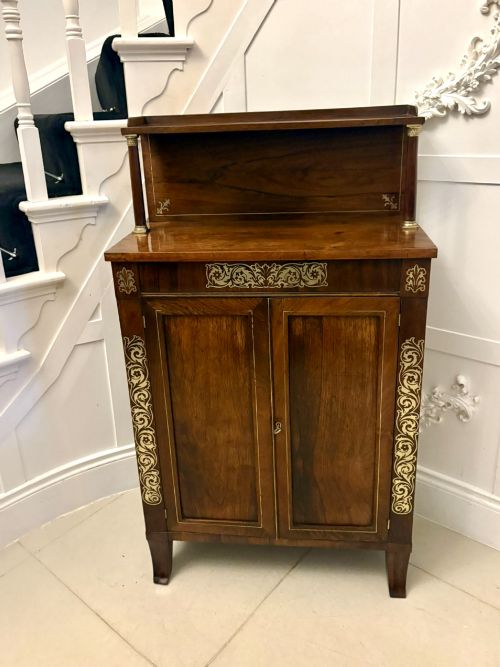
Among the cutlery containers and serving tables, at least one brass-inlaid campaign style collectors' cabinet stands ready for tiny specimens.
Design and Execution
The distinction between standard and superior pieces rests on the choice of timber and the precision of the cabinet work. Highly figured flame mahogany matched symmetrically across multiple drawers indicates greater expenditure of material and skill.
The intricacy and execution of the inlay separate finer examples from simpler workshops. Crisp, tightly fitted stringing and delicate contrasting bandings demonstrate superior hand-cutting, whereas routine production relies on simpler outlines and uniform veneers.
Maple and Co·George Oakley
The Georgian Inlaid Mahogany Sideboard Glossary
- Bow-front
- A cabinet front that curves outward in a convex sweep, softening the rectangular rigidity of the dining room. This profile gained popularity during the late eighteenth century.
- Serpentine
- A front configuration curving inward centrally and outward at the ends, creating an undulating silhouette. It requires advanced carpentry to execute smoothly.
- Stringing
- Narrow lines of contrasting timber inlaid into shallow channels on drawer fronts or legs. Boxwood and ebony were common choices for this linear detail.
- Flame mahogany
- A veneer cut from timber where the grain diverges, producing a rippling flame-like pattern. Furniture makers reserved this for principal display surfaces.
- Pedestal sideboard
- A form comprising two distinct pedestals flanking a central serving table, sometimes incorporating cupboards or warming compartments. These represent grander proportions.
Georgian Inlaid Mahogany Sideboard: Frequently Asked Questions
How do I spot a reproduction?
Examine the construction methods visible inside the drawers and at the back of the carcass. Hand-cut dovetails and irregular timber thicknesses point to period production.
Machine-cut joints and modern adhesives indicate later revival work or twentieth-century reproduction.
Where were these placed?
These pieces stood against dining room walls to hold serving dishes, cutlery, and wine during meals. They functioned as both preparation surfaces and display furniture.
In larger houses, companion pieces such as knife boxes or cutlery urns sat directly on top.
How do I care for the timber?
Keep the wood away from direct sunlight and strong heat sources to prevent the mahogany veneer from drying and splitting. Natural wax polish applied sparingly maintains the sheen.
Avoid silicone-based sprays, which sink into the pores of old wood and attract dust.
What is a stage-back?
A stage-back incorporates a raised tiered structure at the rear of the sideboard top. This feature provided extra display space for silver and plates.
Such elements are typical of larger Scottish or grand English dining furniture.