

Antique Bookcase on Chest
An antique bookcase on chest combines a towering display space for books with a solid set of storage drawers below.
Antique Bookcase on Chest
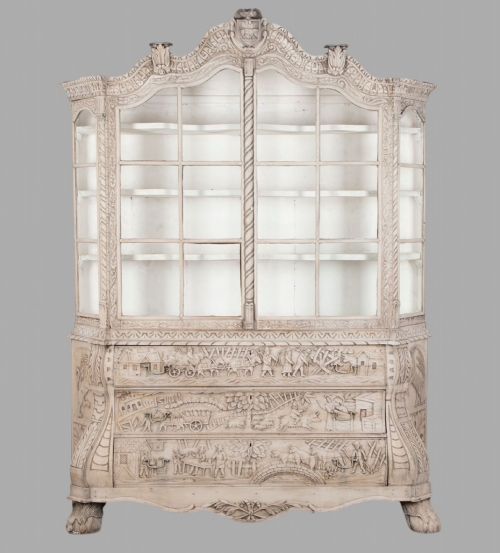
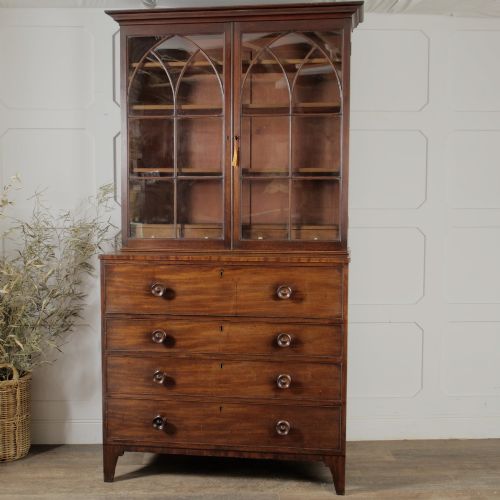
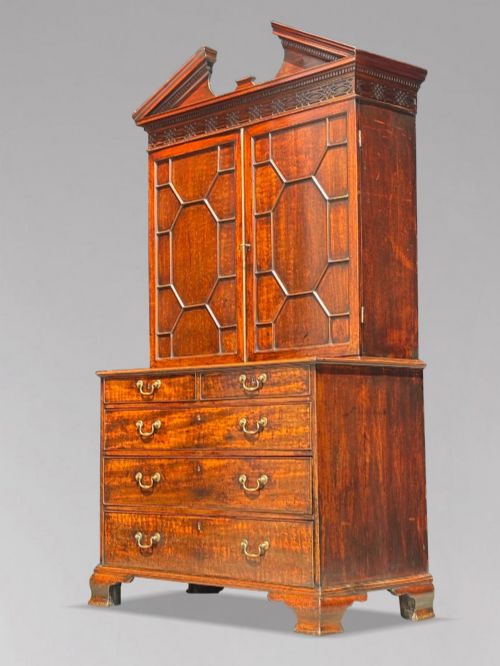
An antique bookcase on chest unites an upper glazed or open cabinet with a lower chest of drawers, creating a formidable two-part storage unit. These hybrid pieces span the eighteenth, nineteenth and early twentieth centuries, reflecting changing domestic library needs across the Georgian, Regency and Victorian eras.
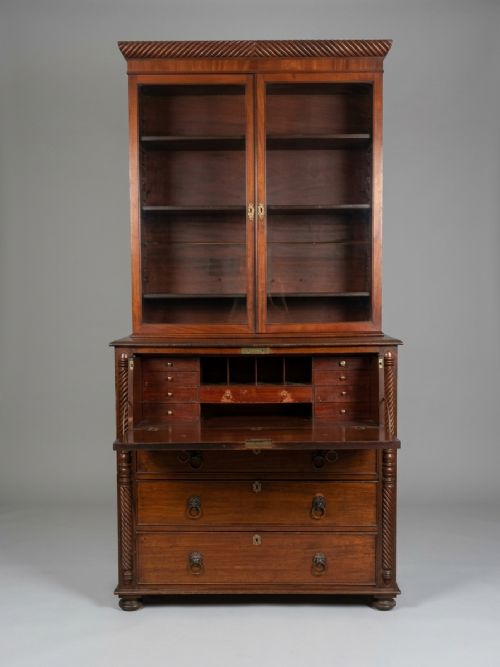
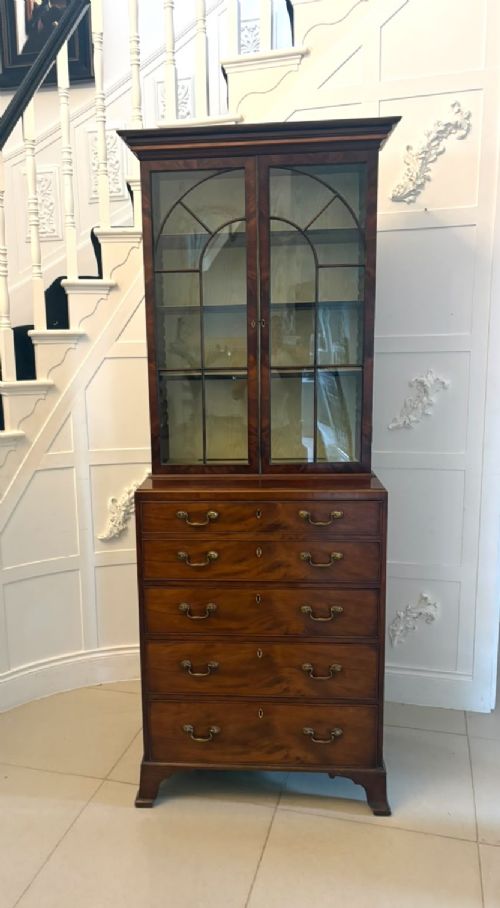
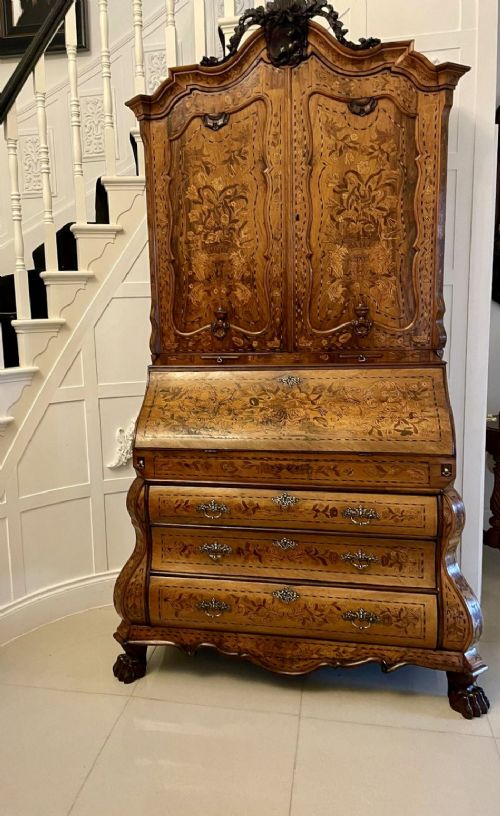
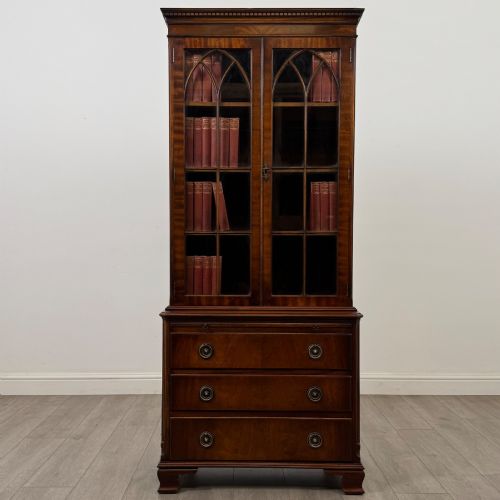
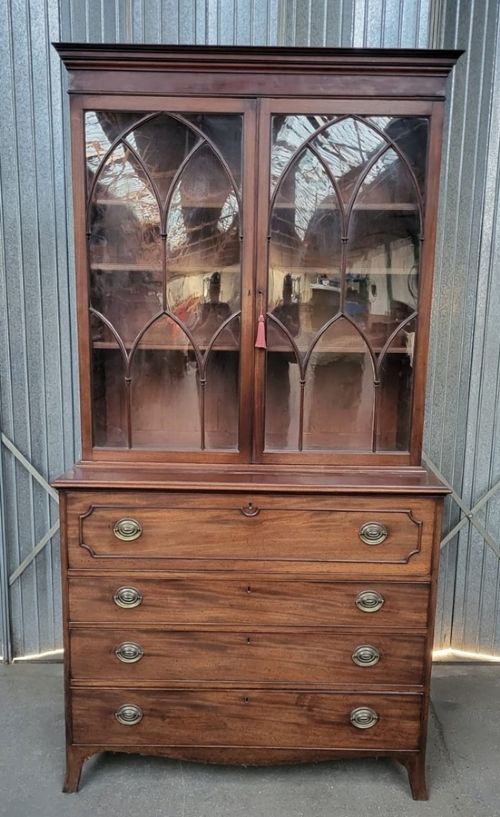
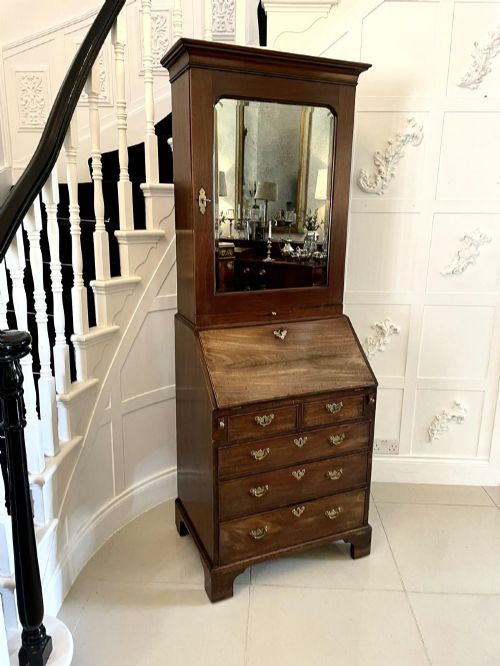
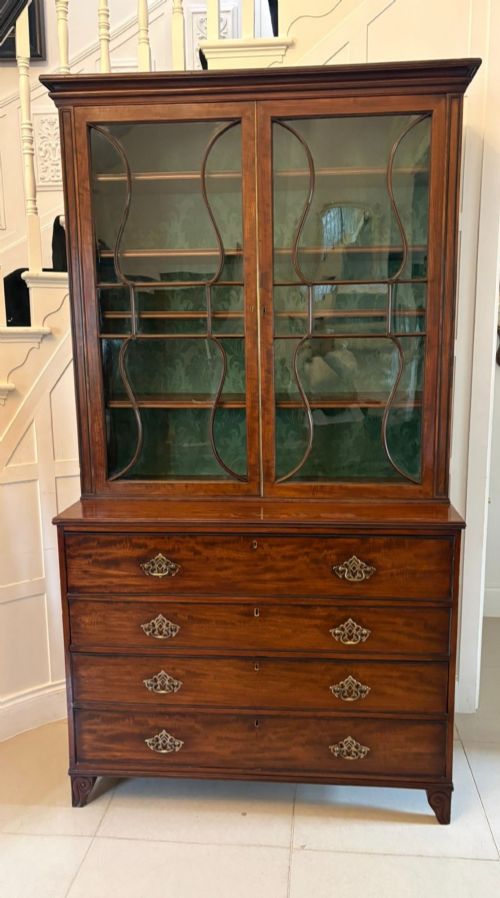
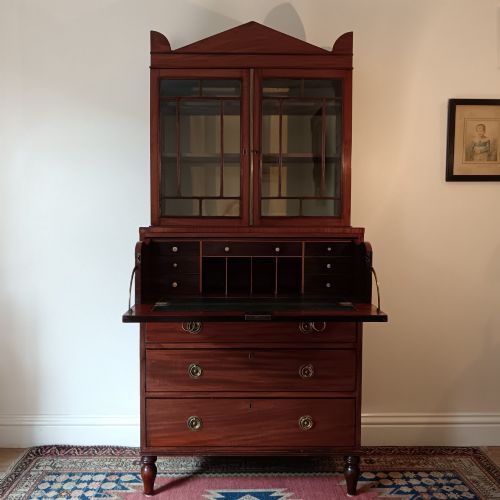
Mahogany and oak dominate the available forms, often fitted with astragal glazed doors above a pull-out secretaire drawer or standard chest base. Examples range from formal George III library pieces to Dutch marquetry cabinets and provincial oak variations.
How they were made
Cabinetmakers constructed these large items in two distinct sections to ease transport, joining the upper bookcase to the lower chest via matching mouldings. Dense timbers like mahogany, walnut and oak provided the structural stability required to support heavy glass doors and stacked book collections.
Marquetry inlay, figured veneers and brass hardware added decorative refinement to the exterior surfaces, while secondary woods such as pine or oak formed the drawer linings and internal divisions.
Materials span solid mahogany, figured walnut, oak, satinwood and decorative fruitwood marquetry.
What varies in quality
The choice of timber grain sets the visual hierarchy, with highly figured mahogany, burr walnut and delicate satinwood veneers marking out the finer workshops. Proportion and the precision of the glazing bars, particularly astragal designs, distinguish master cabinetwork from simpler regional production.
Internal execution reveals structural ambition, demonstrated by fitted secretaire drawers containing pigeonholes and small compartments versus plain shelving and unadorned carcases.
Thomas Chippendale·George Oakley·Edwards and Roberts·Gillows·Arthur Simpson
The Antique Bookcase on Chest Glossary
- Secretaire
- A desk drawer that pulls out and drops down to reveal a fitted interior of small drawers and pigeonholes. It allows a tall cabinet to double as a writing surface without adding a separate desk.
- Astragal
- A moulded strip of wood or metal used to hold panes of glass within a door. Fine astragal glazing creates delicate geometric patterns across the upper bookcase.
- Marquetry
- Decorative patterns formed by fitting contrasting veneers into a prepared wooden ground. Dutch pieces frequently employ floral marquetry in various fruitwoods.
- Burr walnut
- Timber taken from a tree growth that produces swirling, highly decorative grain patterns. It provides a luxurious surface texture on elite cabinet doors and drawer fronts.
- Glazed door
- A frame fitted with glass panes to display books while protecting them from dust. These doors often feature individual hand-blown panes in earlier periods.
Antique Bookcase on Chest: Frequently Asked Questions
What is a bookcase on chest?
A bookcase on chest is a tall, two-part furniture form featuring an upper display cabinet sitting directly on top of a lower chest of drawers. This combined structure maximises vertical storage in rooms with limited floor space.
Craftsmen designed these pieces to house valuable libraries while keeping personal papers and household linens secured in the drawers below. The upper section typically uses glass doors to showcase book bindings.
How do I date an antique bookcase on chest?
Dating relies on examining timber choices, construction techniques, hardware styles and overall architectural proportions. Eighteenth-century examples often display fine mahogany with astragal glazing, whilst Victorian and Edwardian versions introduce heavier mouldings and alternative woods like oak.
Drawer construction also offers clues, as hand-cut dovetails and solid timber linings point towards earlier periods. Secondary woods inside the carcase help confirm the regional origin and approximate age of the piece.
Where should I place a bookcase on chest?
These tall cabinets require substantial wall space and stable flooring to support their considerable weight and height. Placing them away from direct sunlight protects vulnerable mahogany or walnut veneers from fading.
Rooms with high ceilings suit these imposing proportions best, allowing the architectural cornices to display properly. Because they split into two sections, moving them between rooms or floors proves manageable.
How do I maintain wood and glass?
Routine maintenance involves dusting with a dry, soft cloth and occasionally applying a suitable beeswax to nourish the timber surface. Avoid silicone-based polishes that build up and damage antique finishes over time.
Glass panes require gentle cleaning with standard glass cleaner applied to a cloth rather than sprayed directly onto the wood. Maintaining stable room humidity prevents the timber and veneers from shrinking or cracking.