
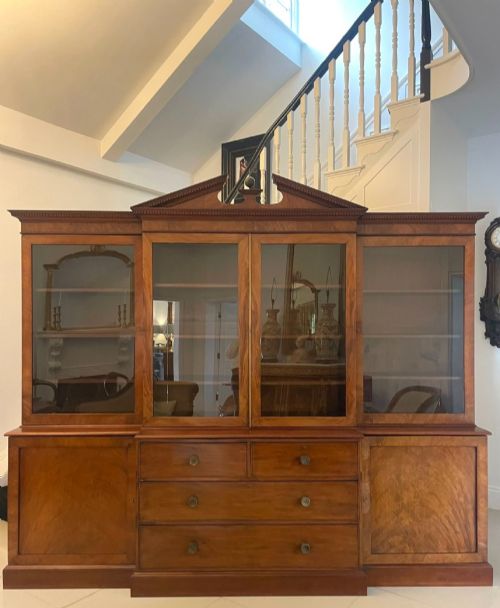

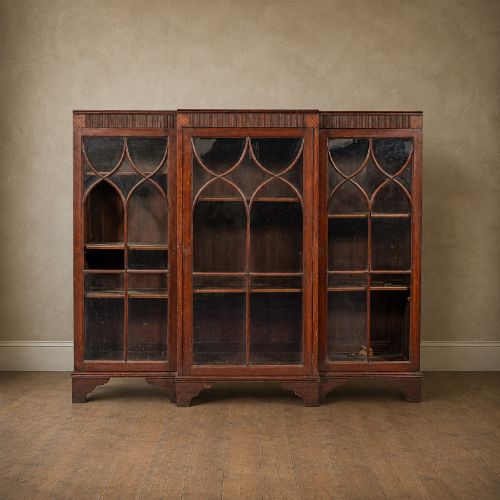


George III Library Cabinet
A George III library cabinet is a sturdy timber storage piece built to hold leather-bound volumes, and collectors prize them for their proportion and timber figure.
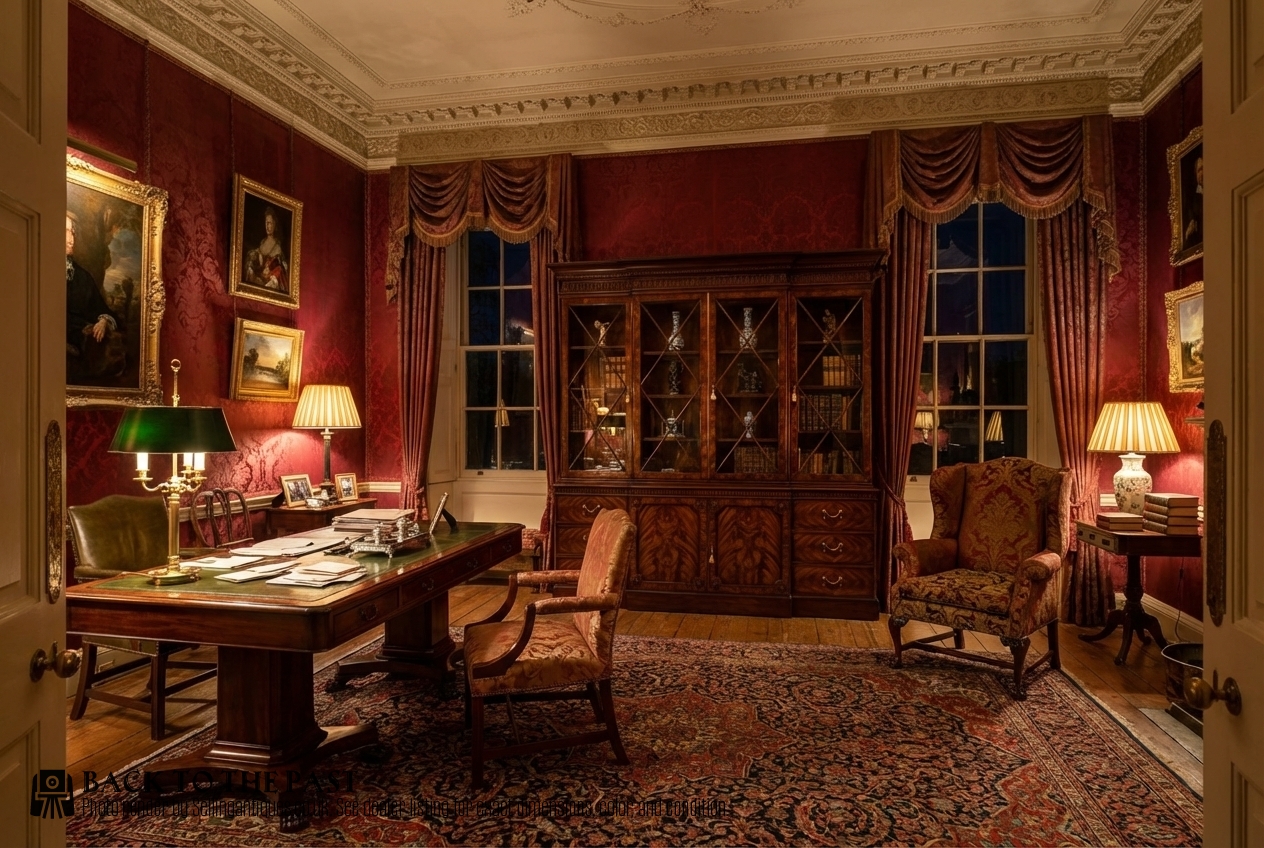
George III Library Cabinet
When you search for a George III library cabinet, you encounter tall breakfront bookcases, secretaire bookcases with fitted writing drawers, and glazed display pieces designed for domestic studies and libraries. The examples met on this page span the Georgian period, the nineteenth century, and later revivals, displaying timber construction intended for heavy storage.
Most entries follow traditional forms like the breakfront bookcase, often fitted with glazed upper doors and panelled lower cupboards. Forms range from large country house double bookcases to more compact library desks and kneehole variations.
The materials recorded across these pieces are predominantly mahogany and flame mahogany veneer, supplemented by glass, brass, leather, oak, satinwood, and pine. Styles stretch from eighteenth-century Chippendale through to Victorian Gothic Revival and later George III interpretations.
How they were made
Cabinet makers constructed these large pieces using solid mahogany and flame mahogany veneers applied to secondary structural timbers such as oak and pine. Glazed upper doors required precise joinery to hold individual glass panes within wooden bars, whilst lower sections relied on sturdy carcase construction.
Internal fittings often included adjustable wooden shelving, brass hardware for doors and secretaire drawers, and inset leather writing surfaces for drop-front writing compartments. Fine detailing involved contrasting timber stringing, satinwood inlays, and carved mouldings typical of the period.
Listings feature mahogany, flame mahogany veneer, oak, satinwood, pine, brass, leather, and glass across Georgian, Victorian, and later periods.
What varies in quality
The distinction between standard execution and finer workshop output lies in the selection of timber veneers and the crispness of carved details. Flame mahogany with strong natural figure indicates superior material choice compared to plain stock.
Proportion and architectural balance dictate the overall success of the piece, particularly in large breakfront forms where cornice mouldings and plinth bases must align correctly. The sophistication of interior desk fittings and drawer construction further separates routine utility items from superior cabinet work.
Robert Gillows II
The George III Library Cabinet Glossary
- Breakfront
- A cabinet design where the central section projects forward from the flanking wings. This configuration creates visual depth and allows for varied internal storage.
- Secretaire
- A cabinet or desk incorporating a pull-down drawer front that conceals a writing surface and small pigeonholes. It combines storage with a functional writing desk.
- Glazed
- Fitted with glass panels in the doors to display books while protecting them from dust. The wooden divisions holding the glass are known as glazing bars.
- Flame mahogany
- A timber veneer cut from the fork of the mahogany tree where the branch meets the trunk. This produces a distinctive flickering flame pattern highly valued by cabinet makers.
- Kneehole desk
- A freestanding desk or cabinet featuring a recessed central space for the user's knees, flanked by pedestals of small drawers.
George III Library Cabinet: Frequently Asked Questions
What is a George III library cabinet?
A George III library cabinet is a large timber storage piece designed for books and papers, typically featuring glazed upper doors and lower cupboards or drawers.
These pieces were constructed in British workshops during the Georgian era and subsequent revival periods, serving as functional furniture for formal home libraries.
Where were these cabinets placed?
They were designed for the principal rooms of large houses, specifically libraries, studies, and drawing rooms where books and documents were kept.
Their substantial proportions meant they stood against main walls as focal points of the interior.
How do I distinguish eighteenth-century pieces?
Eighteenth-century examples rely on period timber selection, traditional joinery methods, and proportions consistent with Georgian design books.
Later Victorian and twentieth-century interpretations often show different secondary woods, machine-cut elements, or revival styling cues.