


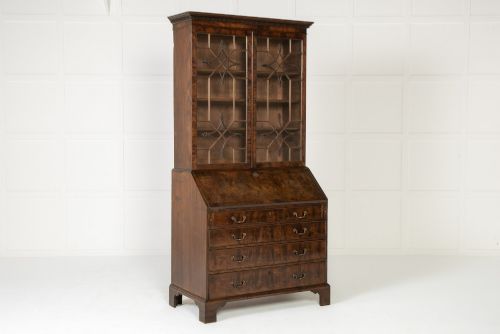
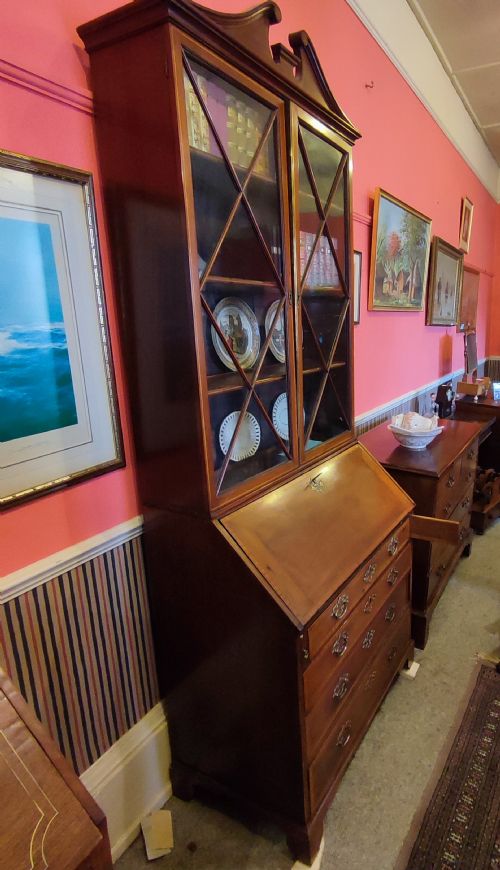


English Georgian Bookcase
When you search for an english georgian bookcase, you are looking at substantial timber storage built to hold libraries through centuries of domestic life.
English Georgian Bookcase
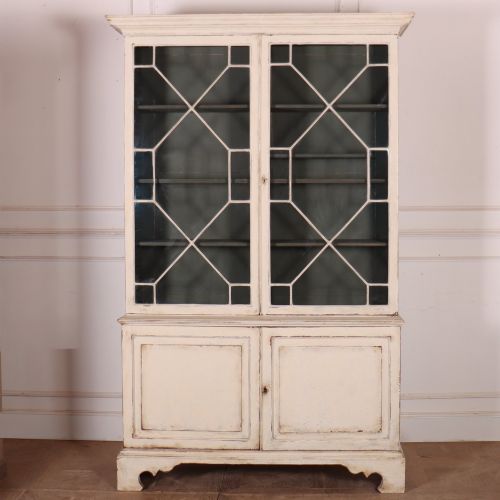
An english georgian bookcase typically combines a glazed upper display section with a lower storage base, frequently taking the form of a bureau bookcase with a fitted writing drawer.
The pieces appearing on this page span the eighteenth and nineteenth centuries, alongside later revival interpretations, originating from both grand country houses and regional workshops.
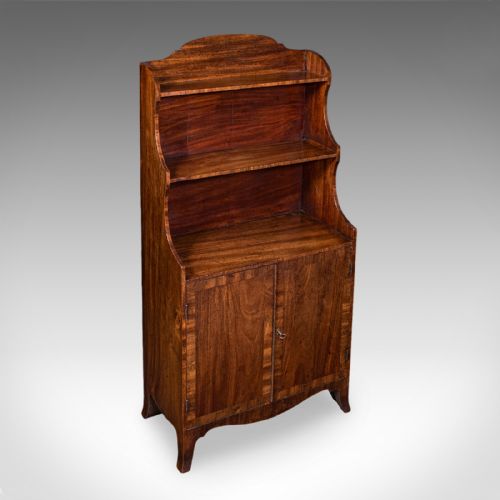
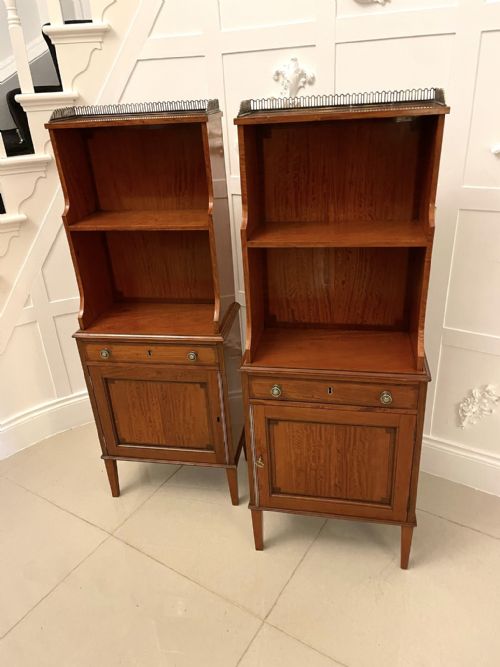
Forms range from tall breakfront library cabinets to smaller waterfall bookcases and corner cupboards, reflecting the diverse domestic needs of their original owners.
How they were made
Cabinet makers relied primarily on dense hardwoods like mahogany and walnut, often figured or burr veneered, supported by secondary timbers such as oak and pine.
Glazing involved delicate timber framing, including astragal bars holding individual panes of glass, while brass hardware secured doors and drawers.
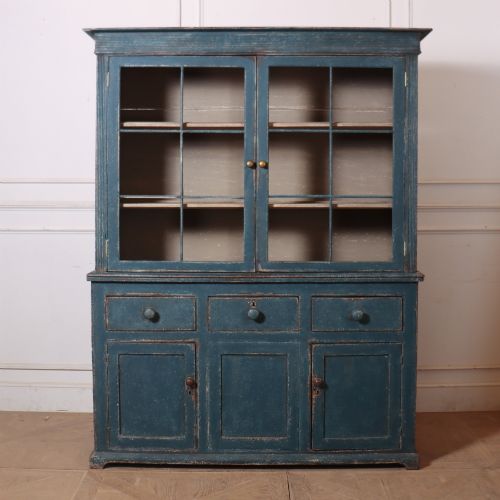
Listings span the eighteenth, nineteenth, and early twentieth centuries, featuring mahogany, walnut, oak, and painted wood.
What varies in quality
Quality rests in the selection of timber veneers, the crispness of moulded details, and the complexity of fitted internal compartments rather than sheer size.
Early pieces demonstrate superior joinery and original patination, whereas later revivals vary in the depth of carving and the fidelity of their historical styling.
Gillows·S and H Jewell·Chippendale
The English Georgian Bookcase Glossary
- Astragal glazing
- Timber bars dividing glass panes within a door. These slender mouldings define the period aesthetic.
- Secretaire
- A drawer containing a fitted writing desk with small pigeonholes and drawers. It drops down to provide a writing surface.
- Breakfront
- A cabinet design where the central section projects forward from the flanking wings. This creates architectural depth.
- Figured wood
- Timber showing natural decorative grain patterns such as flame or burr. Cabinet makers prized these boards for principal surfaces.
- Patina
- The surface sheen and colour developed through age and regular handling. It indicates genuine historical depth.
English Georgian Bookcase: Frequently Asked Questions
What is a bureau bookcase?
A bureau bookcase is a dual-purpose piece featuring a sloping writing flap or pull-out secretaire drawer beneath a glazed upper cabinet for books.
This configuration allowed owners to write letters and store their libraries within a single item of furniture.
How do I tell an original from a revival?
Original pieces display period construction methods, timber shrinkage, and natural wear consistent with eighteenth or early nineteenth-century use.
Revival items, built later in the nineteenth or twentieth century, often utilise machine-cut elements and mimic earlier styles without authentic ageing.
Where should I place a large bookcase?
Large bookcases require stable interior walls away from direct sunlight and sudden temperature fluctuations that affect timber veneers.
Library and breakfront models suit principal reception rooms with sufficient height and floor space to accommodate their scale.
What woods were commonly used?
Mahogany and walnut predominate in high-status pieces, often enhanced by figured veneers and brass fittings.
Oak and pine served for regional country pieces and internal carcases where appearance mattered less.