
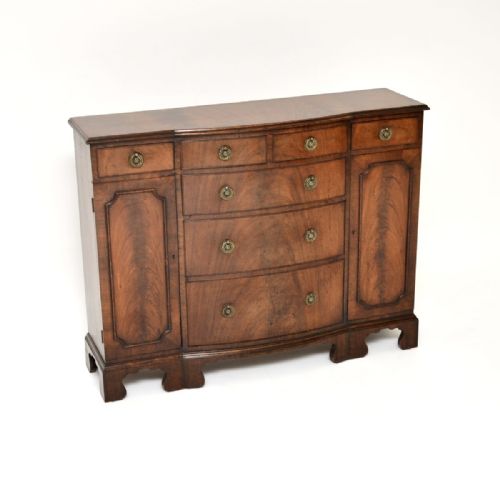
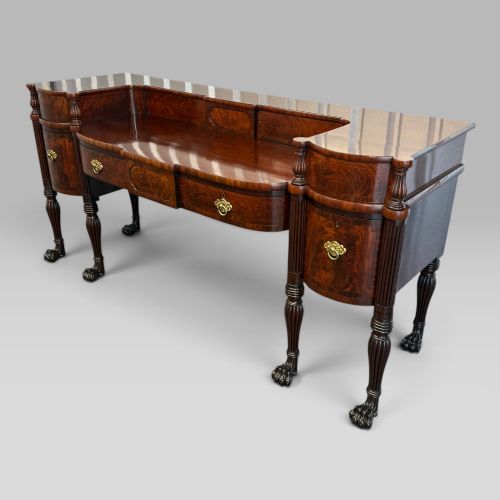
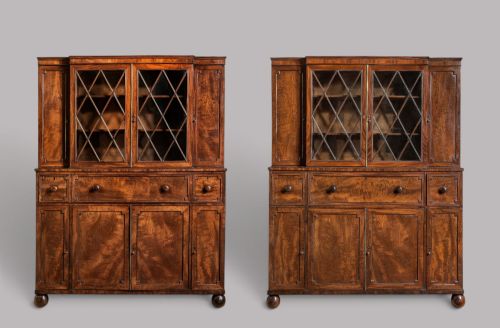
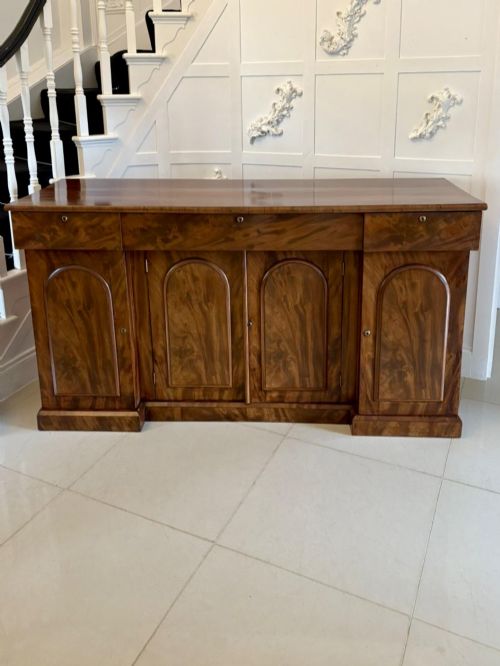
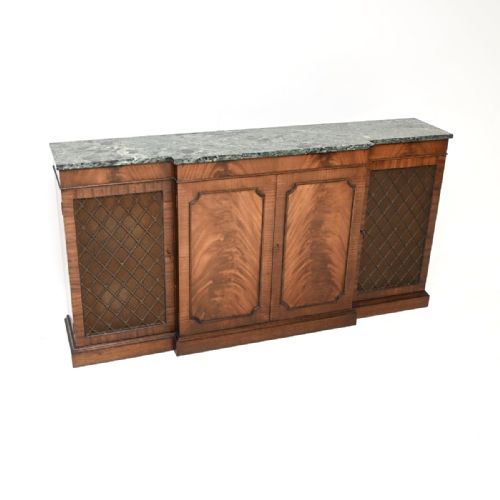
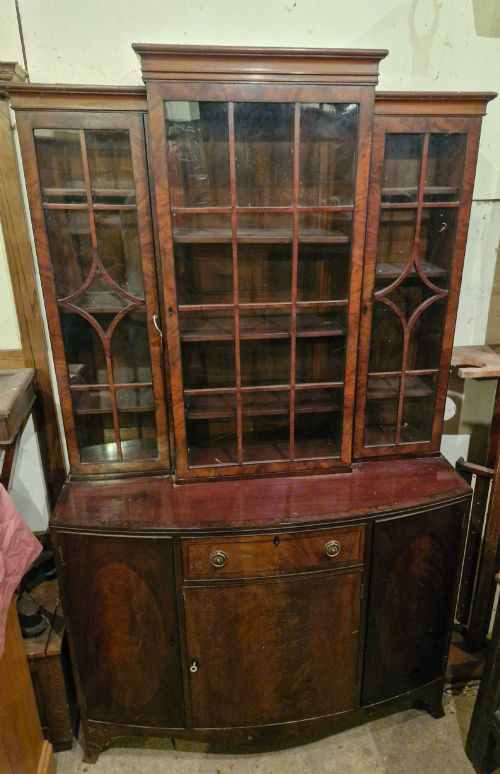
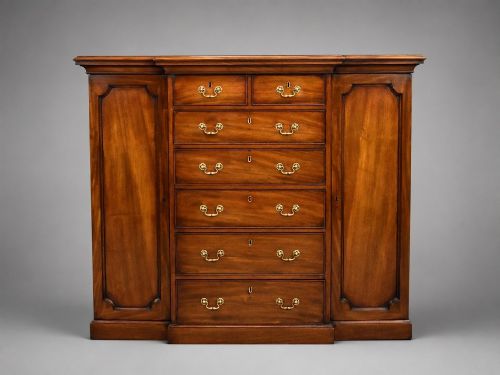
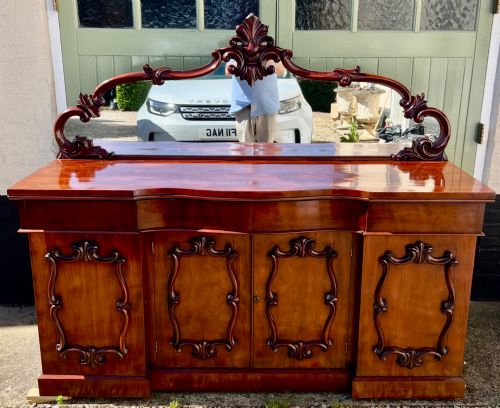
Flame Mahogany Breakfront Cabinet
A flame mahogany breakfront cabinet brings dramatic timber grain and architectural presence to a room, uniting display and storage.
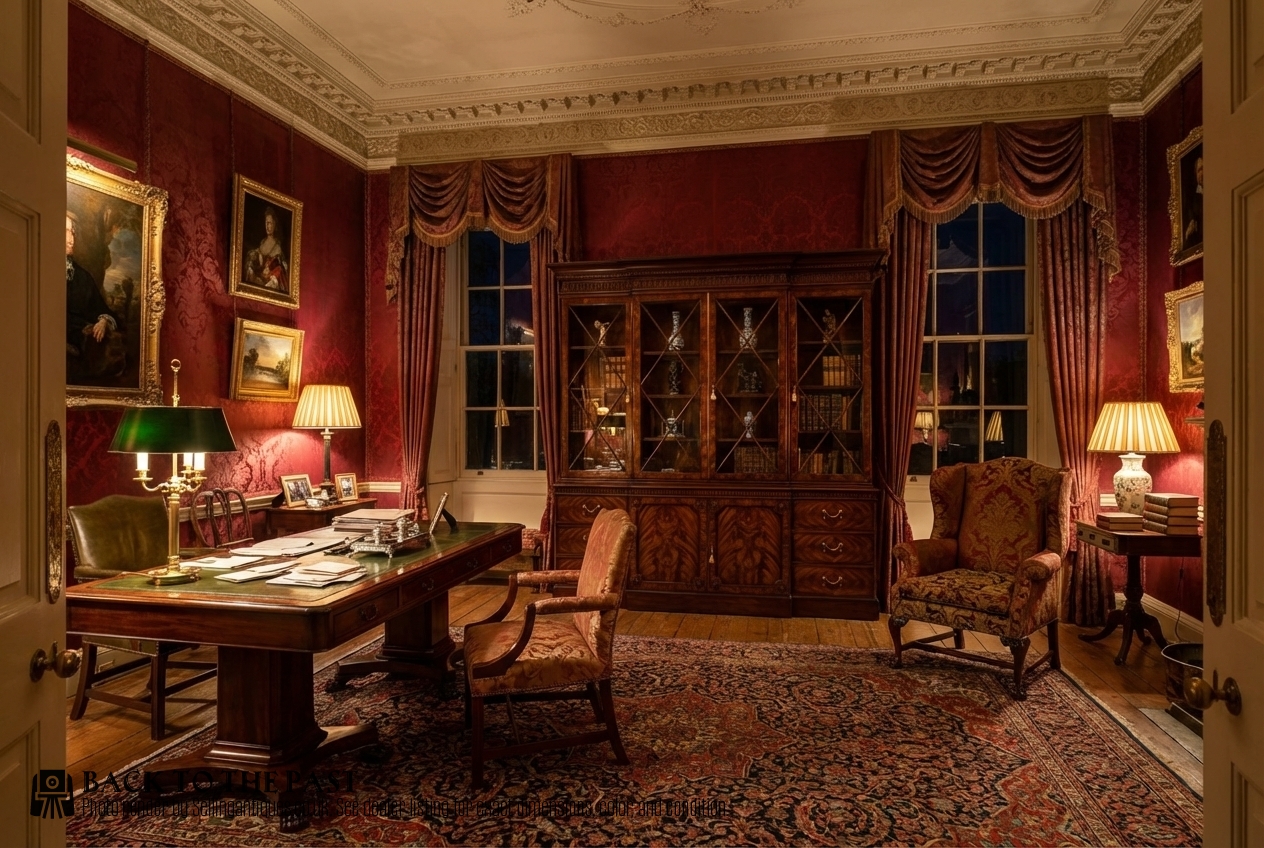
Flame Mahogany Breakfront Cabinet
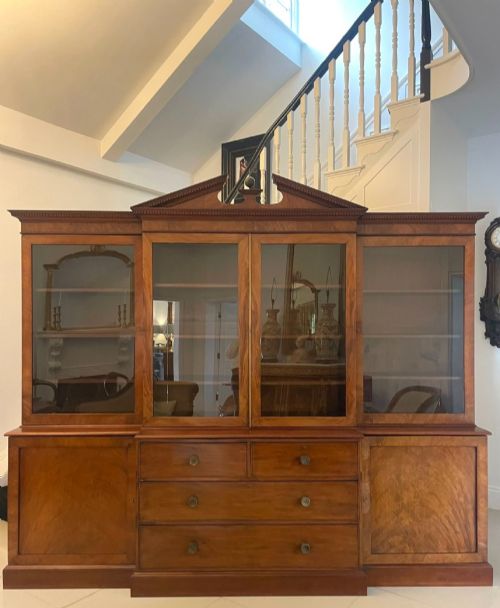
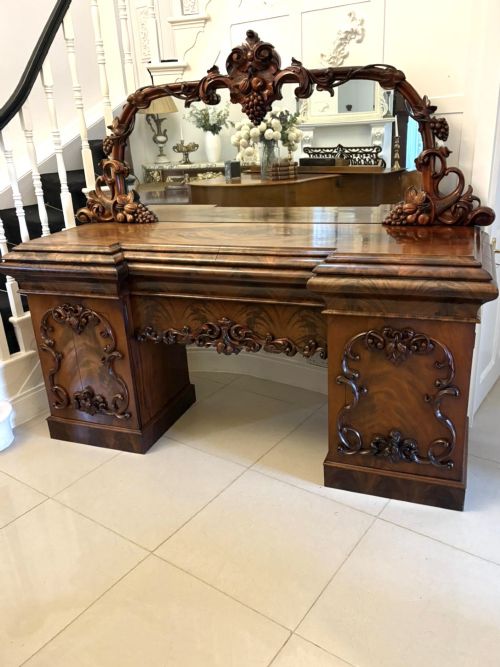
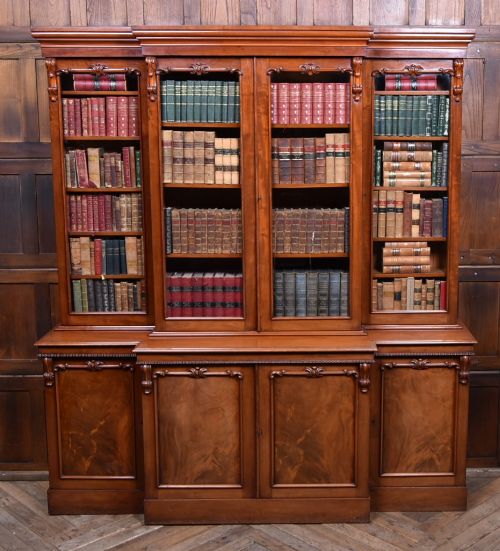
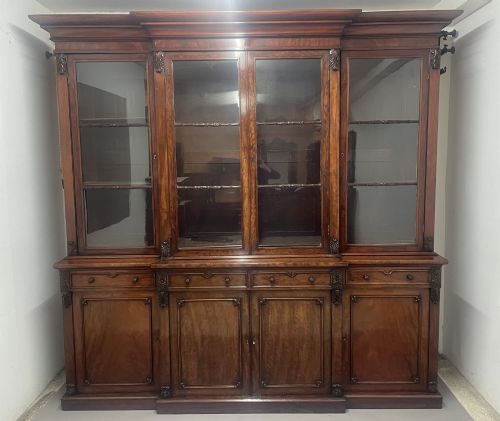
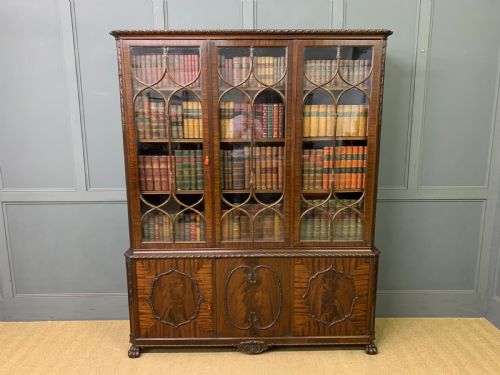
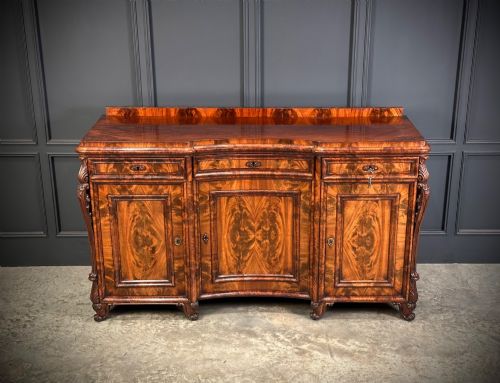
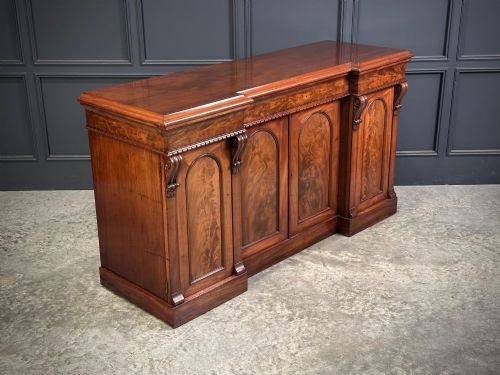
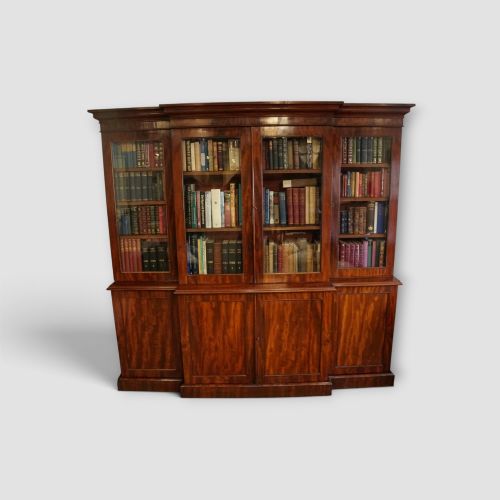
A flame mahogany breakfront cabinet is a substantial piece of furniture designed with a projecting central section, giving the facade its characteristic stepped profile. These pieces appear primarily as bookcases and sideboards across the nineteenth century, spanning Regency, Victorian, and William IV periods.
The pieces on this page lean heavily toward large library bookcases with glazed doors and fitted sideboards with cupboards. Cabinetmakers constructed these forms to anchor grand rooms, using the breakfront shape to break up long expanses of timber.
Makers drew upon Georgian styles alongside later Victorian Gothic Revival influences, producing both architectural floor bookcases and smaller sideboards. The resulting mix offers a tangible connection to nineteenth-century cabinet making traditions.
Materials and Technique
Cabinetmakers built these pieces using solid wood carcasses overlaid with flame mahogany veneer to achieve the characteristic undulating grain patterns. Secondary timbers provided structural stability while brass fittings, glass panels, and occasional satinwood stringing completed the details.
Veneering technique dictated the visual impact, as workers matched and laid flame mahogany leaves across the broad doors and drawer fronts to create symmetrical patterns. Carpenters joined structural elements with traditional cabinet joints, housing large glass panes within timber frames for library bookcases.
Some nineteenth-century makers hid secret drawers behind decorative mouldings, giving owners a private spot to stash letters and small valuables.
Judging Quality
Quality rests in the selection and bookmatching of the veneer, where skilful grain alignment across multiple doors separates finer examples from standard production. The crispness of carved details, whether lion paw feet or classical mouldings, indicates the competence of the workshop.
Proportion and scale dictate the success of the breakfront design, with superior cabinets maintaining balanced architectural lines rather than heavy proportions. Original glass, working locks, and well-fitted internal shelving further separate the best surviving examples.
Gillows
The Flame Mahogany Breakfront Cabinet Glossary
- Flame mahogany
- A veneer cut from the fork of the mahogany tree, producing a distinctive fire-like ripple effect. This figured timber provides the primary visual appeal on cabinet doors and drawer fronts.
- Breakfront
- An architectural furniture facade where the central section projects forward from the flanking wings. This configuration creates depth and shadow across large sideboards and bookcases.
- Bookmatching
- A technique of placing successive veneer slices next to each other to create a symmetrical mirror-image pattern. Skilled cabinetmakers utilised this method to emphasise the natural grain.
- Chiffonier
- A low sideboard or cabinet featuring shelves or a mirror back, developed during the nineteenth century. These smaller pieces provided serving space and display areas in dining rooms.
- Stringing
- Thin inlay lines of a contrasting wood, such as satinwood, set into the primary timber surface. This decorative banding frames drawer fronts and cabinet doors.
Flame Mahogany Breakfront Cabinet: Frequently Asked Questions
How do I date a mahogany cabinet?
Dating relies on observing construction methods, timber choices, and stylistic details across the piece. Regency examples often feature classical proportions and brass inlays, while Victorian pieces incorporate heavier mouldings or Gothic Revival influences.
Secondary woods inside drawers and the thickness of the mahogany veneers also offer clues to the period of manufacture. Comparing the overall form to dated examples helps narrow down the decade.
Where were these cabinets placed?
These large cabinets originally stood in principal rooms such as libraries, dining rooms, and grand hallways. Bookcases housed extensive private book collections behind glazed doors, while sideboards served dining spaces.
The substantial scale meant they served as permanent fixtures designed to display wealth and literary or culinary hospitality.
How do I care for flame mahogany?
Flame mahogany benefits from stable room temperatures away from direct sunlight and heat sources, which can dry out the timber and veneer. Regular dusting with a soft, dry cloth preserves the polished surface.
Abrasive cleaners and excessive moisture should be avoided to protect the historic polish and the delicate veneer underneath.