
Antique Bone China Dish
An antique bone china dish brings English heritage to the table, offering painted birds, botanical studies, and rich gilding.
Antique Bone China Dish
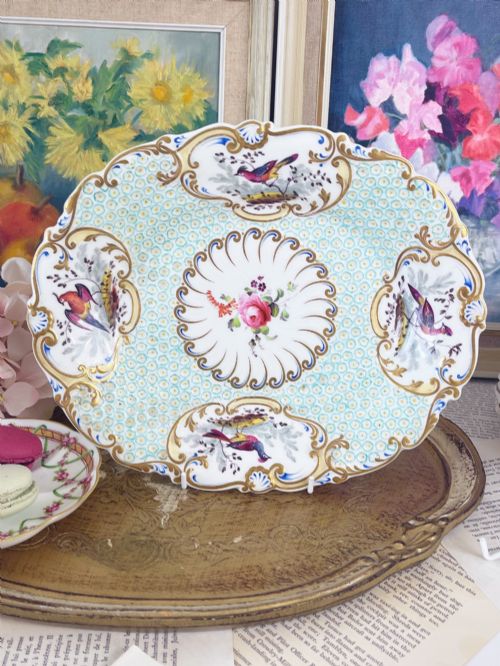
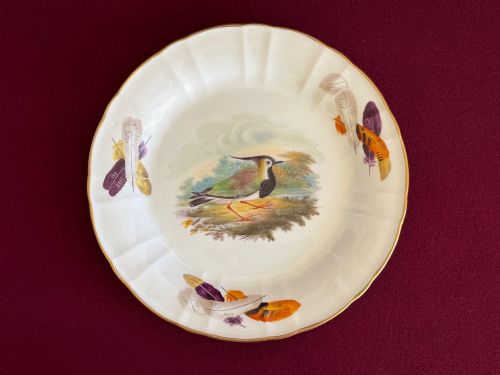
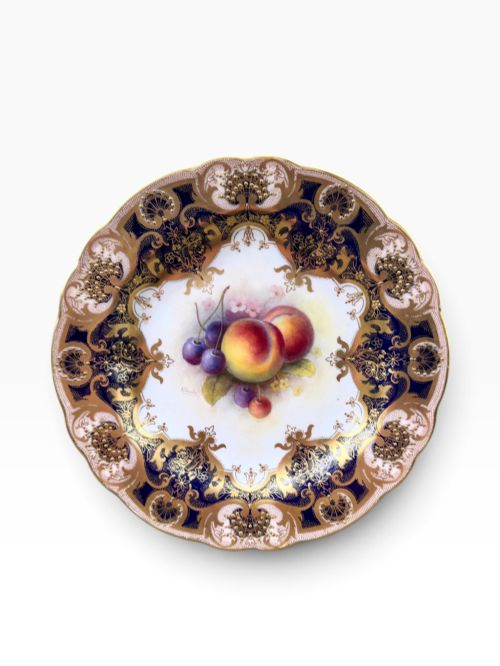
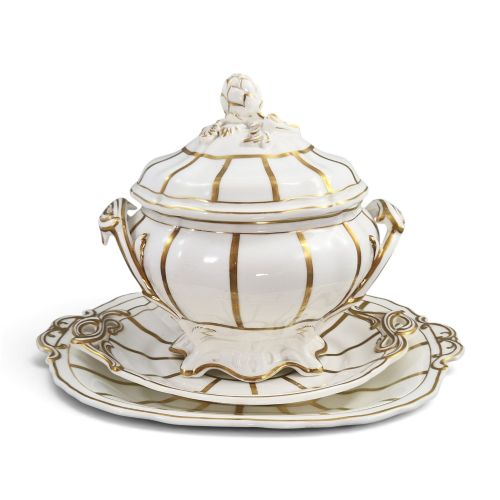
When someone searches for an antique bone china dish, they encounter a range of forms designed for service and display, including cabinet plates, dessert plates, serving dishes, and sauce tureens. The pieces span Georgian, Regency, Victorian, and later twentieth-century periods, originating from prominent English factories.
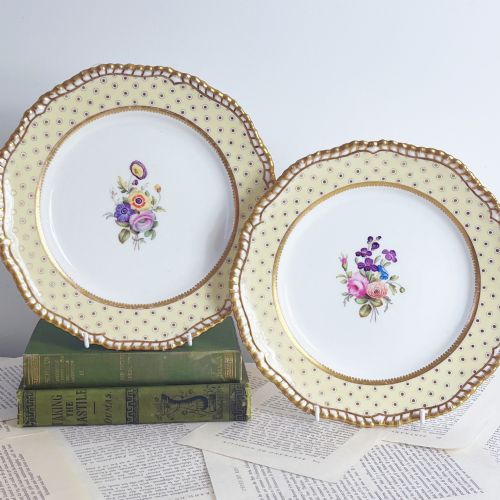
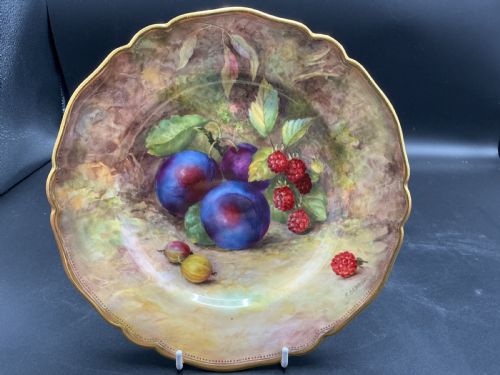
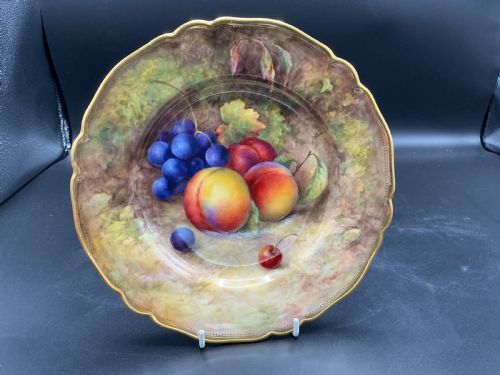
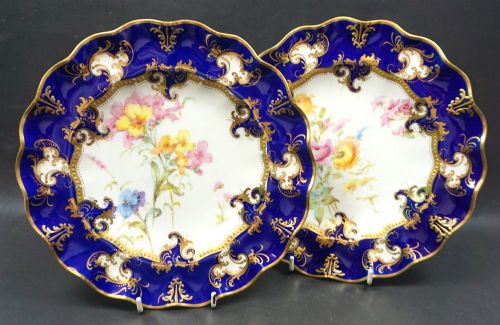
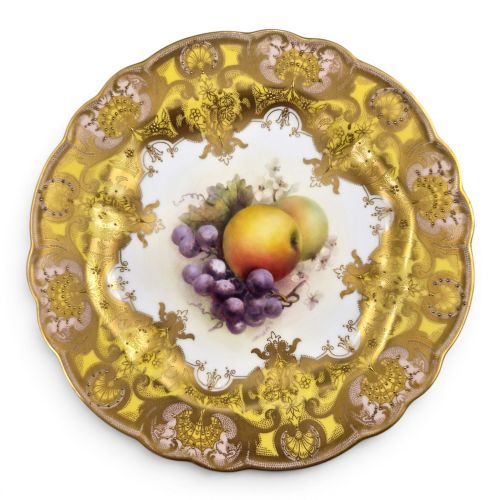
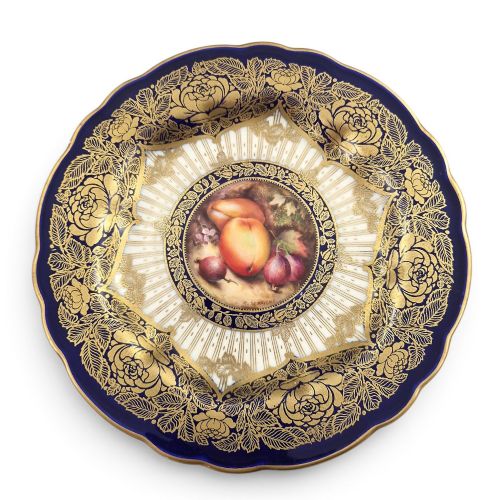
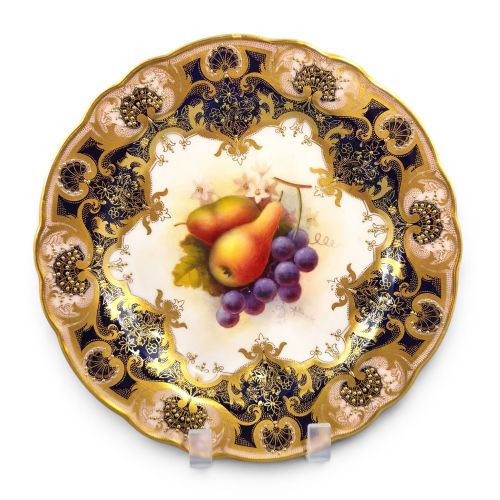
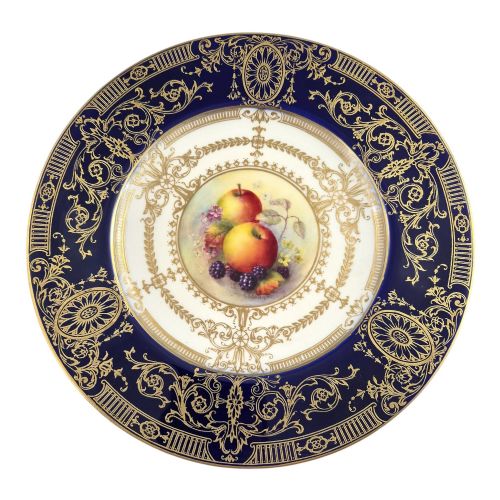
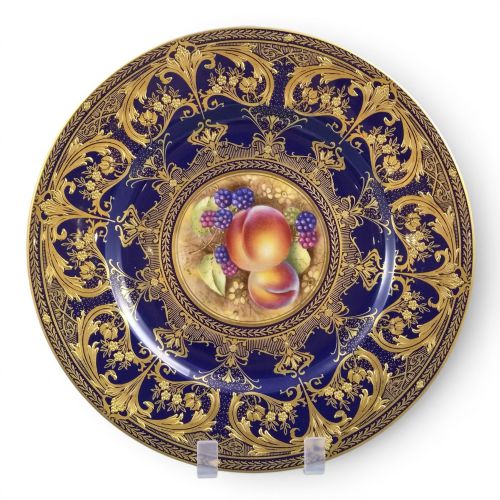
The version most commonly met on this page is the painted cabinet plate or dessert plate, often featuring hand-painted botanical subjects, birds, or fruit scenes. Serving dishes and tureen sets also appear, reflecting the formal dining customs of the nineteenth and early twentieth centuries.
Distinctions in Quality
Quality rests upon the skill of the hand-painting and the complexity of the gilt work. Pieces featuring signed artistic work by notable painters command greater attention than standard factory decoration.
The crispness of moulded details, such as basketweave textures or pierced borders, distinguishes finer productions. The weight, translucency of the bone china paste, and precision of the enamel registration further divide standard wares from exceptional examples.
Listings feature porcelain and bone china forms spanning the Georgian, Regency, and Victorian eras, decorated with enamel and gold leaf.
Royal Crown Derby·Royal Worcester·Coalport·Mintons·H and R Daniel
The Antique Bone China Dish Glossary
- Bone china
- A type of porcelain incorporating bone ash, developed in England to create a strong, translucent body suited to intricate tableware. This composition permits thinner walled vessels than traditional hard-paste porcelain.
- Cabinet plate
- A decorative plate intended for display in a cabinet or on a wall rather than for practical dining use. These items frequently showcase elaborate hand-painted scenes by named artists.
- Imari pattern
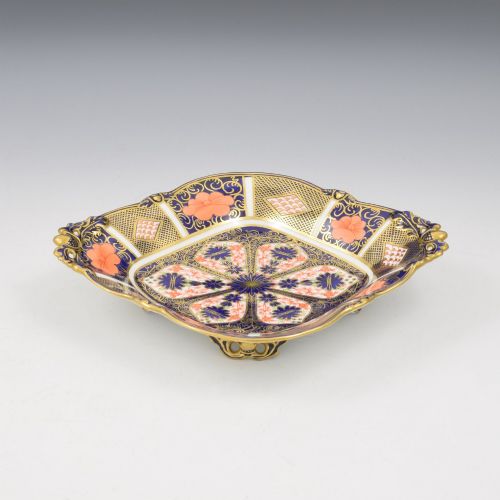
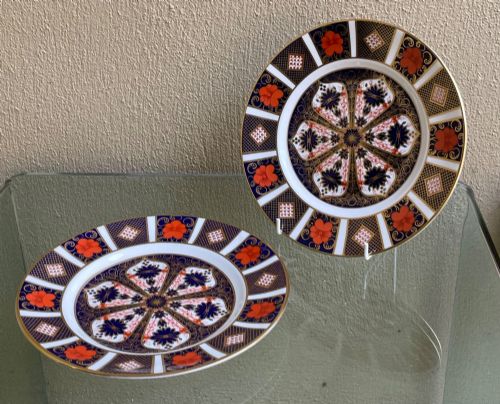
- A decorative style adopting the Japanese palette of iron red, underglaze blue, and gold, widely replicated by English factories. The scheme provides a striking visual contrast across plates and serving trays.
- Gilding
- The application of gold leaf or gold paint to ceramic surfaces, typically accentuating rims, handles, and borders. Burnishing adds a bright reflective finish to the metallic details.
- Tazza
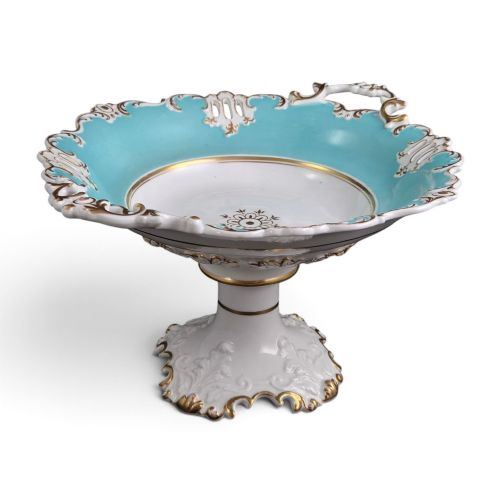
- An Italian term for an ornamental cup or shallow vessel raised on a stem and foot, used in English service for dessert or sweetmeats. These elevated pieces add vertical dimension to a table setting.
Antique Bone China Dish: Frequently Asked Questions
How were these dishes used originally?
Serving dishes and dessert plates formed part of formal nineteenth-century dining services, used during specific courses like dessert or for presenting side dishes at the table.
Cabinet plates were exceptions, intended strictly for visual display in drawing rooms rather than culinary service.
How do I display an antique dish safely?
Wall mounting requires specialised plate hangers with rubber-coated prongs that distribute pressure evenly across the rim without scratching the glaze or gilding.
Cabinet display shelves benefit from plate grooves or small acrylic stands to prevent slipping, away from direct sunlight.
How do I date a piece without a mark?
Dating relies on stylistic clues, such as the Regency preference for botanical specimens or the Victorian taste for rich turquoise grounds and Rococo revival scrolls.
Shape names, paste translucency, and pattern numbers painted on the reverse offer additional chronological markers when factory stamps are absent.