





Antique Ceramic Tureen Stand
These antique ceramic tureen stands protect dining tables from hot serving vessels and anchor formal dinner service sets with decorative presence.
Antique Ceramic Tureen Stand
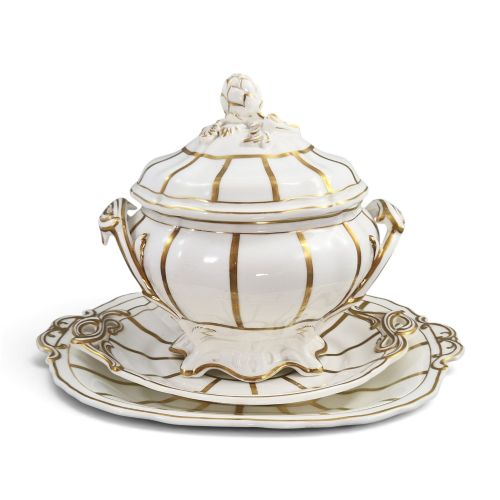
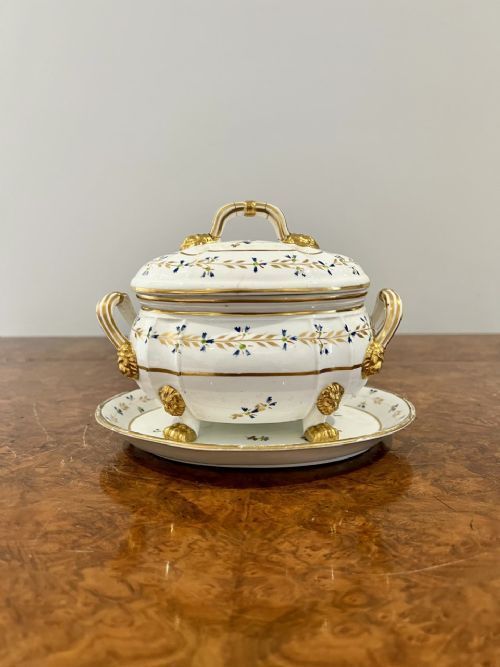
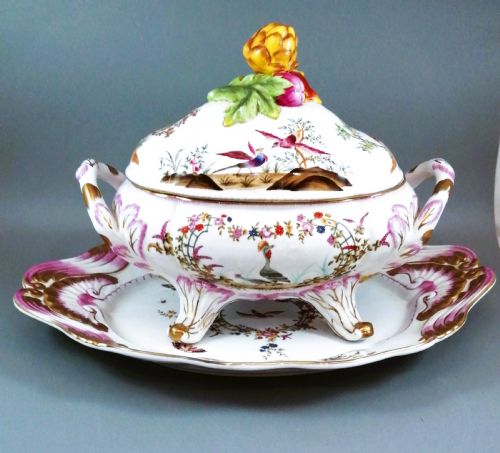
An antique ceramic tureen stand is a specialised base plate designed to hold a soup or sauce tureen, catching drips and insulating the surface of the dining table. When you search for an antique ceramic tureen stand, you encounter sturdy earthenware and refined bone china pieces originating from Georgian, Regency, and Victorian periods.
The items listed on this page span the nineteenth century, including specific patterns like the Bridge of Lucano and Romantic Ruins designs. Most examples originate from English potteries, though continental porcelain and Chinese blue and white pieces also appear.
These stands take geometric and scalloped forms to match their corresponding tureens, often arriving with transfer-printed blue and white scenery or hand-painted botanical motifs. Collectors find both standalone bases and complete sets featuring matching covers and vessels.
Materials and production methods
Potters utilised earthenware, ironstone, bone china, and porcelain to shape these sturdy serving pieces, applying lead or tin glazes to seal the porous ceramic bodies. Workshops often incorporated transfer printing techniques to apply intricate blue and white landscapes directly onto the clay before firing.
Gilding and gold leaf accents appear on refined porcelain examples from English factories, adding decorative borders that complement hand-painted polychrome scenes. Artisans fired these items in kilns at high temperatures to achieve durable surfaces suitable for daily dining use.
Listings feature nineteenth-century items spanning the Georgian, Regency, and Victorian periods, utilising earthenware, ironstone, and porcelain.
Assessing quality and craftsmanship
The refinement of the ceramic body and the crispness of the transfer print or hand painting determine the overall caliber of a stand. Heavier ironstone and sturdy earthenware offer robust utility, while translucent bone china and fine porcelain display greater delicacy and complex moulding.
Makers known for technical excellence achieve smoother glaze consistency and more precise enamel alignment, whereas simpler pieces show minor kiln imperfections and softer pattern lines. Preserved gilding and intact borders distinguish well-kept examples from heavily worn service ware.
Davenport·Coalport·Crown Derby·Mintons·Doulton Burslem·Mason’s·Spode·Rogers·J. & R. Clews
The Antique Ceramic Tureen Stand Glossary
- Transfer print
- A decorative technique where an engraved metal plate transfers a design onto paper, which is then pressed onto the ceramic body. This method allowed potteries to produce detailed pictorial scenes consistently across multiple pieces.
- Ironstone
- A dense, durable type of earthenware patented in the nineteenth century to imitate Chinese porcelain. It resists chipping and served as a heavy-duty material for formal dining vessels.
- Bone china
- A hybrid porcelain incorporating animal bone ash, resulting in a strong, brilliant white body with high translucency. English factories utilised this material for luxury tableware.
- Glaze
- A glassy coating fused to the ceramic surface through kiln firing to render the piece waterproof and glossy. It protects the underlying clay body from stains and moisture.
- Earthenware
- A porous, opaque ceramic fired at lower temperatures than porcelain. It forms the heavy base for many nineteenth-century blue and white tableware items.
Antique Ceramic Tureen Stand: Frequently Asked Questions
What is a tureen stand used for?
A tureen stand serves as a protective ceramic base placed beneath a soup or sauce tureen on the dining table. It catches accidental drips and prevents heat damage from the heavy serving vessel.
Beyond simple protection, these stands complete formal table settings by framing the tureen with matching decorative borders and patterns.
How do I date a ceramic stand?
Dating relies on examining the ceramic body, glaze characteristics, and the style of any transfer print or maker mark on the underside. Nineteenth-century pieces often display specific factory stamps or pattern numbers that correspond to active production dates.
Stylistic cues such as Regency scalloped edges or Victorian transfer scenery provide additional chronological context for the item.
Are these stands dishwasher safe?
Historic ceramics require hand washing in lukewarm water with mild soap to preserve their fragile glazes and hand-painted or gilt details. Modern dishwashers subject antique pieces to thermal shock and harsh detergents that can craze the glaze or strip gold leaf.
Careful manual cleaning ensures the nineteenth-century material remains stable and retains its original surface finish.
Can I use these stands daily?
Sturdy ironstone and dense earthenware stands withstand gentle functional use for serving food during meals. However, delicate porcelain and bone china pieces with extensive gilding are better suited for display or careful seasonal dining.
Assessing the thickness and structural condition of each individual stand helps determine its suitability for modern handling.
What causes blue and white patterns?
Cobalt oxide applied beneath the glaze creates the deep blue colour during the high-temperature kiln firing process. Potteries applied this pigment either through hand painting or by pressing engraved transfer paper onto the raw clay.
This technique locked the blue pigment permanently beneath a shiny protective glass coating.