


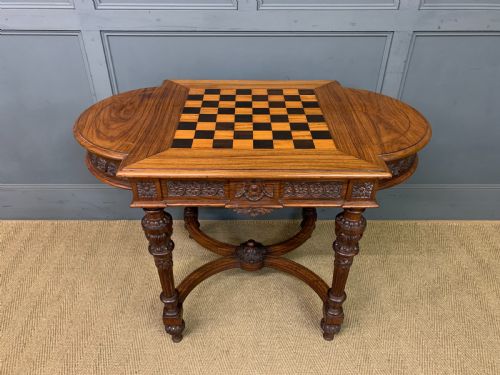
Antique Board Game Table
An antique board game table provides a dedicated surface for pastimes, merging formal furniture design with integrated play.
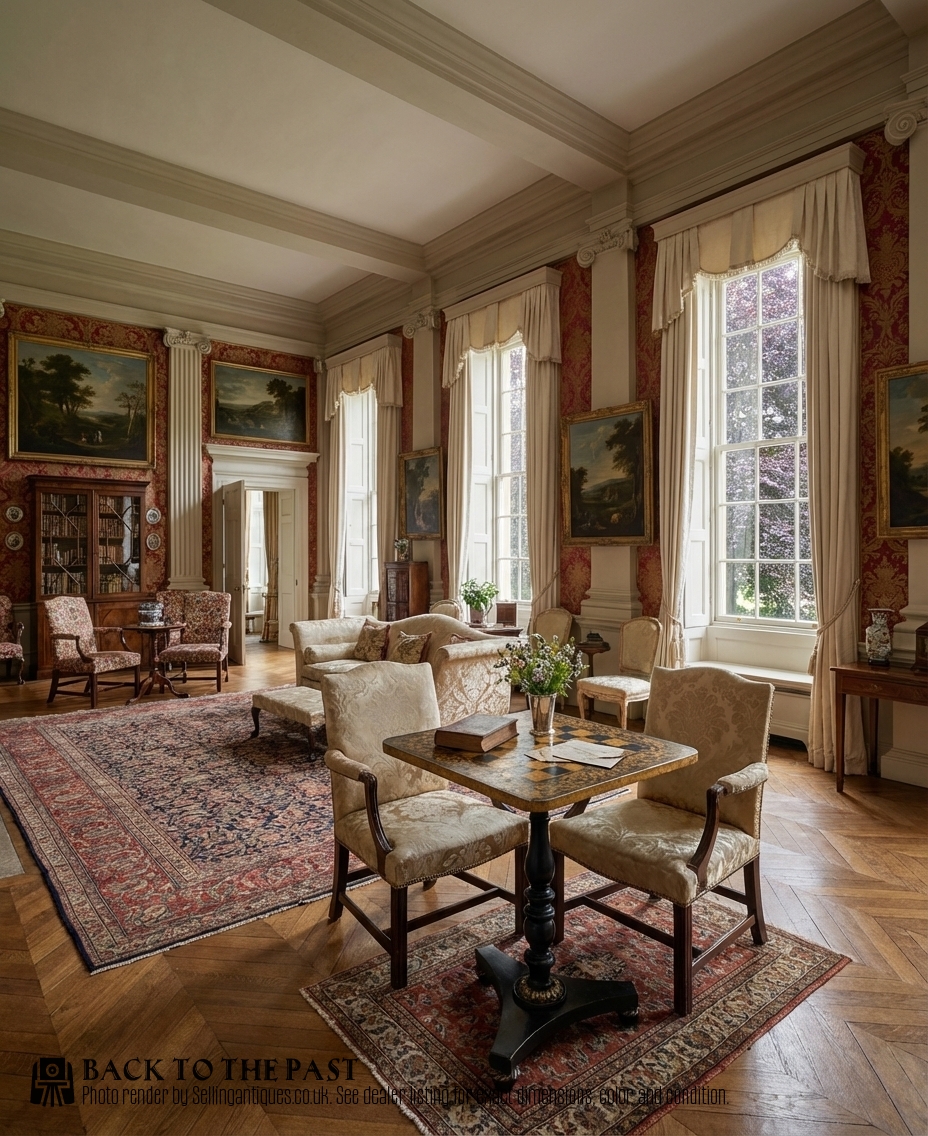
Antique Board Game Table
An antique board game table is a piece of furniture designed specifically to accommodate pastimes such as chess, backgammon, and card games within domestic settings. When you search this phrase, you encounter forms ranging from freestanding tripod tables and fold-over card tables to elaborate sewing and occasional pieces.
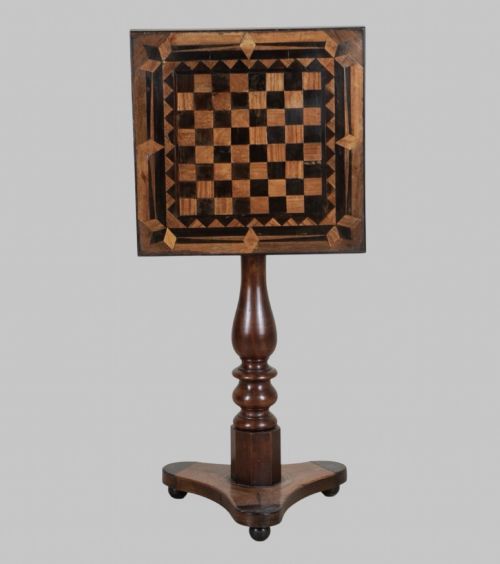
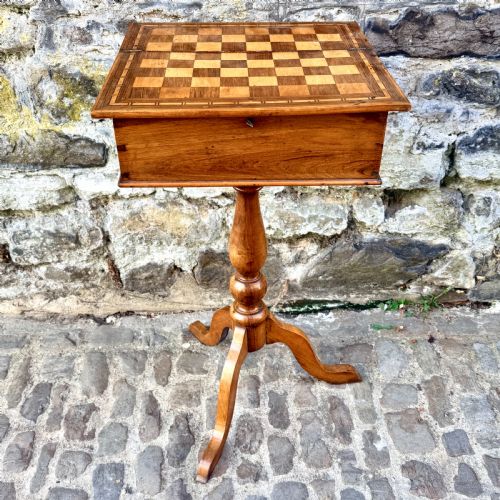
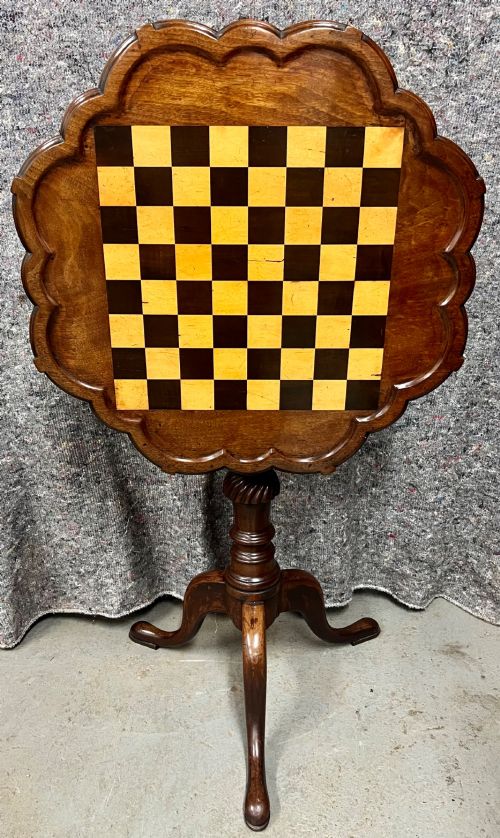
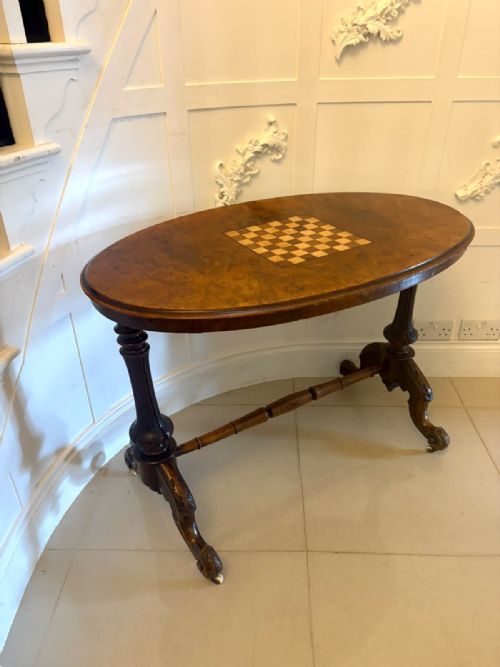
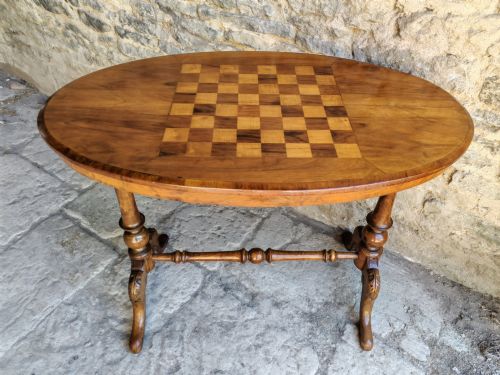
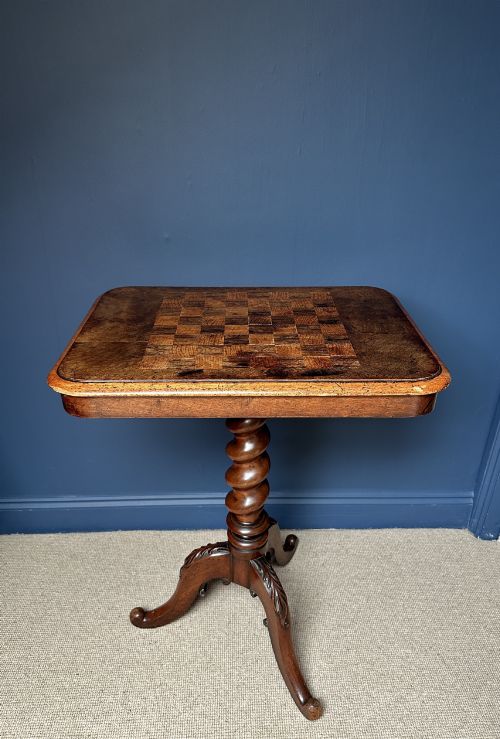
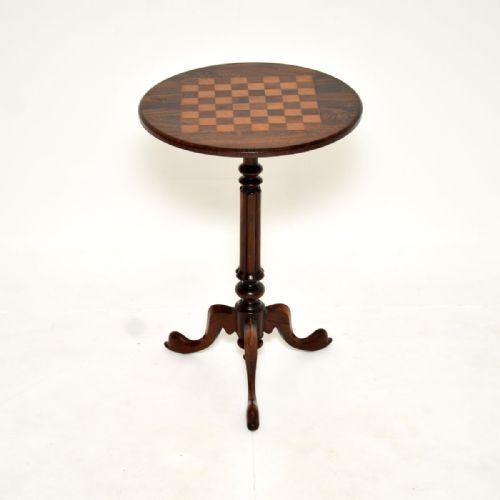
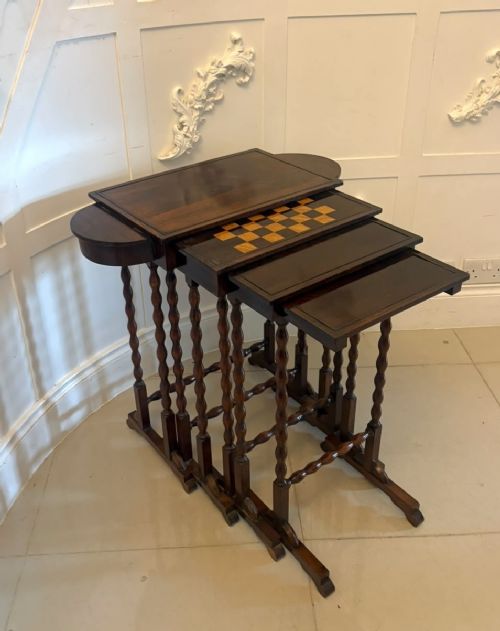
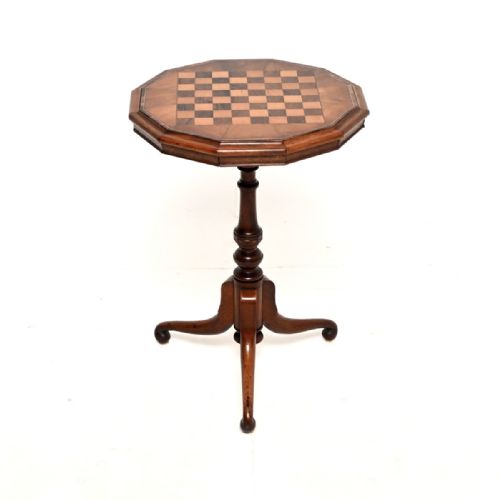
The pieces appearing on this page span the Georgian, Regency, and Victorian periods, alongside French Provincial and Anglo-Indian variants. Most examples integrate inlaid chess or chequer boards directly into the top, while others utilise removable boards or multi-tiered nested designs.
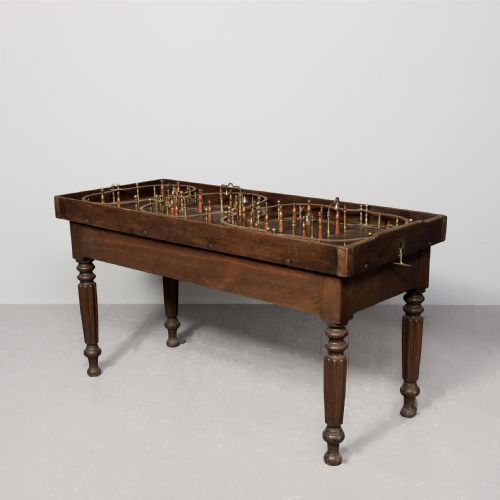
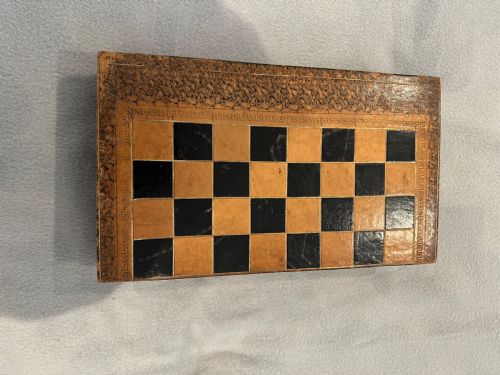
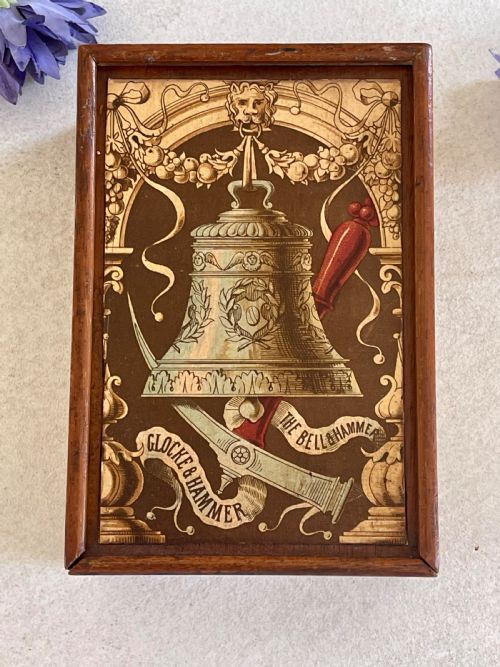
Beyond standard tables, the selection includes related items such as scoreboards, travelling compendiums, and decorative game boxes. The primary function remains domestic entertainment, executed through cabinetry that doubles as formal household furniture when not in use.
How They Were Made
Cabinetmakers constructed these tables using dense hardwoods such as mahogany, rosewood, and walnut, frequently selecting burr veneers for decorative impact on table tops. Inlays of boxwood, satinwood, and various specimen woods formed the contrasting squares for chess and backgammon surfaces.
Specialised techniques included delicate penwork decoration, brass mountings, and precision joinery to create pivoting or fold-over mechanisms. Tripod bases supported smaller occasional pieces, while pedestal and pillar designs provided stability for heavier multi-functional furniture.
The listings demonstrate that 19th-century makers favoured rosewood and walnut, frequently incorporating boxwood and satinwood for chess board inlays.
What Varies in Quality
The standard of execution depends on the precision of the wood inlay and the selection of timber veneers, where burr walnut or figured rosewood indicates higher workshop ambition. Integrated elements such as hidden drawers, sewing wells, and reversible boards demonstrate advanced craftsmanship.
Structural integrity of the pivoting mechanisms and the stability of tripod or pedestal bases separate superior examples from more utilitarian pieces. The refinement of secondary details, including penwork borders and brass mounts, dictates the overall hierarchy among surviving pieces.
Gillows·George Merrifield·Thurston·British Chess Company
The Antique Board Game Table Glossary
- Chequer-board
- A squared grid surface utilised for games such as draughts and chess. It is frequently formed through contrasting wood veneers like boxwood and mahogany.
- Penwork
- A decorative technique using ink on wood to simulate elaborate inlay or engraving. It appears frequently on Regency examples.
- Tripod Table
- A small freestanding table supported by a central pillar above three splayed legs. This form allows for easy relocation within a parlour.
- Compendium
- A portable case or box containing multiple games and equipment sets. These items allowed users to travel with several pastimes.
- Specimen Wood
- Timber gathered from various global sources to create decorative mosaic patterns. Anglo-Indian and Ceylonese pieces often display this material variety.
Antique Board Game Table: Frequently Asked Questions
What games were played on these tables?
These pieces primarily accommodated chess, draughts, and backgammon through integrated or reversible wooden boards set into the top surface. Many examples also supported card games, bagatelle, and skittles.
Cabinetmakers designed the surfaces to serve as standard occasional furniture when games were not actively in progress, allowing the pieces to remain in domestic use throughout the day.
How do I identify a Regency board game table?
Regency examples frequently feature rosewood or mahogany timbers, often enhanced with brass mounts, penwork decoration, or satinwood chequer-board inlays. They tend to utilise tripod pedestals or slender column supports.
These pieces reflect neoclassical design influences popular during the early nineteenth century, distinguishing them from heavier, more ornate Victorian furniture.
Were these tables used in formal rooms?
Owners placed these items in drawing rooms, parlours, and libraries where guests gathered for evening entertainment. Their dual function as decorative occasional tables meant they sat alongside standard seating without disrupting the room's formal aesthetic.
Fold-over tops and sewing compartments allowed the furniture to conceal game pieces and sewing materials when entertaining visitors.
How do I tell Victorian tables apart from Georgian ones?
Georgian and Regency tables generally exhibit restrained classical lines, lighter timber selections, and subtle stringing or penwork. They often rely on tripod bases or Pembroke configurations.
Victorian pieces lean towards heavier proportions, burr walnut veneers, elaborate carved details, and multifarious secondary functions like integrated sewing boxes and desks.