




Black Floral Side Table
These black floral side tables bring painted lacquer, papier-mâché, and ebonised wood together to anchor a room with nineteenth-century pattern.
Black Floral Side Table
When you search for a black floral side table, you encounter occasional tables, wine tables, and tray tables spanning the nineteenth century and early decades of the twentieth. These pieces draw on Victorian Chinoiserie, Aesthetic Movement, Japonisme, and Dutch Baroque Revival styles.
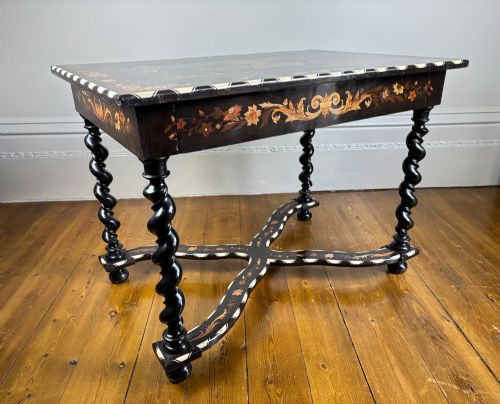
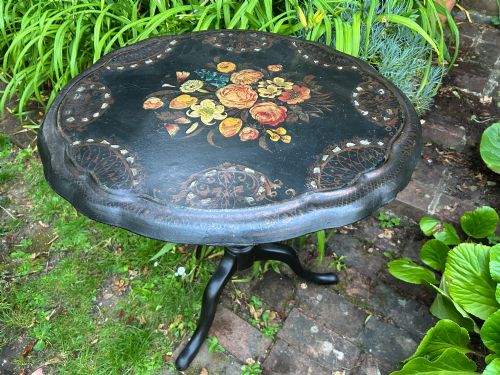
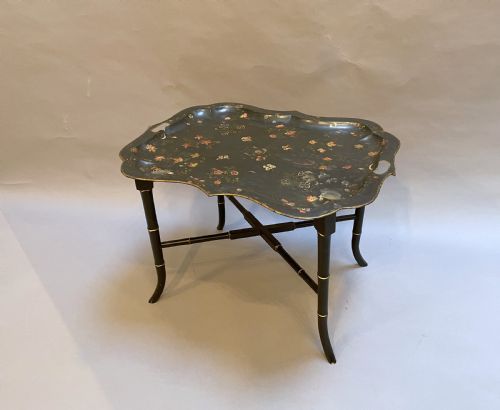
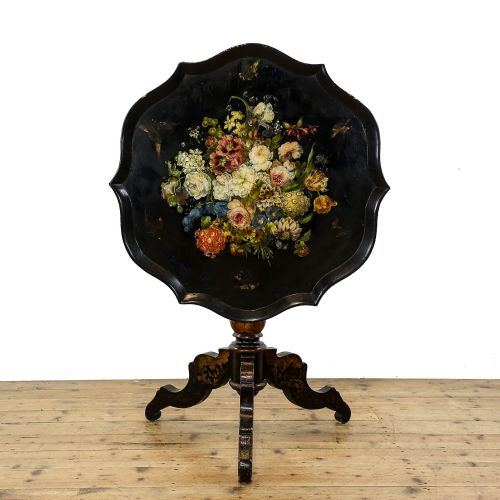
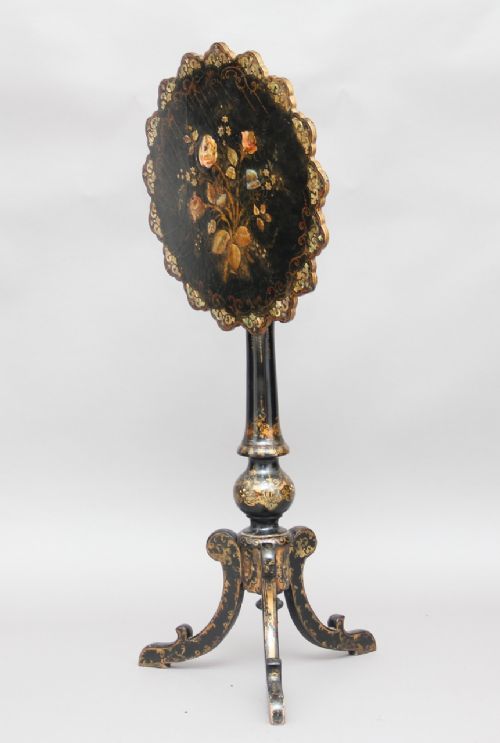
The version you are most likely to meet on this page is a Victorian papier-mâché or ebonised wood occasional table featuring hand-painted floral decoration. Many utilise tilt-top mechanisms or pedestals, while others combine black lacquer with gilt or mother-of-pearl inlay.
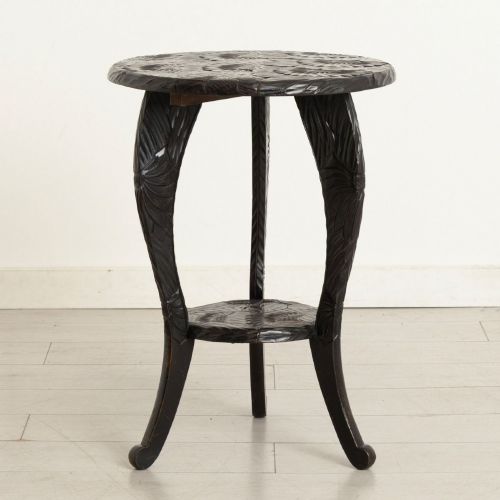
The selection ranges from small bedside and wine tables to larger centre tables, plant stands, and occasional tables with marquetry or bone inlay. Makers and workshops from England, Italy, China, and Japan contributed to this varied group.
How they were made
Wood, lacquer, and papier-mâché form the primary structure of these black floral side tables. Ebonised wood provides a dense, dark ground, while papier-mâché offers a smooth, lightweight surface suited to intricate painting.
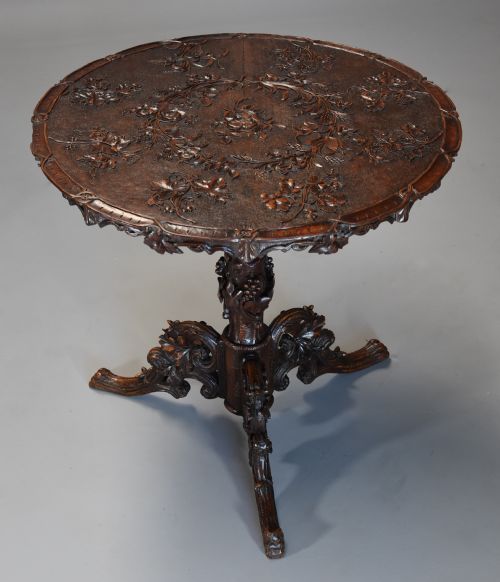
Makers applied hand-painted floral motifs directly onto the dark surfaces, often combining gilt and mother-of-pearl inlay to catch the light. Some examples incorporate bone inlay, marquetry, or carved linden wood details.
Tops frequently sit on pedestals, iron stands, or carved wooden legs, with tilt-top mechanisms allowing the tables to store flat when not in use.
Materials recur across wood, lacquer, ebonised wood, paint, papier-mâché, gilt, mother of pearl, and metal.
What varies in quality
The refinement of the hand-painted floral decoration dictates the visual success of the piece. Crisp brushwork and well-preserved gilt or mother-of-pearl inlay separate the finer examples from simpler provincial work.
Material choice and structural integrity also divide the range. Solid ebonised woods, finely pressed papier-mâché, and stable pedestal joints represent superior workshop production compared to basic painted pine.
Liberty of London
The Black Floral Side Table Glossary
- Ebonised wood
- Timber stained or painted black to imitate expensive ebony. This finish became popular in Victorian and Aesthetic Movement furniture.
- Papier-mâché
- A composite material made from paper pulp or layers of paper mixed with glue, pressed into moulds and dried. It forms a hard, smooth surface ideal for painting and lacquering.
- Japonisme
- A late nineteenth-century Western fascination with Japanese art and aesthetics. It heavily influenced the floral motifs and black lacquer finishes on these tables.
- Marquetry
- The art of applying pieces of veneer to a structure to form decorative patterns. Craftsmen used various woods and bone to create intricate tabletop designs.
- Pietra dura
- A technique using cut and fitted polished coloured stones to create images. It appears on select nineteenth-century tabletops in this group.
Black Floral Side Table: Frequently Asked Questions
What is a papier-mâché table?
A papier-mâché table uses a pressed paper composite base finished with black lacquer and hand-painted floral designs. These pieces often feature tilt-top actions.
They offer a smooth surface that supported detailed painting and inlay work during the Victorian period.
How do I use a side table?
These tables function as small surfaces for drinks, books, or lamps beside seating. Many occupy corners or hallways as plant stands.
Tilt-top versions store flat against walls when space is required.
What is ebonised wood?
Ebonised wood is timber treated to look like solid ebony. Makers utilised this finish to create a dark background for floral paintwork.
It appeared frequently across nineteenth-century occasional and centre tables.
How do I date a black floral table?
Dating relies on materials, construction methods, and stylistic influences such as Victorian Chinoiserie or the Aesthetic Movement. Papier-mâché construction and specific hardware point to the nineteenth century.
Later pieces often reflect early twentieth-century revivals.