



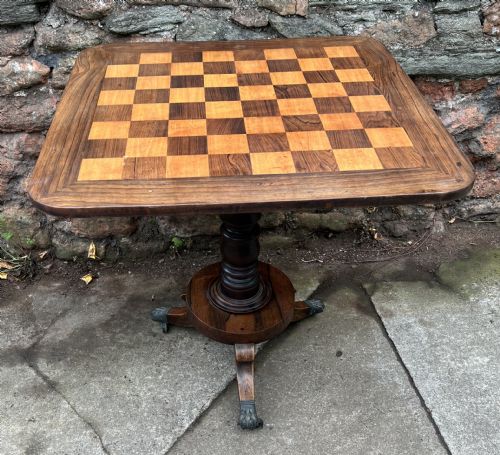


Regency Chess Board Table
A regency chess board table brings the focused play of the early nineteenth century straight into a modern room with timber and brass.
Regency Chess Board Table
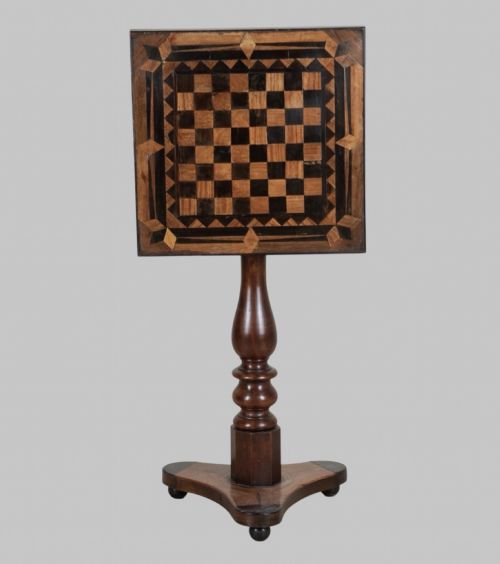
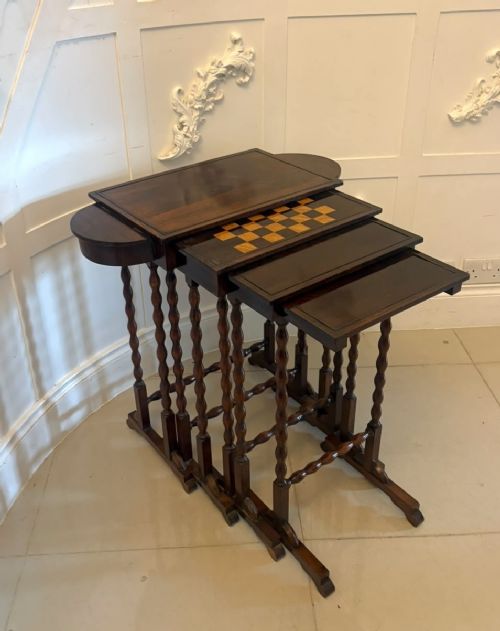
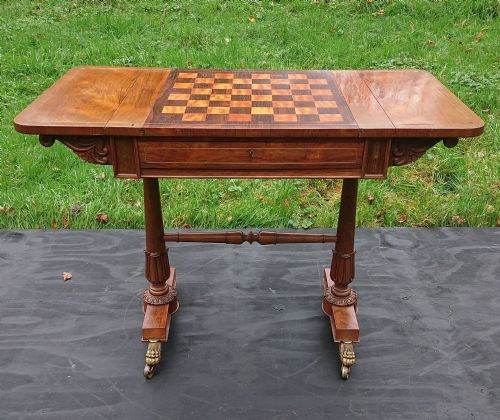
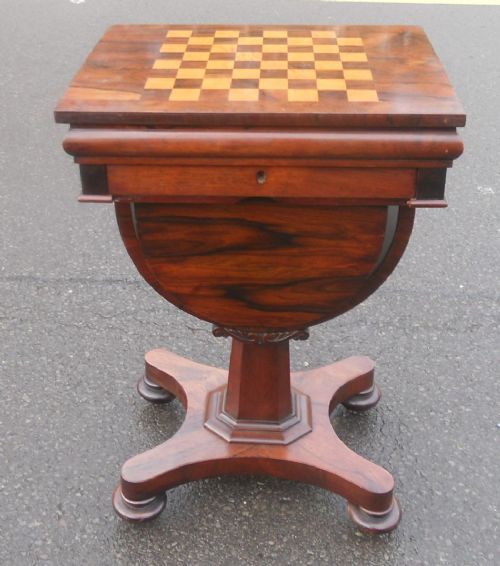
A regency chess board table is an occasional or games table designed for play and display during the early nineteenth century. These forms include fold-over tops, tripod pedestals, work tables, and nesting quartetto sets that integrate a chequer board into the design.
The versions met most often on this page date from the Georgian and Regency periods, spanning the early eighteen hundreds. They combine practical household utility with dedicated surfaces for board games using rich timbers.
Makers utilised versatile formats such as octagonal tripod tables and nested arrangements to save space in period drawing rooms. Each piece serves as both a functional table and a centrepiece for intellectual leisure.
How they were made
Cabinet makers built these tables using dense tropical hardwoods like rosewood and mahogany, often contrasting lighter timbers such as boxwood and satinwood for the chequer squares. Ebonised wood and intricate penwork provided dark lines and delicate motifs across the playing surfaces.
Specialist techniques involved precise inlay and delicate ink-drawn penwork decoration to delineate intricate borders and board markings. Brass mounts and tripod supports added structural stability and decorative contrast to the polished timber frames.
Regency Chess Board Table Retail Price Guide 2026
Typical asking prices for regency chess board table among the pieces listed under this phrase on Sellingantiques today, from the lower quarter to the upper quarter. They describe what is for sale here now, not the wider market.
Listings feature rosewood, satinwood, boxwood, and ebonised wood alongside intricate penwork decoration.
What varies in quality
The distinction between standard examples and the finest pieces rests upon the crispness of the timber inlays and the complexity of the penwork. Master workshops employed superior contrasting woods like satinwood and boxwood that retain sharp geometry and rich colour over centuries.
Design ambition separates basic occasional tables from sophisticated forms like quartetto nests with integrated boards or tripod tables with specimen marble tops. Execution of brass mounts and the selection of figured rosewood or kingwood indicate the standing of the original maker.
Gillows·George Merrifield
The Regency Chess Board Table Glossary
- Penwork
- Decoration applied to wood using ink and fine pens to create detailed motifs and borders. This delicate technique produced intricate patterns on early nineteenth-century surfaces.
- Quartetto
- A set of four graduating tables designed to nest together when not in use. These versatile pieces frequently incorporated chess boards into the top surface.
- Chequer-board
- A squared grid pattern of alternating dark and light tiles used for games like chess and draughts. In these tables, the pattern is formed from inlaid woods or penwork.
- Specimen wood
- Timbers chosen for their distinct grain, colour, or exotic origins to create decorative inlaid patterns. Craftsmen arranged these diverse woods to highlight natural variations.
Regency Chess Board Table: Frequently Asked Questions
What is a regency chess board table?
A regency chess board table is an early nineteenth-century furniture piece designed specifically for playing board games while functioning as an occasional table in a reception room. These tables feature integrated chequer boards executed in inlaid woods or delicate penwork.
They reflect the social habits of the period when parlour games formed a central part of daily entertainment. The designs range from tripod pedestal tables to nested sets and fold-over top formats.
How were these games tables used?
These tables served a dual purpose as everyday occasional furniture and dedicated surfaces for chess, draughts, or backgammon. Family members and guests used them during evening leisure hours for strategic board games.
When not in use for play, the tables held books, work baskets, or decorative objects. Their portable nature allowed servants to move them easily around the drawing room.
How do I live with a chess board table?
Living with one of these tables involves placing it away from direct sunlight and radiators to protect sensitive rosewood, satinwood, and penwork surfaces. Using coasters and careful handling preserves the polished timber and delicate inlays during daily use.
They fit well behind sofas or beside armchairs as lamp tables while retaining their character as historic games boards. The rich dark timbers anchor neutral modern interiors with traditional warmth.
How do I tell Regency periods apart?
Regency pieces dating from the early eighteen hundreds typically display classical influences, restrained ornamentation, and dark exotic timbers like rosewood and kingwood. They often incorporate brass mounts, sabre legs, or intricate penwork decoration.
Earlier Georgian examples tend to show heavier proportions and simpler mahogany or walnut construction without the distinctive Regency brass detailing. Comparing the timber selection and decorative motifs helps clarify the manufacturing era.