



Black and Gold Occasional Table
A black and gold occasional table brings dark lacquer and gilt surface work together in a compact form that serves a room with considerable visual presence.
Black and Gold Occasional Table
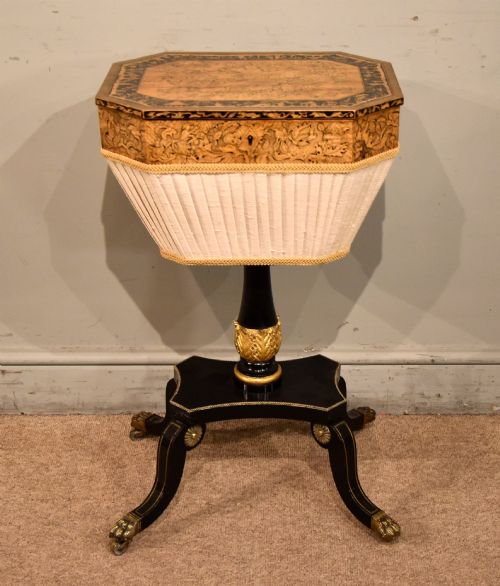
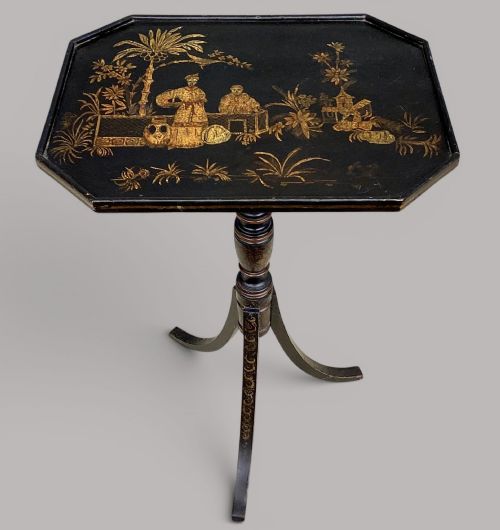
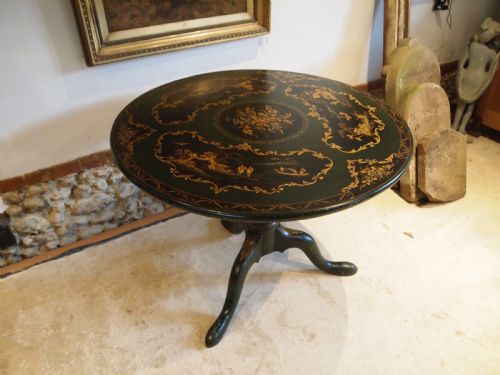
When you search for a black and gold occasional table, you encounter compact furnishings designed for display and convenience, spanning forms such as lamp tables, nests, tilt-tops, and trays on stands. These pieces predominantly draw on Regency, Victorian, and early twentieth-century periods, showcasing how dark surfaces and metallic highlights adapt to diverse domestic uses over generations.
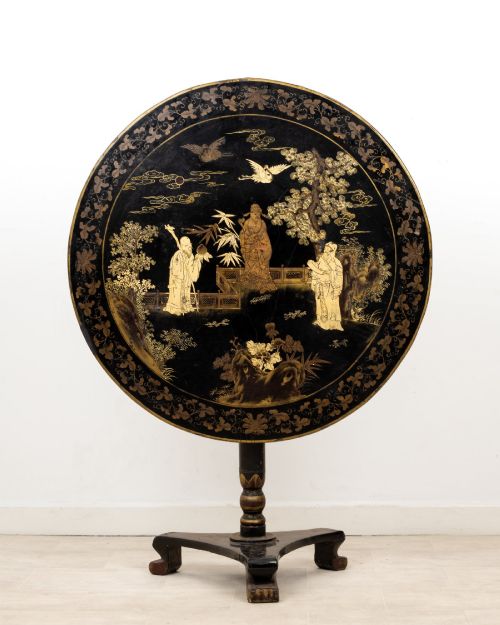
The material expression centres on black lacquer, ebonised wood, and papier-mâché, enriched with gold leaf, hand-painted Chinoiserie motifs, or penwork decoration. You are most likely to meet small dropleaves, nests of four tables, and tilt-top designs that combine portability with ornamental richness.
Originating from British workshops influenced by Eastern trade, Chinese export traditions, and European revivals, these tables reflect a sustained fascination with dark polished surfaces. They function readily beside seating or in corners, providing a stable platform while introducing deep tonal contrast to a room.
How they were made
Maker construction relies on timber substrates, papier-mâché pulp pressed in moulds, or dense hardwoods prepared to receive deep coats of black lacquer or ebonising. Artisans built up smooth grounds through successive layers of varnish and polishing before applying any ornamentation.
Decoration involved applying gold leaf, delicate penwork, or hand-painted Chinoiserie scenes directly onto the dark ground, often sealed beneath protective clear finishes. Tray tops were frequently fashioned separately from their folding or fixed stands, uniting papier-mâché or lacquered panels with supporting wooden frames.
Several nesting tables arrive in sets of four, engineered to slide neatly together like a polite family meeting for tea.
What varies in quality
The distinction between tiers rests upon the execution of the surface decoration and the crispness of the gilt work. Finely rendered Chinoiserie details and meticulous penwork indicate superior workshop standards, whereas mechanical printing or crude brushwork diminishes the visual depth of the piece.
Structural integrity in the joints, stands, and nesting elements governs durability, especially in forms subject to frequent movement like trays and folding tables. The stability of the lacquer ground and the harmony between original tops and later bases determine the overall integrity of the construction.
The Black and Gold Occasional Table Glossary
- Chinoiserie
- European artistic interpretation of Chinese and East Asian motifs, frequently rendered in gold on black lacquer grounds. This style dominated decorative furniture during the Georgian and Regency periods.
- Papier-mâché
- A composite material formed from paper pulp or layers of paper mixed with glue and resin, pressed and dried to form rigid trays and table tops. It provides a smooth, stable surface for black japanning and hand-painting.
- Ebonised wood
- Timber treated with stains, dyes, or finishes to imitate costly ebony wood. It yields a deep black surface often enhanced with parcel gilding.
- Penwork
- A decorative technique using fine ink drawings on prepared wood or satinwood surfaces, sometimes tinted and varnished. It creates intricate linear patterns resembling engraving.
- Tilt-top
- A table mechanism allowing the top to pivot vertically for storage against a wall when not in use. This form is common in occasional and tea tables from the eighteenth and nineteenth centuries.
Black and Gold Occasional Table: Frequently Asked Questions
How do I clean a lacquered table?
Dust the surface gently with a soft, dry cloth to prevent scratching the delicate lacquer and gilt details. Avoid harsh chemical cleaners, moisture, and direct sunlight that can degrade the dark finish over time.
For stubborn marks, use a barely damp cloth followed immediately by a dry one. Maintaining stable indoor humidity prevents timber movement beneath the lacquer layers.
How do I date a papier-mâché tray table?
Examine the construction of the base and the composition of the tray panel to determine the manufacturing period. Nineteenth-century examples often feature heavy pressed paper grounds paired with either contemporary folding stands or later support frames.
The style of the hand-painting and the wear patterns on the underside offer further clues regarding age and workshop origin.
What is the difference between Chinoiserie and Regency styles?
Chinoiserie focuses specifically on whimsical Asian-inspired pictorial scenes rendered in gold and colour on black backgrounds. Regency design encompasses broader classical revivals, incorporating ebonised woods, brass inlay, and geometric lines.
Pieces often combine both vocabularies, featuring Regency structural forms decorated with Chinoiserie lacquer work.