



Antique Penwork Table
An antique penwork table offers intricate black-and-white ink decoration on wood, drawing collectors who appreciate meticulous surface artistry.
Antique Penwork Table
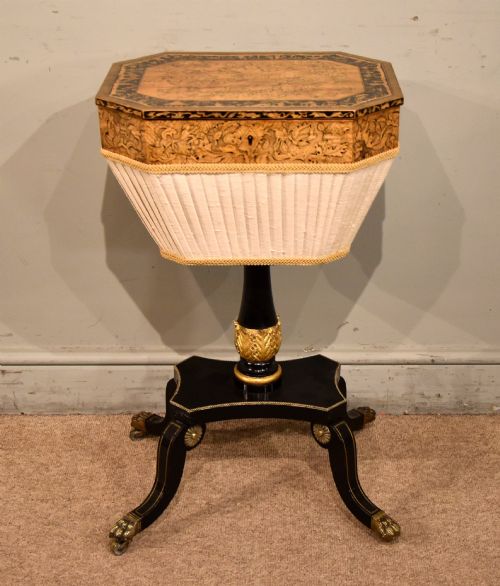
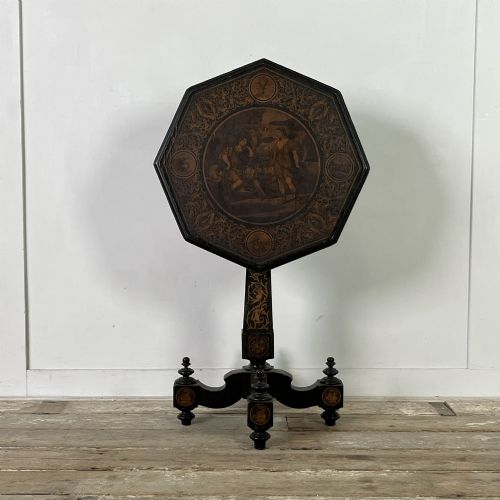
An antique penwork table is a surface decorated primarily with fine ink drawing on wood, often protected by varnish or lacquer. When you search for an antique penwork table, you encounter diverse forms created during the Regency and Georgian periods.
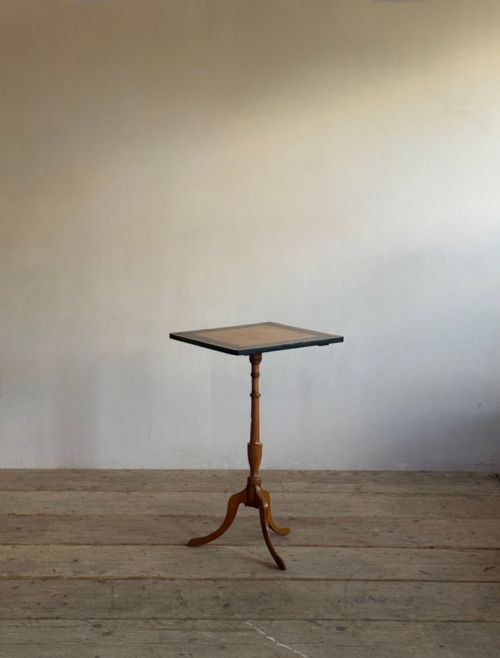
The selection on this page centres on occasional tables, games tables with chess or backgammon boards, and tripod tables. These pieces showcase delicate linear motifs rendered in black ink upon ebonised wood or light boxwood grounds.
Alongside tables, the listings include related decorative forms such as collectors cabinets on stand and table cabinets featuring the same distinctive penwork technique. Regency examples dominate the selection, reflecting the height of this decorative fashion.
How they were made
Maker's workshops built these tables using woods such as boxwood and ebonised timber, providing a contrasting ground for detailed ink application. Artisans drew intricate patterns directly onto the prepared wooden surface using fine ink and pen techniques.
Finished pieces received coatings of varnish or lacquer to protect the delicate ink work from wear. Some examples incorporate brass mounts, giltwood highlights, or tilt-top mechanisms to combine utility with decorative complexity.
Antique Penwork Table Retail Price Guide 2026
Typical asking prices for penwork table among the pieces listed under this phrase on Sellingantiques today, from the lower quarter to the upper quarter. They describe what is for sale here now, not the wider market.
What varies in quality
Quality in an antique penwork table rests upon the precision and complexity of the ink drawing itself. The finest examples display intricate Chinoiserie scenes, architectural perspectives, or botanical borders executed with steady control and sharp detail.
The underlying cabinet-making also determines worth, distinguishing simple turned tripod bases from sophisticated games tables with fitted interiors and quality hardware. Preservation of the original varnish surface and the crispness of the ebonised finish further define the better pieces in the range.
George Merrifield
The Antique Penwork Table Glossary
- Penwork
- A decorative technique using pen and ink to draw fine, detailed patterns onto a prepared wooden surface. This method mimics more costly inlay or lacquer work through skilled draughtsmanship.
- Ebonised
- Wood treated to resemble expensive ebony by staining or painting it black. This dark finish provides a high-contrast background for pale ink drawings.
- Tripod table
- A small freestanding table supported by a central pillar above three spreading legs. These tables appeared frequently in the Georgian and Regency periods for tea or games.
- Chinoiserie
- European decorative art influenced by Chinese artistic styles and motifs. It often appears in penwork depicting imaginary landscapes, figures, and pavilions.
Antique Penwork Table: Frequently Asked Questions
What is an antique penwork table?
An antique penwork table is a small wooden furnishing decorated with fine ink drawings rather than traditional carving or marquetry. These pieces rely on meticulous penmanship to create detailed geometric, floral, or pictorial scenes.
Craftsmen produced them primarily during the Georgian and Regency eras, applying protective varnish over the ink work to preserve the delicate motifs.
How were these tables used?
These tables served various social functions in the Georgian home, often functioning as games tables for chess or cards. Their lightweight tripod designs also suited them for use as occasional or tea tables.
Cabinet versions and small stands provided specialised storage for collectors to display small curiosities and specimens.
How do I identify a Regency penwork table?
Regency examples typically feature characteristic design elements such as ebonised grounds, classical tripod bases, and specific decorative themes like Chinoiserie or Brighton-inspired motifs. The ink work often incorporates sharp linear details and dark contrasts typical of early nineteenth-century taste.
Checking the construction methods and secondary woods helps confirm the period of manufacture.
How do I care for penwork furniture?
Protect penwork surfaces by keeping them away from direct sunlight and excessive moisture, which can damage the delicate ink and varnish layers. Dust gently with a dry, soft cloth rather than using liquid polishes or abrasive cleaners.
Maintaining stable room humidity prevents the timber base from warping and protects the fragile surface decoration.