




Antique Beer Glass
These antique beer glass pieces are Georgian drinkware crafted in lead glass, lead crystal, and flint glass, offering collectors authentic tavern history and drinking heritage.
Antique Beer Glass
When you search for antique beer glass, you uncover Georgian drinkware designed for ales, beers, and rummers during the eighteenth and early nineteenth centuries. These vessels served the social drinking habits of the period, ranging from intimate tavern glasses to large serving vessels.
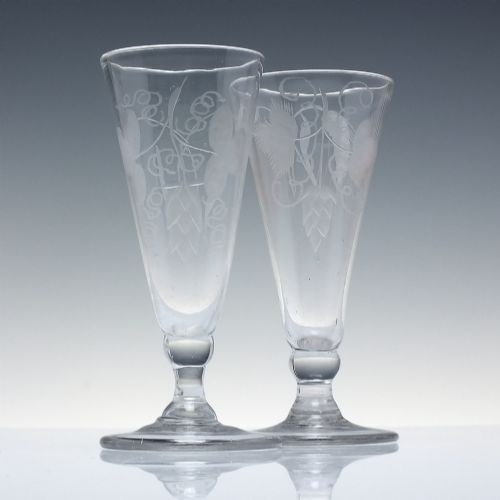
The pieces you are most likely to meet on this page include Georgian ale glasses, rummers, and flutes featuring traditional engraved motifs such as hops and barley. They date from the mid-eighteenth century up to around eighteen hundred and twenty, reflecting the prevailing styles of the Georgian and Regency eras.
How they were made
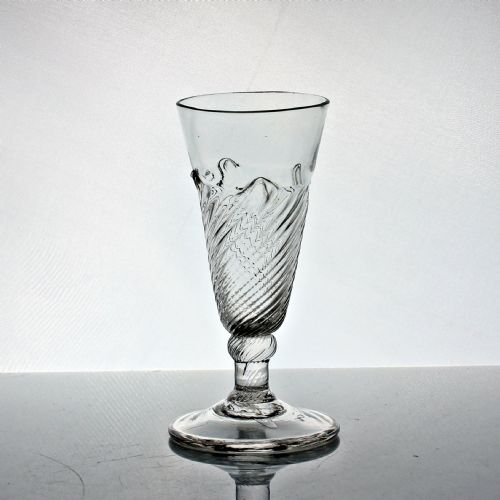
Gloving hands shaped these drinking vessels from lead glass, lead crystal, and flint glass, utilising traditional blowing and moulding techniques. Artisans achieved distinct visual textures through full wrythen moulding, creating spiral patterns within the body of the glass.
Detailing on the vessels involved meticulous hand engraving and facet cutting upon stems and bowls. The inclusion of air twists within the stems demonstrates the skilled manipulation of air bubbles during the glassblowing process.
Historic drinkers needed sturdy vessels: eighteenth-century ale glasses often featured hefty bowls just to survive rowdy toasts.
What varies in quality
The standard of an antique beer glass rests upon the clarity of the metal and the crispness of its decorative cuts. Superior examples display brilliant light refraction through high-grade lead crystal alongside finely detailed wheel engraving depicting hops and barley.
Form and proportion set the finer pieces apart from standard tavernware, particularly where stems feature intricate air twists or precise facet cutting. The harmony between the engraved motifs and the vessel shape indicates the level of craftsmanship invested by the glasshouse.
The Antique Beer Glass Glossary
- Rummer
- A large heavy drinking glass popular in the Georgian period, often utilised for serving ale or beer. These vessels typically feature substantial bowls supported by short, sturdy stems.
- Wrythen moulding
- A decorative technique producing spiral ribs or flutes in blown glassware. This pattern is achieved by twisting the glass while it is hot within a specialised mould.
- Air twist
- A decorative stem formation containing an elongated spiral of tiny air bubbles. Glassmakers created this effect by drawing out air trapped inside the molten metal during the pull.
- Facet cut
- Geometric surface cutting that creates a series of flat planes across the glass. This method enhances the brilliance of lead crystal by catching and reflecting light.
- Flint glass
- An early British term for high-quality clear glass containing lead oxide. It provided the heavy weight and exceptional clarity necessary for precision cutting.
Antique Beer Glass: Frequently Asked Questions
What is an antique beer glass?
An antique beer glass is a Georgian drinking vessel, such as an ale glass, flute, or rummer, produced during the eighteenth or early nineteenth century.
These pieces were specifically formed from lead glass or flint glass to handle the robust beers and ales of the era.
How do I identify Georgian glassware?
Georgian glassware is characterised by heavy lead metal content, pontil marks on the base, and period-appropriate decorative techniques like air twists or hop and barley engravings.
Looking closely at the manufacturing anomalies and the type of glass helps confirm the mid-eighteenth to early nineteenth-century origin.
What are hops and barley motifs?
Hops and barley motifs are traditional wheel-engraved decorations showing the primary agricultural ingredients used in brewing beer and ale.
These naturalistic designs were frequently applied to Georgian drinking vessels to denote the specific function of the glass.
How were air twist stems made?
Air twist stems were formed by piercing hot glass with pins to trap air, which was then stretched and twisted into a spiral as the stem was pulled.
This technique required immense skill from the glassblower to maintain an even and delicate pattern within the lead crystal.
Can I use antique drinkware?
While these pieces are durable lead glass items, many collectors prefer to display them rather than use them daily to preserve their historical surface condition.
Gentle hand washing is essential if handling or utilising these fragile Georgian drinking vessels.