




Antique Bear Figure
An antique bear figure brings character to a room, appearing in carved wood, bronze or silver across several European and Asian traditions.
Antique Bear Figure
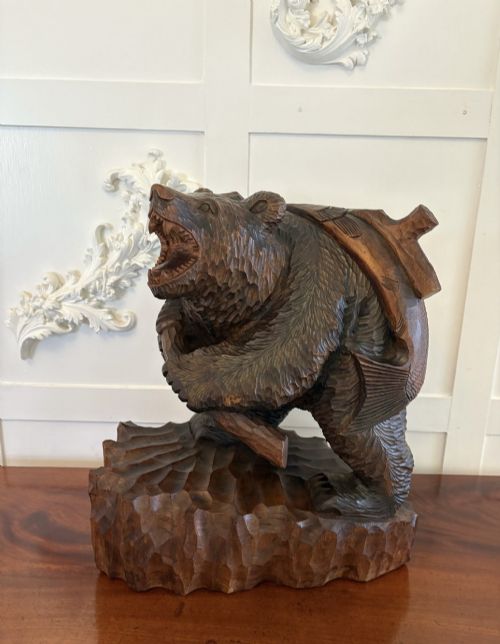
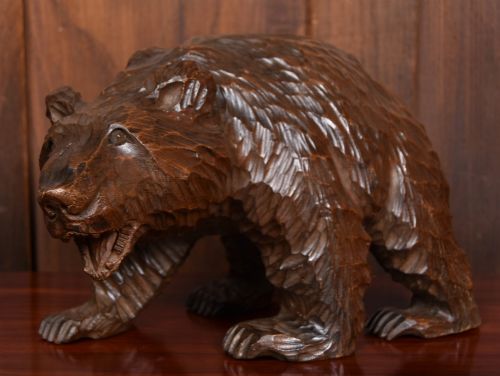
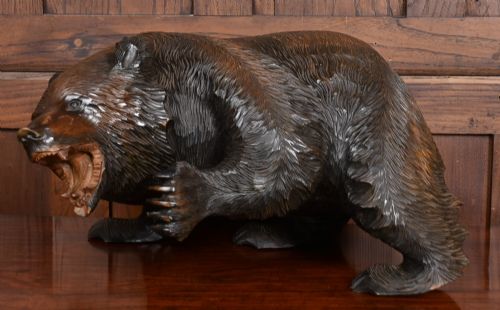
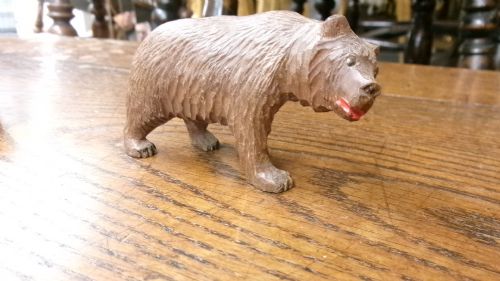
An antique bear figure encompasses carved wood sculptures, bronze statuettes, and small silver novelty items created during the eighteenth, nineteenth, and early twentieth centuries. When searching for an antique bear figure, collectors most frequently encounter pieces carved from linden wood and walnut originating from the Black Forest region or Japanese workshops.
The objects range from large freestanding sculptures and pairs of walking bears to functional desk accessories like inkstands, candlesticks, and condiment containers. Many of these pieces reflect regional carving traditions, particularly Swiss and German folk art alongside Meiji period Japanese metalwork and woodcarving.
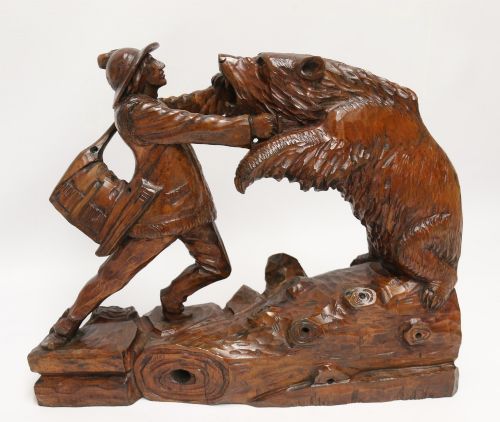
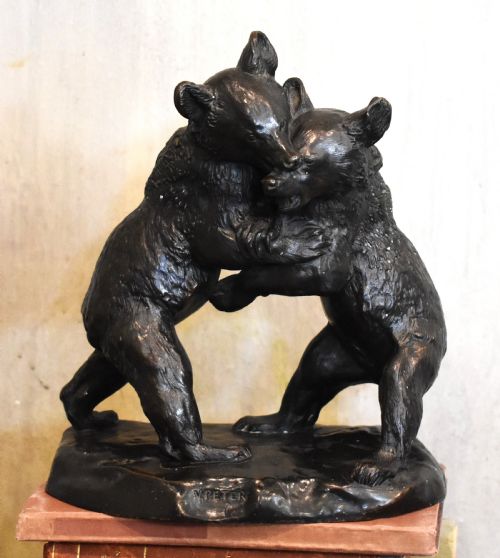
Makers and sculptors utilised domestic timbers such as walnut and linden wood alongside cast bronze to render animals in realistic or humorous poses. Collectors find both solitary creatures and complex figure groups depicting cubs fighting or carrying fish.
Materials and methods of construction
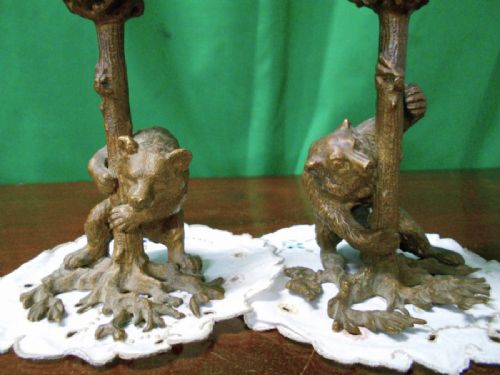
Metal versions rely on bronze casting, sometimes with gilt finishes, employing the lost-wax method to capture fine anatomical details in statues, candlesticks, and okimono. Smaller pieces such as pin cushions combine cast silver mounts with textile elements.
Distinctions in craftsmanship and design
The standard of an antique bear figure depends upon the anatomical accuracy and expression achieved by the carver or sculptor, alongside the crispness of detail in the fur and claws. Finer examples display subtle musculature and lifelike posture rather than rigid or generic forms.
Scale and ambition separate standard decorative items from exceptional works, with large multi-figure groups or signed artist bronzes representing the upper tier of production. The integration of practical elements, such as inkwells or candlesticks, into the sculptural form also influences the sophistication of the piece.
Kaniya Kuniharu·Victor Peter·Timothy Hughes·Christophe Fratin
The Antique Bear Figure Glossary
- Black Forest
- A designation for carved wooden animal figures and furnishings produced in Switzerland and the Black Forest region of Germany, typically featuring bears and forest motifs. These pieces date predominantly from the nineteenth century.
- Okimono
- A Japanese term for a decorative statue or ornament designed for display on a shelf or in a tokonoma alcove. In metalwork, these often depict animals with meticulous attention to surface texture.
- Animalier
- A nineteenth-century artistic genre focusing on the realistic depiction of animals, executed frequently in bronze by European sculptors. Works in this style capture creatures in motion or repose.
- Linden wood
- A pale, fine-grained timber favoured by European woodcarvers for its uniform texture and ease of handling with sharp tools. It allows for intricate undercut details in sculptural work.
- Novelty piece
- An object designed with a playful or amusing function, such as a condiment container or pin cushion shaped as an animal. These items combined utility with whimsical domestic decoration.
Antique Bear Figure: Frequently Asked Questions
What materials were used for these figures?
Makers relied primarily on linden wood, walnut, and assorted hardwoods for carved wooden sculptures, whilst metal versions used bronze and silver.
Surface finishes varied from waxed timber to gilt bronze and silver mounts.
How do I identify a Black Forest carving?
Black Forest carvings typically feature bears rendered in realistic or anthropomorphic poses, often fashioned from linden wood or walnut with distinct textured fur.
Many pieces incorporate functional elements like inkstands, candlesticks, or card trays into the wooden design.
Where were these bear figures made?
Production centred heavily on European workshops in the Black Forest region of Germany and Switzerland, alongside Japanese studios creating wood and bronze okimono.
Individual artists and regional craftsmen contributed to the diverse range of styles seen across the nineteenth century.
What functional types are available?
Beyond standard decorative sculptures and figurines, these bears served practical purposes on desks and dining tables as inkstands, condiment holders, and candlesticks.
Smaller novelty items also included silver pin cushions.