

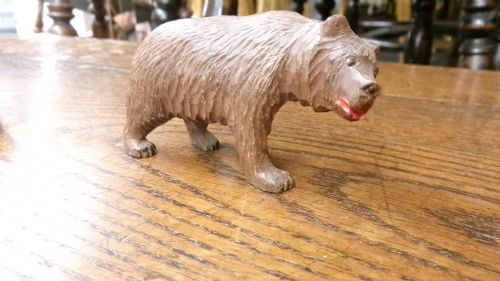
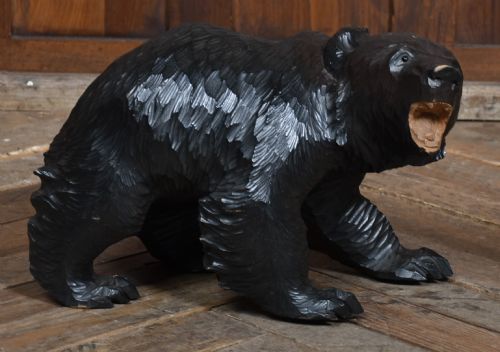
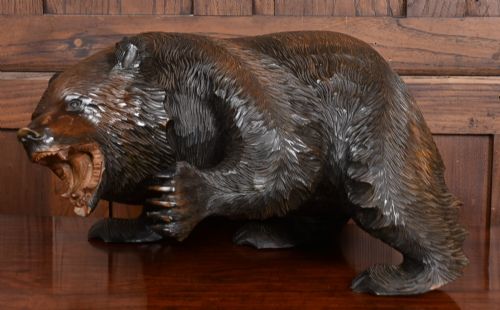


Folk Art Bear Sculpture
These folk art bear sculpture pieces bring carved linden wood, hardwood, and stud eyes into your home with charming character.
Folk Art Bear Sculpture
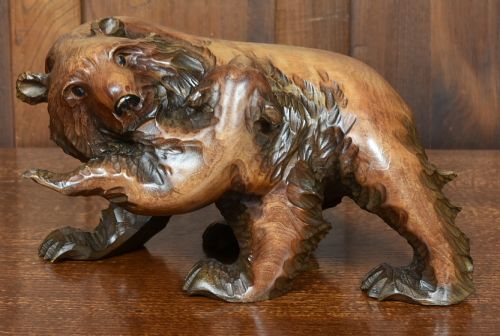
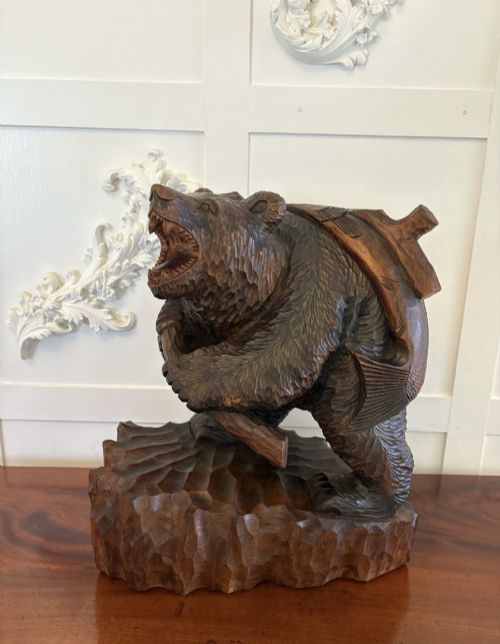
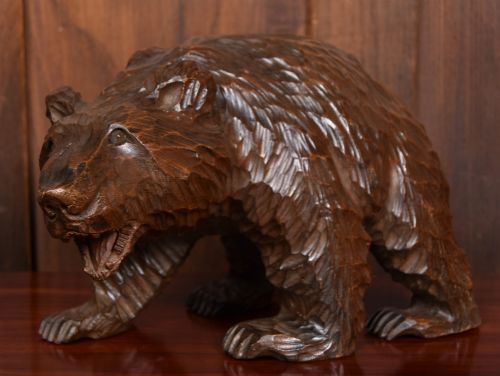
A folk art bear sculpture represents carved wooden animal figures originating from distinct regional traditions such as Black Forest, Swiss folk art, and Japanese folk art. These items include large decorative sculptures, figurines, and miniature sets.
The most common examples on this page are Japanese Kibori Kuma carvings and Black Forest carvings dating from the nineteenth century, nineteen hundred, and the Edwardian period.
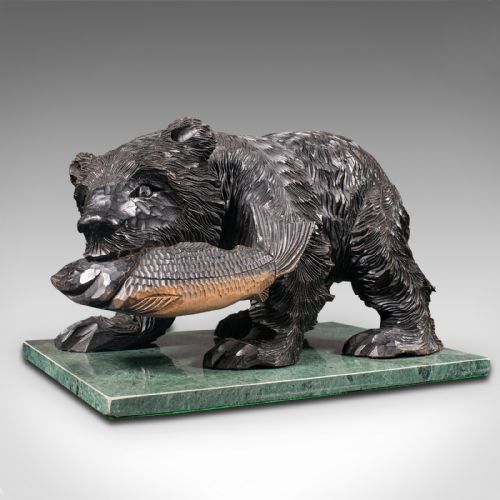
Makers produced these works in forms ranging from a single bear carrying a fish to sets of miniature bears and small figures with stud eyes.
How they were made
Carvers shaped these pieces using hand-carved techniques on natural timber, primarily linden wood and other hardwoods.
Finishers applied paint, stain, or wax to the wooden surfaces, while some sculptors incorporated metal elements like stud eyes for realistic detail.
Folk Art Bear Sculpture Retail Price Guide 2026
Typical asking prices for folk art bear sculpture among the pieces listed under this phrase on Sellingantiques today, from the lower quarter to the upper quarter. They describe what is for sale here now, not the wider market.
Japanese folk art and Black Forest traditions dominate the styles, alongside miniature sets and individual animal figures.
What varies in quality
Quality differences stem from the depth of detail in the hand-carving and the expressive accuracy of the bear form.
Larger sculptures and matched sets demonstrate greater sculptural ambition than small, simple carvings.
The Folk Art Bear Sculpture Glossary
- Kibori Kuma
- A traditional style of Japanese wood-carved bear originating from Hokkaido. These carvings often depict the animal holding a fish.
- Black Forest carving
- Nineteenth-century wooden sculpture originating from the Brienz region of Switzerland and the Black Forest in Germany. These works typically feature naturalistic bears and woodland motifs.
- Linden wood
- A pale, fine-grained timber frequently utilised by carvers for its cooperative texture. It allows for intricate detail without splitting.
- Stud eyes
- Small metal fittings inserted into carved wooden animal heads to represent eyes. They provide a reflective contrast to the matte wood surface.
Folk Art Bear Sculpture: Frequently Asked Questions
How old are these bear carvings?
The pieces listed date from the nineteenth century, including objects from eighteen sixty, nineteen hundred, and the Edwardian era.
Materials and carving styles help distinguish these older periods from modern reproductions.
What wood was used?
Carvers utilised linden wood and general hardwoods to create these figures. The timber was then finished with paint, stain, or wax.
Some examples also feature metal stud eyes to add definition to the animal faces.
Where did Black Forest bears originate?
Black Forest carvings were produced in European centres including the Swiss and German regions during the nineteenth century and nineteen hundred.
These sculptures focus heavily on naturalistic depictions of bears in various poses and groupings.