


Antique Beach Landscape Picture
An antique beach landscape picture brings the nineteenth-century coast directly into a room, offering quiet stretches of sand and working shores.
Antique Beach Landscape Picture
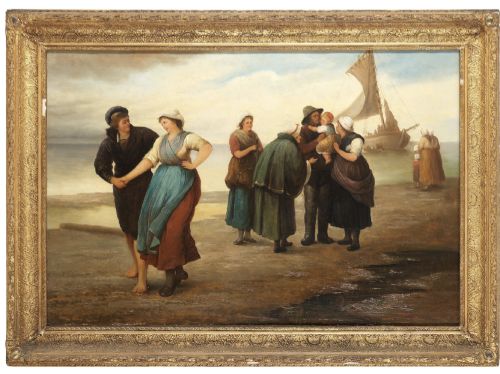
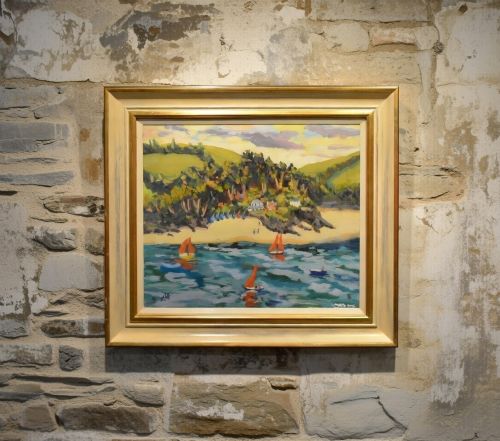
An antique beach landscape picture captures coastal life, tidal shores, and maritime views predominantly across the nineteenth and early twentieth centuries. These works range from grand oil paintings on canvas to intimate watercolour paintings on paper and framed prints.
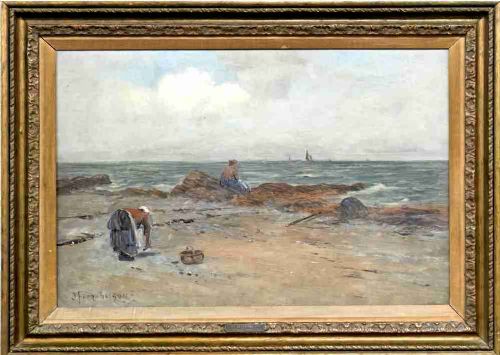
The pieces on this page lean heavily towards Victorian and Edwardian depictions of British and European shores, showing local fisher folk, beached boats, and quiet coastal stretches. Buyers encounter scenes from Yorkshire, Norfolk, Devon, and Scottish coastal waters.
Subjects often record everyday coastal labour, including seaweed carts, oyster pickers, and figures spreading nets alongside calm or stormy seas. Such works combine landscape observation with social history.
How these coastal pictures were made
Artists worked primarily in oil paint on canvas or applied watercolour upon paper, capturing atmospheric light and coastal moisture. Many watercolours and oils sit within period wood frames, occasionally featuring gesso mouldings or hand enamelled polychrome decoration.
Printmakers employed techniques such as etching with aquatint to achieve tonal depth in seaside views. Canvas supports and heavy paper stocks provided durable foundations for artists painting out in the open air.
Fisher folk haul seaweed, gather oysters, and mend nets on these shores, proving that Victorian holidays involved considerably more mud.
What varies in quality
Quality rests in the sureness of brushwork and the artist's command of atmospheric light across water, sand, and sky. Stronger works convey the chill of low tide and the specific weight of figures hauling nets without relying on generic formulas.
The preservation of the paper or canvas and the originality of the frame contribute significantly to a piece's standing. Works with clear provenance, legible signatures, and well-preserved media outrank tired, routine studio copies.
Joseph Farquharson R.A.·James Webb·Frederick William Hattersley·John Mitchell·Kate E Booth·George Hamilton Constantine·William Russell Flint·Owen Bowen·Madeline Hughes·William Greaves·Edmund Gouldsmith·Norman Janes·William Shayer·Thomas Bush Hardy
The Antique Beach Landscape Picture Glossary
- Watercolour
- A painting method where fine pigment is suspended in water soluble binder and applied to paper. It allows for transparent washes of coastal light.
- Etching
- A printmaking process where acid bites lines into a metal plate to hold ink. It creates fine, detailed linear marks.
- Aquatint
- A printmaking method used alongside etching to produce tonal areas resembling watercolour washes. It achieves soft shadows in coastal scenes.
- Gesso
- A plaster mixture applied to wood frames to create a smooth surface for gilding or moulding. It provides ornate decoration around period paintings.
- Canvas
- A heavy woven fabric stretched tightly over a wooden frame to serve as a painting surface. It is typical of larger nineteenth century oil works.
Antique Beach Landscape Picture: Frequently Asked Questions
How do I care for an antique watercolour?
Keep antique watercolours out of direct sunlight to prevent the pigments and paper from fading over time. Use UV-filtering glass when framing to protect the delicate media.
Ensure the hanging wall remains free from dampness, as moisture encourages foxing and paper degradation. Maintain stable room temperatures to prevent the paper from warping inside its mount.
Are these paintings original or prints?
The selection includes both original hand-painted works in oil or watercolour and limited edition prints. Close inspection reveals brush texture in oil paintings and pigment granulation in watercolours.
Listings specify the exact medium, distinguishing unique canvas and paper works from etchings and signed prints. Examining the surface under magnification clarifies how the image was applied.
What is Victorian marine art?
Victorian marine art encompasses nineteenth century paintings focusing on the sea, coastal craft, shipwrecks, and shore life. These works reflect the period's deep economic and cultural connection to maritime industries.
Artists in this genre documented naval vessels, local fishing fleets, and dramatic coastal weather with close attention to nautical detail. Such pictures capture both the utility and the danger of Britain's shores.
How do I identify a nineteenth century frame?
Nineteenth century frames often feature heavy wooden construction ornamented with moulded gesso decorative motifs. Gilding or painted finishes show age-appropriate wear and craquelure across the surface.
Original frames fit the canvas or paper tightly and may bear historical framer labels on the reverse wood. Examining the corner joints reveals traditional joinery methods distinct from modern manufacturing.