




Coastal Fishing Scene Painting
A coastal fishing scene painting captures the maritime life of working harbours and open shores through centuries of artistic observation.
Coastal Fishing Scene Painting
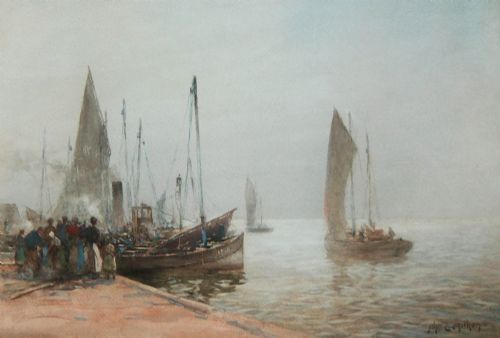
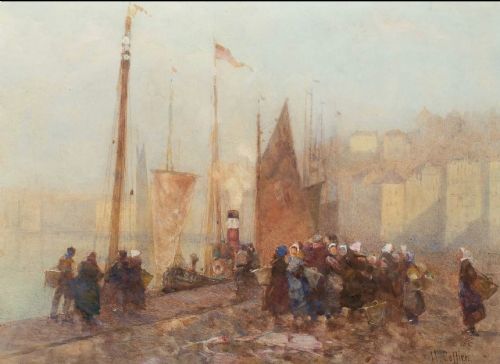
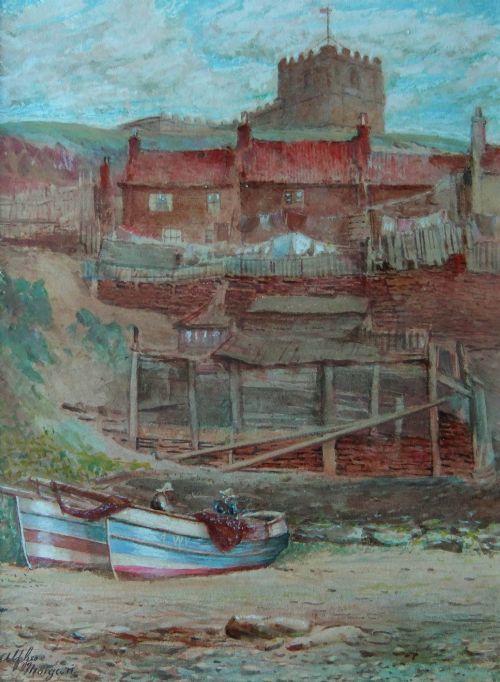
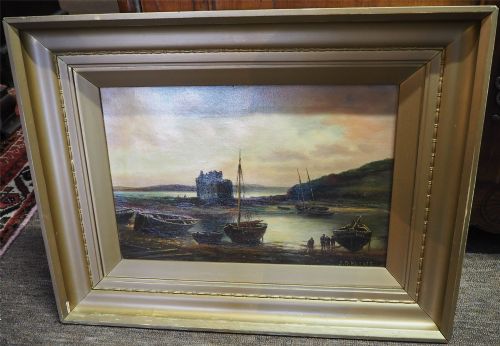
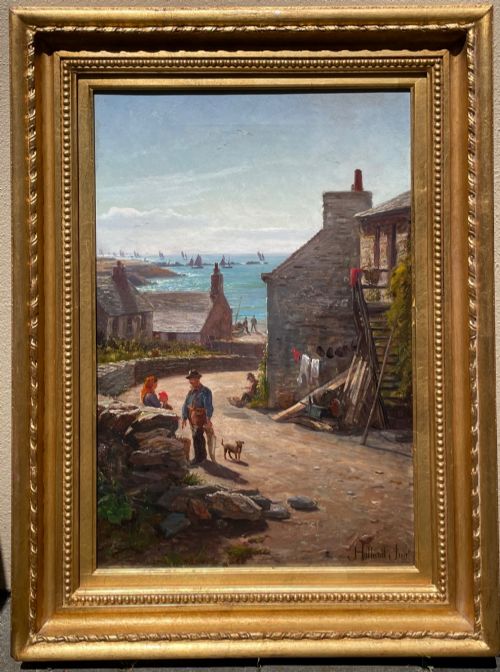
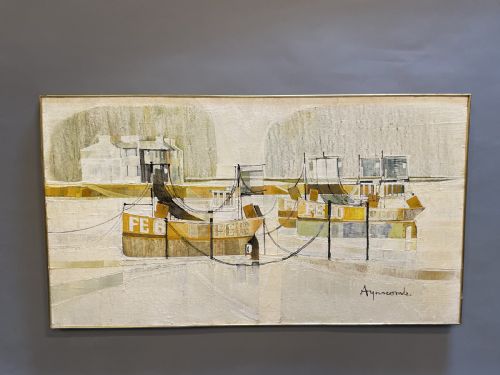
A coastal fishing scene painting portrays boats, harbours, and shores from various periods including the Victorian era and the mid-twentieth century. These works document maritime trades, local catches, and coastal architecture through the eyes of artists drawn to the sea.
Most pieces available on this page originate from British schools, featuring familiar fishing ports from Yorkshire, Cornwall, and Scotland. Painters utilised oil and watercolour to record the changing light on hulls, nets, and coastal villages.
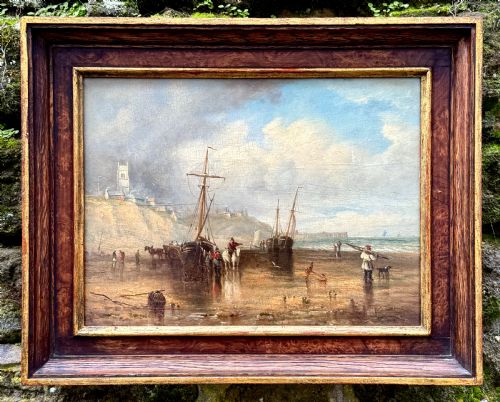
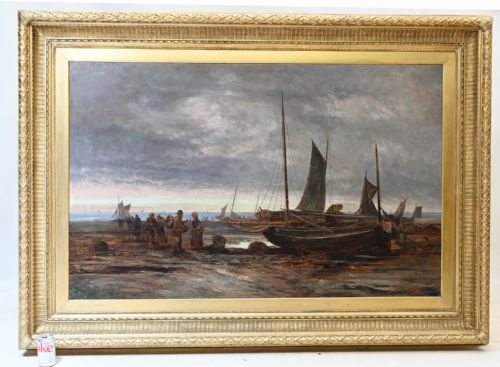
The subjects range from busy harbour docks with vessels unloading catches to stormy seas where fishing boats battle rough weather. Buyers encounter both intimate watercolours on paper and large canvas oil paintings framed in period wood.
How They Were Made
Artists painted these scenes using oil paint or watercolour applied to canvas, board, paper, or panel supports. Oil mediums allowed for rich textures in depicting turbulent seas and heavy skies, whilst watercolours captured translucent light on harbour waters.
Makers often worked plein air along the coast or developed studio pieces from detailed sketches of fishing boats and dockyards. Finished works were traditionally housed in carved or gilded wood frames that complemented the maritime subject matter.
Several artists clearly braved very choppy seas to capture these rolling waves and bustling harbours without dropping their paintbrushes.
What Varies in Quality
The distinction between works rests on the artist's handling of maritime atmosphere, light, and movement. Superior pieces convey the specific weight of sea water and the correct rigging of fishing vessels rather than generic coastal backdrops.
Composition and tonal harmony separate accomplished works from standard topographical records. Stronger paintings integrate human figures and working boats naturally into the surrounding harbour or seascape.
Kenneth Cozens·James Orrock·James E. Aitken·Hector Caffieri·Thomas Creswick·Alfred G. Morgan·John Holland·Retailed Liberty & Co·Gyrth Russell·William Lee Hankey·Gustave De Bréanski·James Kyd·T.S. Wallis·George Gregory·George Morland·John Bell·Frederick William Hattersley·Kate E Booth·Ernest F. Hill·Percy Brooke·William Lambert Bell·Owen Bowen·William Shayer·Antonio Godoy·Walter Sweet
The Coastal Fishing Scene Painting Glossary
- Oil Paint
- Pigment bound in a drying oil, typically linseed oil. This medium offers rich colour saturation and allows for visible brushwork.
- Watercolour
- A paint consisting of colourants suspended in a water-soluble vehicle. It is typically applied to paper to achieve luminous, transparent effects.
- Canvas
- A heavy woven fabric stretched across a wooden stretcher frame to form a durable painting surface.
- Board
- A rigid flat sheet of wood or compressed paper pulp used as an alternative painting support to canvas.
Coastal Fishing Scene Painting: Frequently Asked Questions
How do I date a coastal fishing scene painting?
Dating relies on stylistic clues, framing techniques, and the clothing or boat designs depicted within the canvas. Signatures and exhibition labels on the reverse also provide reliable chronological markers.
Changes in artistic movements from Victorian realism to British impressionism help narrow down the decade in which the work was produced.
Where were these fishing scenes typically painted?
Many works originate from notable fishing hubs along the British coastline, including ports in Cornwall, Yorkshire, and Scotland. Artists frequently gathered in colonies such as Newlyn to study local maritime life.
Continental ports in France and the channel coasts also appear frequently in nineteenth and twentieth-century compositions.
How should I display a watercolour painting?
Watercolours on paper require protection from direct sunlight to prevent the pigments from fading over time. Glazing with conservation-grade glass helps shield the delicate surface from moisture and dust.
Keep these works away from damp areas like unheated rooms to protect both the paper support and the original frame.
What is the difference between oil and watercolour marine works?
Oil paintings on canvas or board generally offer thicker textures and deeper colour tones suited to dramatic seascapes and stormy skies. Watercolours provide a lighter, more transparent finish that captures subtle coastal light.
Both mediums were widely used by marine artists, though watercolours were often favoured for preliminary studies and smaller coastal views.