




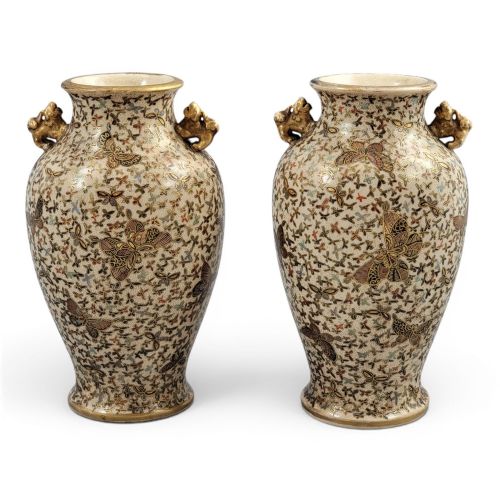


Antique Asian Pottery Pair
These antique asian pottery pair items bring matched balance to a room, offering dual forms created through centuries of ceramic tradition.
Antique Asian Pottery Pair
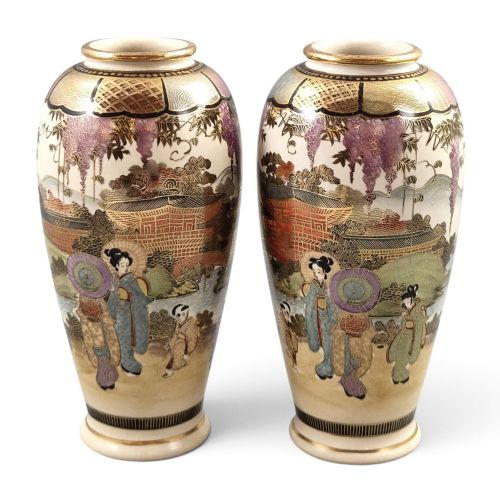
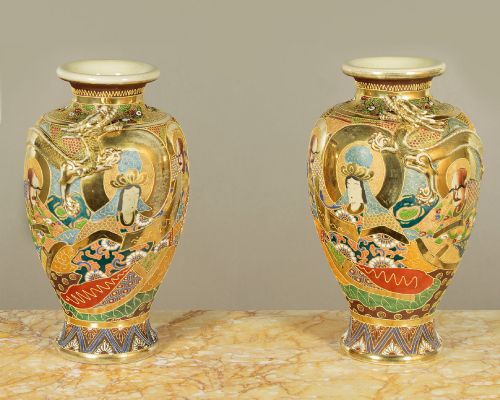
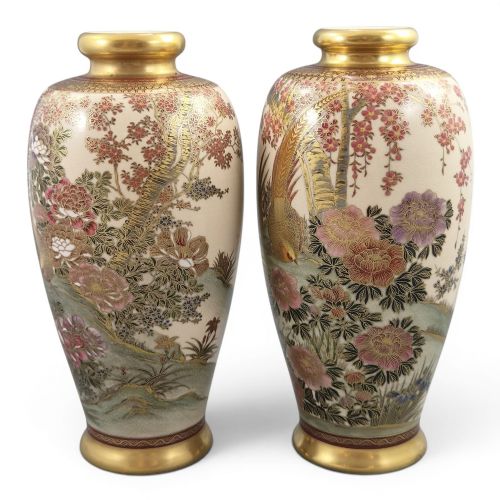
An antique asian pottery pair brings together two matched ceramic pieces, most frequently taking the form of vases originating from Japan and China during the nineteenth and early twentieth centuries.
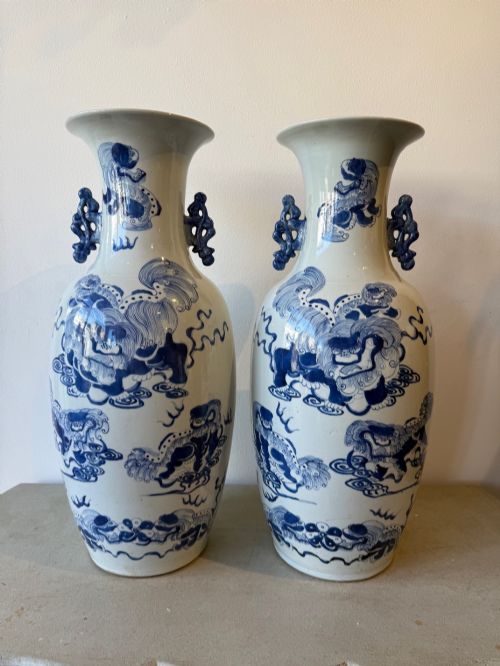
Buyers seeking this phrase encounter distinct regional aesthetics, ranging from the intricate earthenware of Satsuma and Kutani to the crisp palette of blue and white porcelain and Imari wares.
The selection extends beyond traditional vessels to encompass decorative plates, figurative groups, and architectural roof ornaments from periods spanning the Meiji, Taisho, and Showa eras.
Methods and materials in production
Potters utilised earthenware and porcelain as foundational bodies, shaping clay by hand or upon the wheel before applying detailed underglaze and overglaze colours.
Artisans layered delicate enamel pigments alongside gold leaf and gilt detailing, achieving the rich surface decoration characteristic of Satsuma and Kutani workshops.
Among the ceramic menagerie, stern Foo Dogs and whimsical Mandarin ducks keep a permanent, silent watch over the collection.
Distinctions in quality and execution
The standard of an antique asian pottery pair rests upon the precision of the hand-painted brushwork and the clarity of the polychrome enamel and gilt application.
Pieces from distinguished kilns and documented makers display superior refinement in form, glaze consistency, and compositional balance across both matching objects.
Maruni Kobe·Shozan·Manpei·Kinkōzan·Kinzan·Makuzu Kozan II·Hakusan
The Antique Asian Pottery Pair Glossary
- Satsuma
- Earthenware pottery originating from Japan, typically characterised by a crackle-glaze ivory surface decorated with elaborate enamel and gold.
- Kutani
- Japanese porcelain and ceramic ware known for vibrant overglaze colour palettes, often featuring reds, greens, and golds.
- Imari
- Japanese porcelain decorated in underglaze blue, iron red, and gold, produced primarily for export from the port of Imari.
- Meiji Period
- The era of Japanese history lasting from 1868 to 1912, associated with the opening of trade and intricate export crafts.
- Okimono
- Japanese decorative figurines designed for display on a tokonoma alcove or shelf rather than for practical utility.
Antique Asian Pottery Pair: Frequently Asked Questions
What defines an antique asian pottery pair?
An antique asian pottery pair consists of two complementary ceramic vessels or figures created in Asian kilns, most commonly during the nineteenth and early twentieth centuries. These matched objects share identical decorative schemes, forms, and dimensions to display together symmetrically.
Such pairings frequently include Satsuma earthenware vases, Kutani porcelain plates, and Imari decorative pieces originating from Japan, alongside Chinese blue and white porcelain vessels.
How were Satsuma vases decorated?
Satsuma wares utilise a distinctive cream-coloured earthenware body covered in a fine, microscopic crackle glaze. Artisans then hand-painted intricate figurative or floral scenes directly onto this surface using rich enamel pigments.
To complete the decoration, makers added generous amounts of gold leaf and gilt detailing to highlight borders, garments, and natural elements across the composition.
Where should I place these pairs in a home?
Matched ceramic vessels suit prominent display locations where their symmetrical forms and detailed surface decoration can be appreciated from a distance. Common placements include mantelpieces, sideboards, or dedicated display tables.
Larger floor vases or architectural figures work best positioned directly on stable flooring in hallways or spacious reception rooms to maintain balance within the interior.
How can I distinguish Meiji period pieces?
Meiji period ceramics, produced between 1868 and 1912, often reflect the intense artistic output driven by international export demand during Japan's opening to Western trade. These works frequently bear workshop signatures or artist names painted on the base.
The decoration on these pieces typically exhibits exceptional density and meticulous attention to detail, combining traditional motifs with innovative glazing and gilding techniques.