


Antique Asian Bronze Vases
These antique asian bronze vases bring centuries of foundry work and decorative detail into domestic interiors through sculpted handles, inlaid surfaces and patinated metals.
Antique Asian Bronze Vases
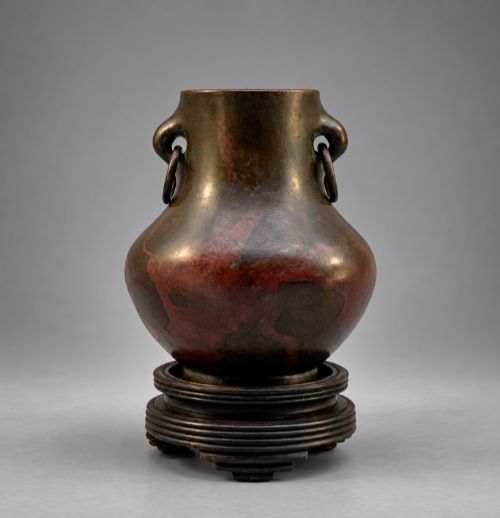
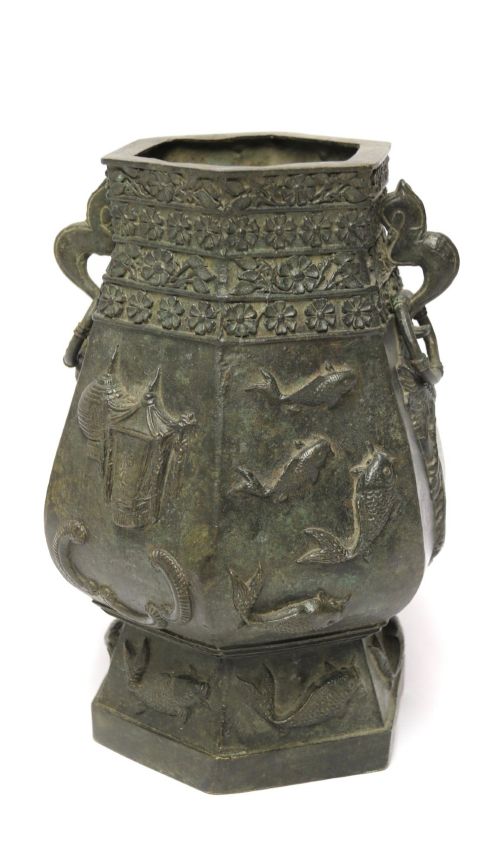
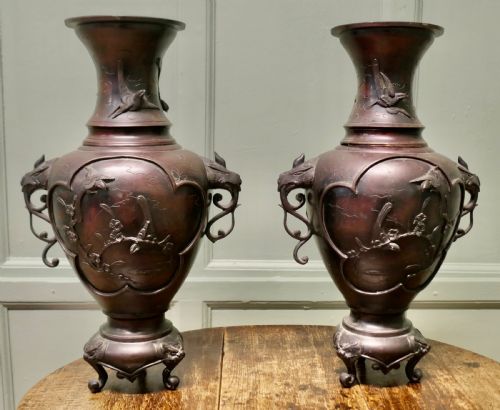
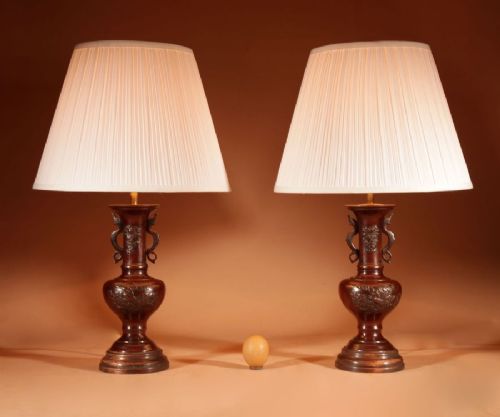
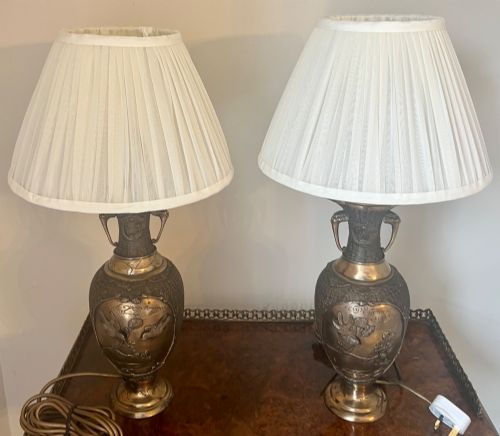
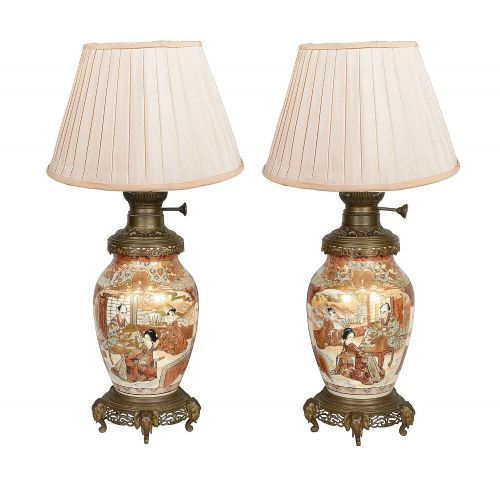
When you search for antique asian bronze vases, you find pieces originating from Japanese Meiji and Chinese Qing contexts, spanning the nineteenth and early twentieth centuries. The selection includes baluster shapes, ritual vessel forms, and ginger jars alongside garden urns and pieces later converted into table lamps.
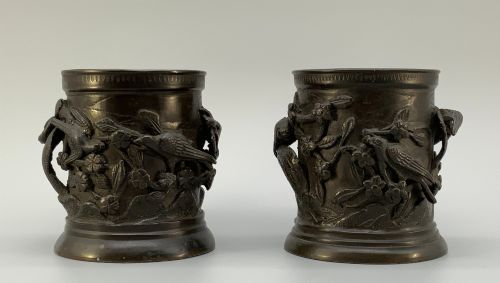
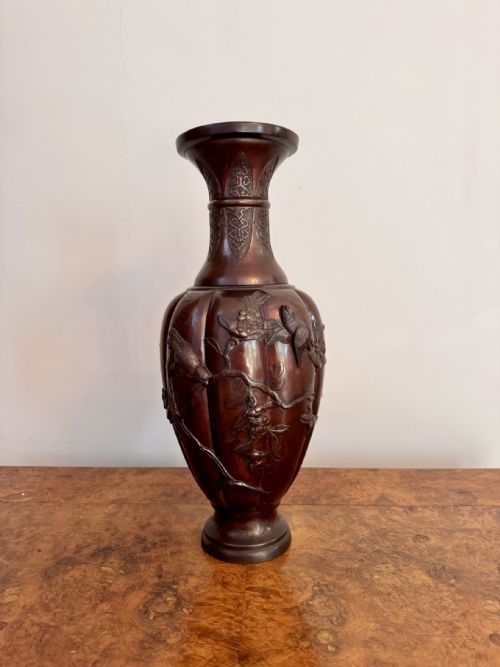
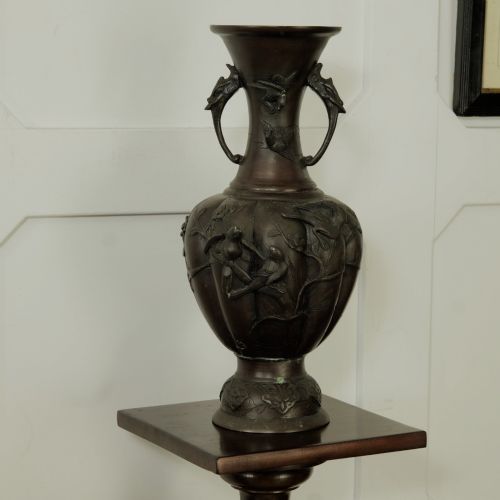
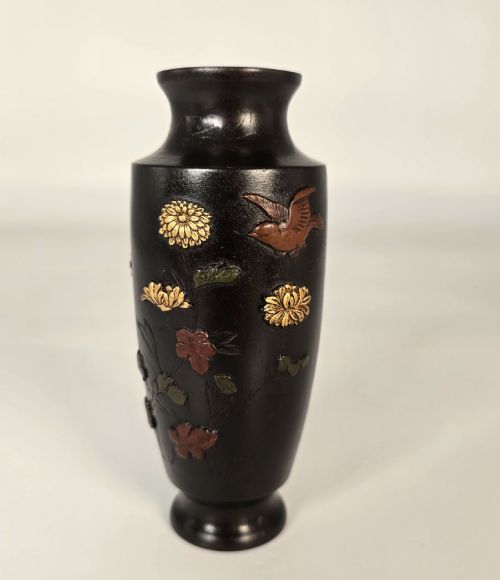
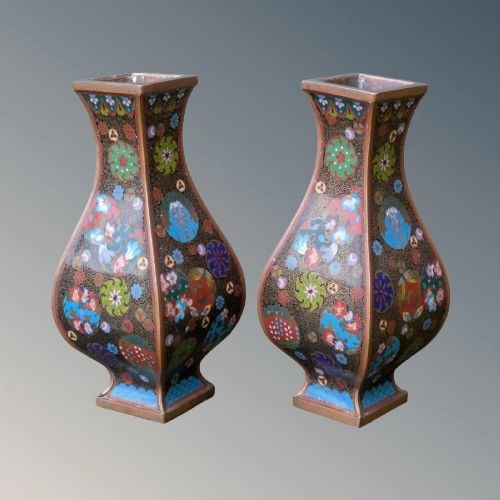
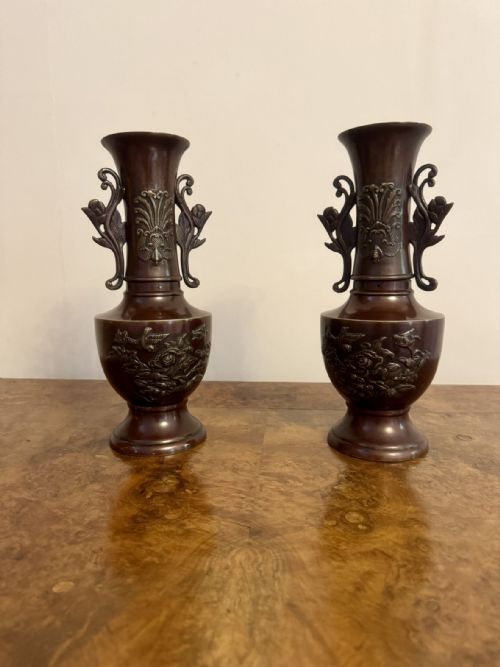
Japanese Meiji examples frequently display high-relief birds, blossoms, or dragons, while Chinese pieces often incorporate champlevé enamel or archaistic details. Pairs appear regularly alongside single monumental vessels and smaller stem vases designed for display.
Materials and technique
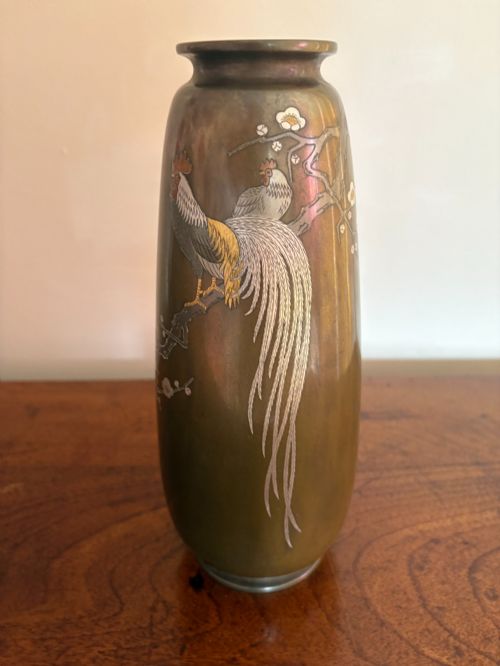
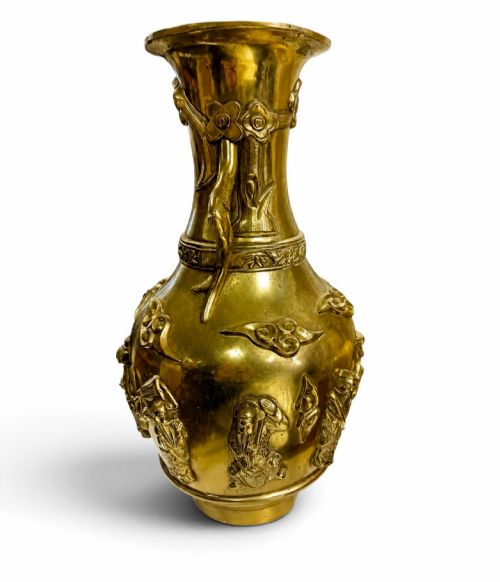
Foundries utilised solid bronze, copper-alloy, and brass, applying patination to achieve deep surface tones on the metal. Artisans incorporated enamel and gilt metal elements to build contrasting colour across the bodies.
Decoration relied on champlevé techniques, inlay work, and high-relief casting to depict figures such as Daoist immortals or fauna like koi and dragons.
Several dragon vases come equipped with matching candle holders, proving that mythological beasts were once expected to multitask.
Evaluating standard
Quality rests on the crispness of the casting and the precision of the chasing, particularly where high-relief motifs like dragons or floral sprays meet the main body of the vessel. Sharper definition in the chased details indicates a higher standard of workshop production.
The integration of secondary materials such as enamel and inlay reveals the maker's hand, where secure placement and harmonious colour transitions distinguish finer vessels from standard decorative output.
KANASAWA
The Antique Asian Bronze Vases Glossary
- Champlevé
- An enamelling technique where troughs are dug into the metal surface and filled with enamel powder before firing. This creates coloured decorative cells flush with the metal partitions.
- Meiji
- A Japanese imperial period spanning from 1868 to 1912 noted for a surge in export metalwork and refined bronze casting. Pieces from this era often feature naturalistic motifs.
- Baluster
- A vertical architectural form with a rounded lower body tapering to a narrow neck, frequently used for vase silhouettes. It provides a stable base and a balanced visual weight.
- Archaistic
- A stylistic choice where nineteenth-century makers replicated the shapes and decorative motifs of ancient ritual bronzes from earlier dynasties. This connects later foundry work to historical ritual vessels.
Antique Asian Bronze Vases: Frequently Asked Questions
How do I date an antique asian bronze vase?
Dating relies on stylistic markers tied to Japanese Meiji or Chinese Qing periods, alongside construction methods visible at the base and interior.
Surface patination and the presence of specific workshop signatures or reign marks also help establish the era of manufacture.
Were these vases used for water?
Many forms originated as ritual vessels, ceremonial items, or decorative display pieces rather than functional flower holders.
Over time, some vessels have been adapted into table lamps or garden planters while retaining their original metal bodies.
How should I clean a bronze vase?
Dust gently with a dry microfibre cloth to protect the historic patina and any delicate enamel or inlay work.
Avoid chemical polishes, abrasive cleaners, or water immersion, which can strip the aged surface finish and damage the metal.
What is the difference between bronze and brass?
Bronze is an alloy primarily of copper and tin, yielding a darker, richer tone suited to traditional patination.
Brass consists mainly of copper and zinc, generally presenting a brighter, yellower metallic colour unless chemically aged.