



Meiji Bronze Bird Vessels
Meiji bronze bird vessels combine intricate metalwork with naturalistic animal forms, offering collectors striking centrepieces rooted in nineteenth-century Japanese craftsmanship.
Meiji Bronze Bird Vessels
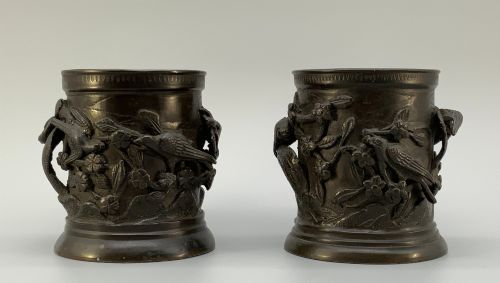
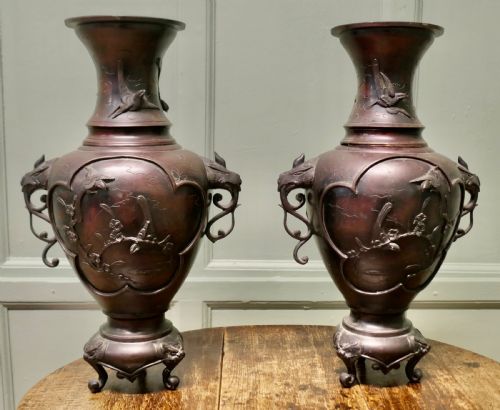
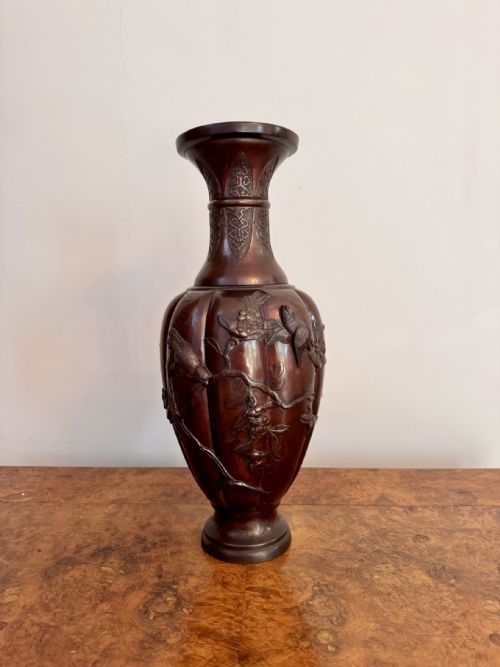
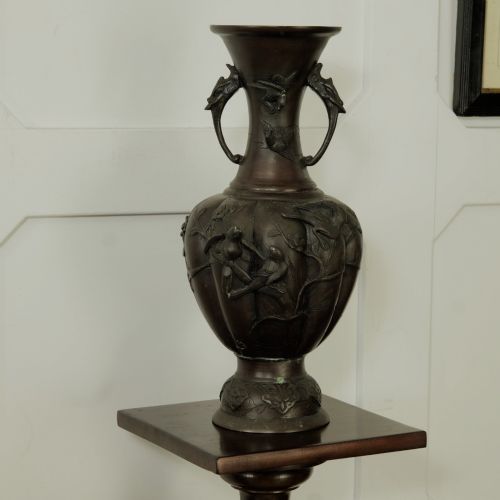
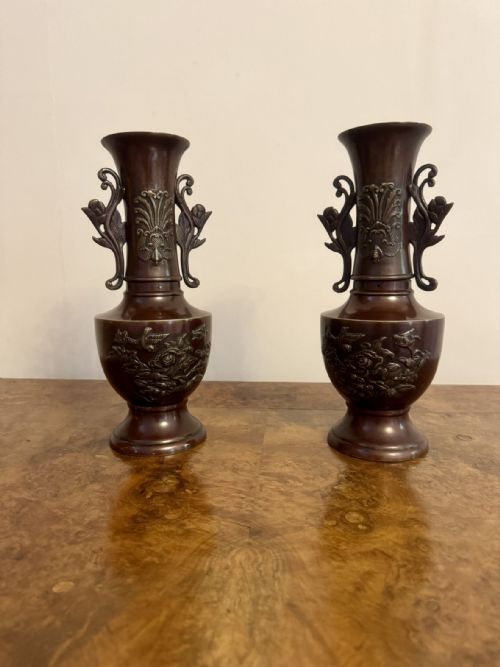
These pieces encompass bronze vases, incense burners, and jardinières originating from the Meiji period, spanning the late nineteenth and early twentieth centuries. Buyers seeking meiji bronze bird vessels commonly encounter paired vases and urns decorated with avian motifs, egret handles, and floral branchwork.
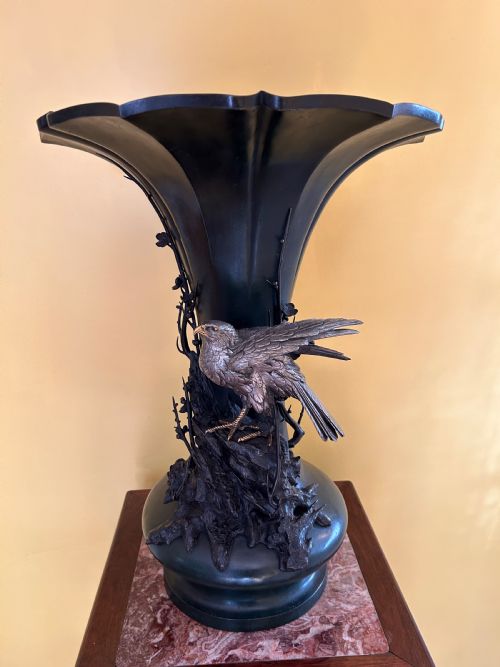
Objects on this page emerge from Victorian-era imports and exhibitions, reflecting European tastes for Japanese metalwork during the 1880s to 1910s. Forms range from small stem vases and posy vessels to very large presentation urns and planters.
Casting and metal inlay techniques
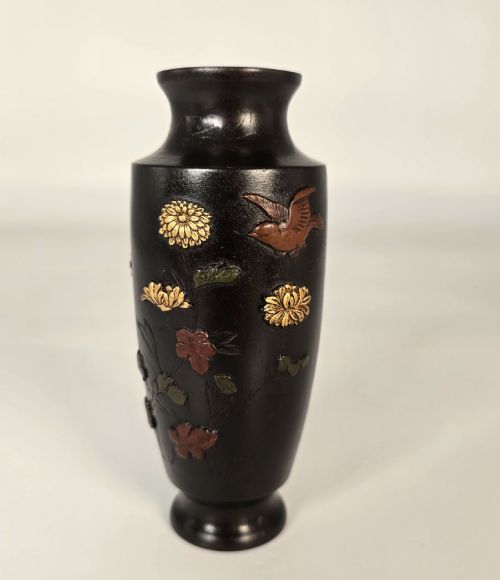
Artisans utilised bronze and patinated bronze as the primary substrate, applying copper, silver, and gold inlay to articulate raised floral and bird details. Surface enrichment often includes mixed metal elements, cloisonné enamel, and cord wrappings that accentuate handles and rims.
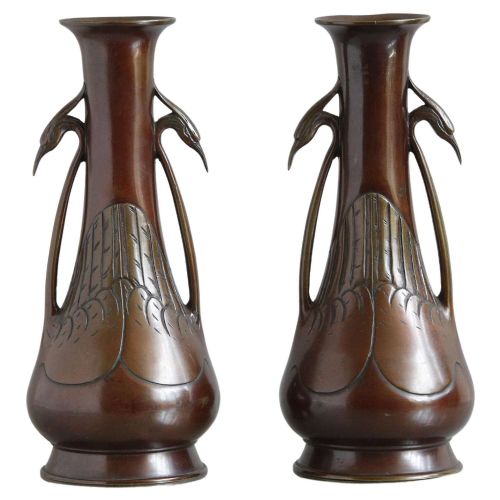
Foundries employed traditional lost-wax casting methods to achieve complex sculptural forms, such as egret handles and baluster silhouettes. Subsequent hand-finishing involved patination treatments and meticulous chiselling to define feathers, blossoms, and backgrounds.
Egrets frequently act as handles, allowing sturdy bronze birds to support the weight of heavy water-filled urns.
Evaluation of metalwork craftsmanship
Distinctions in quality rest upon the crispness of the raised detail and the harmony of the mixed metal inlay. Superior examples display precisely chiselled plumage and secure, flush integration of silver and gold elements into the bronze ground.
The depth and consistency of the patination dictate visual success, alongside the structural integration of sculptural handles like egrets. Finer vessels maintain balanced proportions across large pairs, whereas simpler items show more repetitive surface finishing.
The Meiji Bronze Bird Vessels Glossary
- Koro
- An incense burner featuring a perforated lid, often designed with three or more feet and decorative handles.
- Meiji Period
- The era in Japanese history spanning from 1868 to 1912, characterised by opening trade and exceptional metalwork production.
- Patinated Bronze
- Metal treated with chemical solutions to produce a controlled surface colour, ranging from deep brown to black or green.
- Jardiniere
- A large ornamental pot or planter intended for holding growing or cut plants, frequently cast in heavy bronze.
- Mixed Metal
- A technique combining bronze with contrasting metals such as silver, copper, and gold to create pictorial surface designs.
- Baluster Urn
- A vase form with a rounded body tapering to a narrow neck, resembling an architectural baluster.
Meiji Bronze Bird Vessels: Frequently Asked Questions
How were bronze bird vessels used?
These vessels functioned primarily as decorative display pieces within nineteenth-century interiors, often arranged as balanced pairs on mantelpieces or console tables. Incense burners, known as koro, served both aromatic purposes and ritual display.
Larger forms like jardinières held plants or floral arrangements, bringing naturalistic Japanese aesthetics into Western drawing rooms.
What periods do these pieces date from?
The inventory dates predominantly from the late nineteenth and early twentieth centuries, aligning with the Meiji period in Japan. Many pieces correspond chronologically with the British Victorian era through to the Edwardian period.
Specific dates recorded span from the 1880s up to 1910, reflecting the peak of export trade.
How do I care for antique bronze?
Maintain patinated bronze by dusting gently with a soft, dry cloth without applying commercial brass polishes or harsh chemical cleaners. Protective waxes should only be used sparingly if recommended by a specialist conservator.
Keep the vessels away from direct sunlight and damp environments to preserve the integrity of the original metal patination and inlay.
Are these pieces always found in pairs?
While many listings comprise matched pairs of vases intended for symmetrical display, single vessels also occur frequently. Vases with egret handles or bird decorations were produced both individually and as balanced sets for mantel decoration.
Larger planters and incense burners typically exist as singular objects rather than matched pairs.