


Antique Artwork with Dogs
Antique artwork with dogs captures canine companions alongside their owners in oil paintings, watercolours, and framed prints from past centuries.
Antique Artwork with Dogs
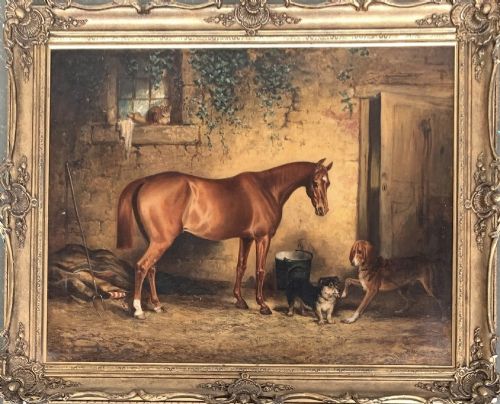
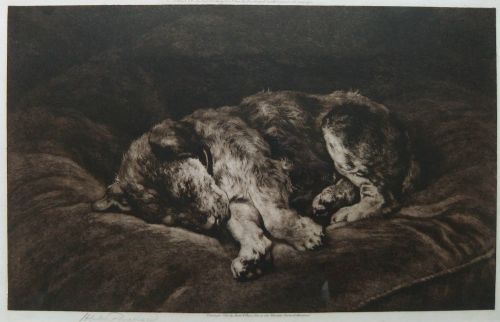
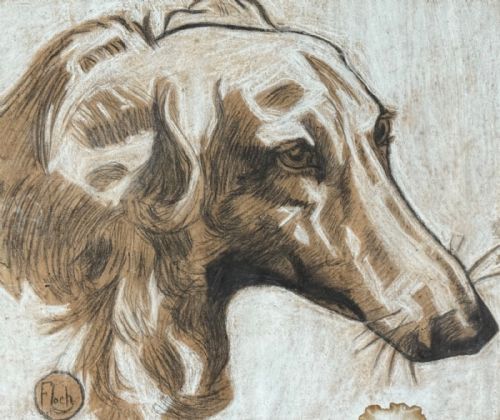
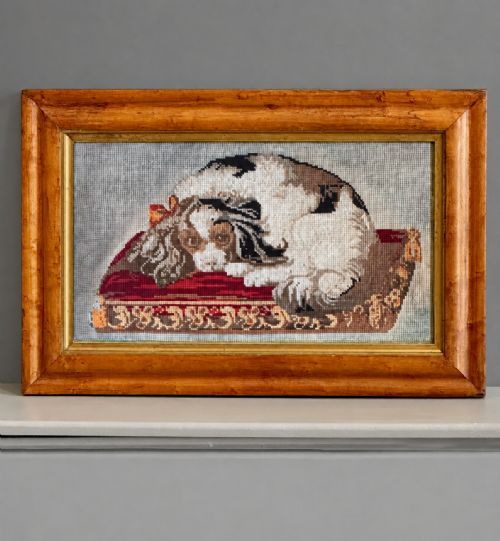
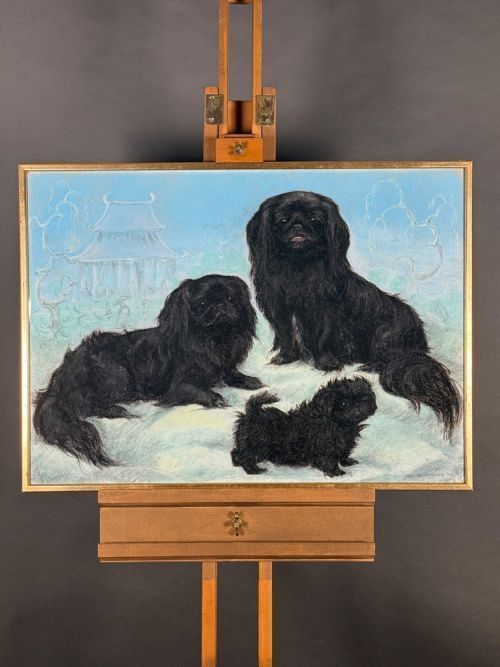
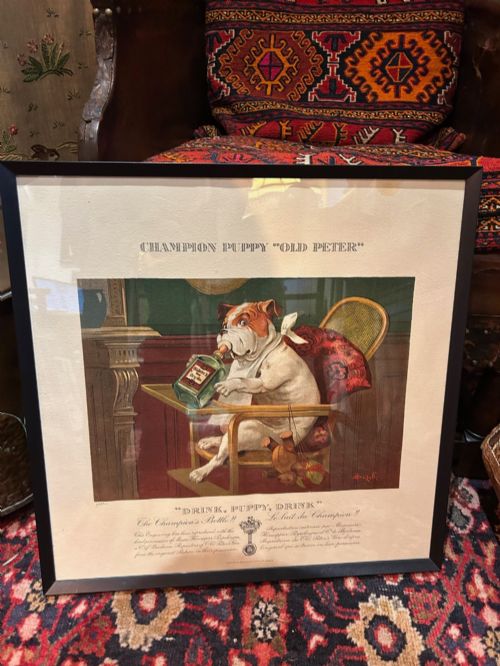
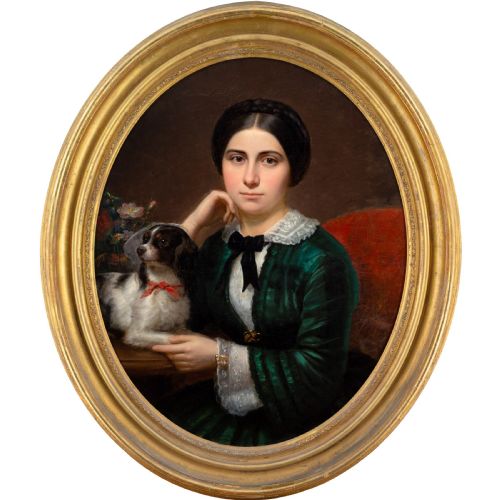
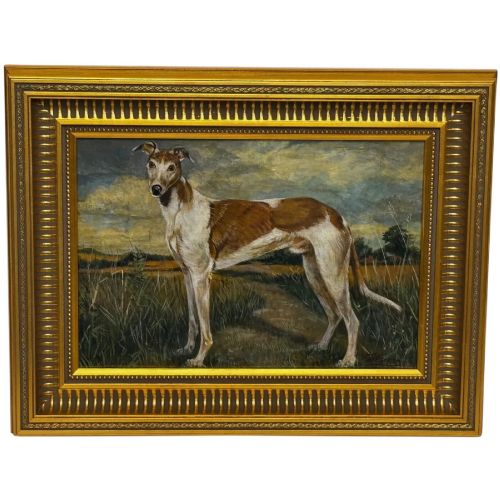
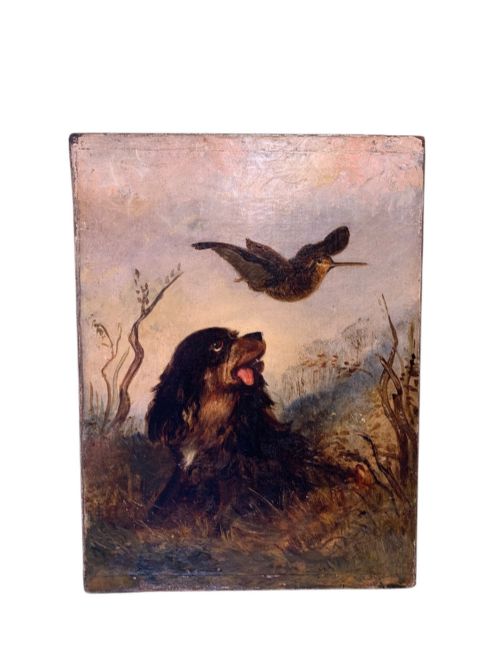
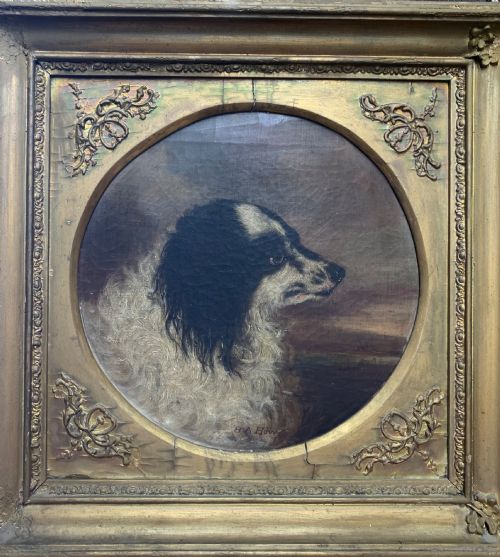
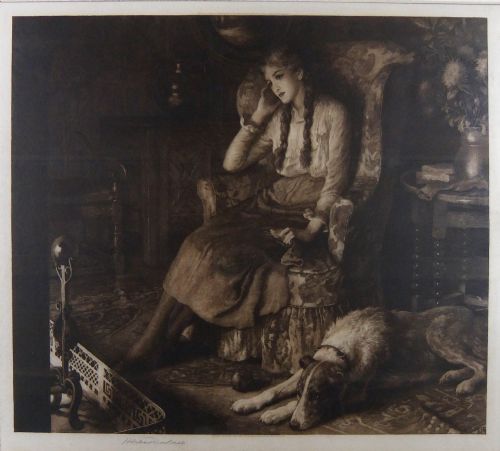
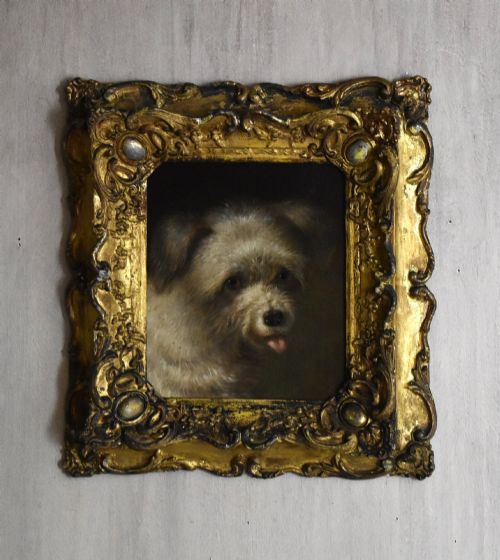
When you search for antique artwork with dogs, you encounter depictions ranging from formal Victorian equestrian portraits to informal folk art and naive studies. The pieces span Georgian, Victorian, and Edwardian periods, recording both prized gun dogs and family pets in oil, watercolour, and pencil.
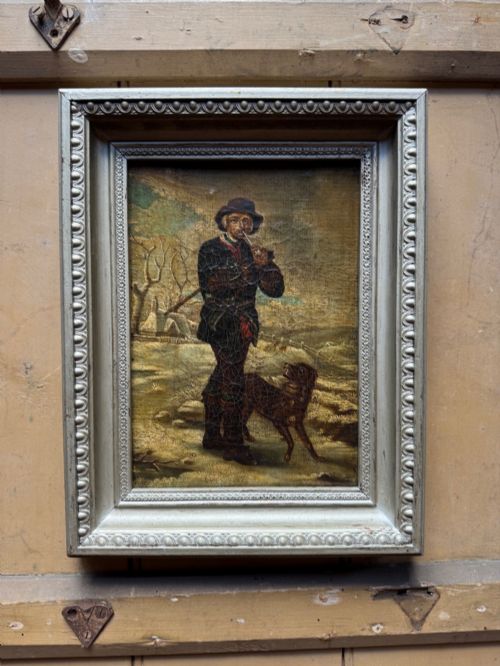
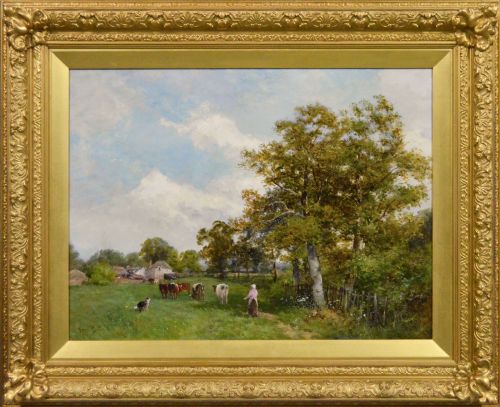
Portraits of children or ladies with spaniels, terriers, and hounds dominate the selection, often rendered by provincial schools or named artists. Landscape genre scenes also place working dogs alongside ploughmen, huntsmen, and cottage figures in rural settings.
How they were made
Makers built these works using oil paint on stretched canvas or wood panels, alongside watercolours and pencil on paper. Many oil paintings show layered brushwork and fine detail on animal coats, while watercolours rely on washes to capture domestic scenes.
Framing often involved gilt wood or glass to protect the paper prints and drawings, with some canvases bearing historical panel repairs on the reverse.
Listings feature oil on canvas, wood panels, and paper watercolours produced across the Georgian, Victorian, and Edwardian periods.
What varies in quality
Anatomical accuracy in the rendering of the dogs and the expressiveness of human figures separate standard provincial pieces from accomplished academic works. Superior brushwork, confident draughtsmanship, and balanced composition elevate portraits by listed artists above anonymous naive renderings.
The preservation of the original surface, stability of the canvas or paper, and the integration of period frames influence the overall character of each surviving piece.
John Sargent Noble·Samuel Raven·J F Marie Huet Villiers·John Alfred Wheeler·J Cecil Bradshaw·Henri Schouten·John Constable·Richard Waitt·Charles Bilger Spalding·Frank Owen Salisbury·Richard Buckner·Thomas Blinks·George Cole·Charles Hunt Jnr·Dean Wolstenholme·Francis Alleyne·Daniel Mytens
The Antique Artwork with Dogs Glossary
- Naive oil on canvas
- A painting executed with an unacademic, flat perspective and simplified forms, typically produced by provincial artists outside formal academies.
- Genre painting
- Artwork depicting scenes from everyday life, often including domestic animals, rural workers, and cottage interiors.
- Gilt wood
- Timber frames finished with a thin layer of gold leaf or metallic gilt, common in 19th-century presentations.
- Sporting art
- Depictions of field sports, hunting parties, and working gun dogs such as pointers, setters, and spaniels.
Antique Artwork with Dogs: Frequently Asked Questions
What periods do these dog artworks come from?
The listings span from the 17th century through the Georgian, Victorian, and Edwardian eras up to the early 20th century. Most pieces reflect 19th-century British and French academic or provincial styles.
Dates are assigned based on stylistic evidence, signatures, or historical attributions recorded in the individual titles.
Which dog breeds appear most frequently?
Spaniels, terriers, hounds, and pointers feature prominently across the portraits and sporting scenes. These breeds reflect the hunting traditions and domestic companions popular with past owners.
Artists often included specific working dogs, such as setters and gun dogs, to denote the status or occupation of the human subjects.
How can I tell a naive painting from a formal portrait?
Formal portraits by academic painters display correct human and animal proportions, sophisticated use of light, and detailed background landscapes. Naive works use flatter perspectives and simpler outlines with a charming, rustic directness.
Both styles offer genuine historical insight into how past households viewed their animals.
Were these artworks created as individual commissions?
Many oil portraits and equestrian scenes were commissioned by landowners or families to record cherished pets and sporting achievements. Smaller watercolours and prints often served as domestic wall decoration for middle-class homes.
Attributions to specific schools or named artists frequently point towards private commissions.