







Victorian Child Dog Painting
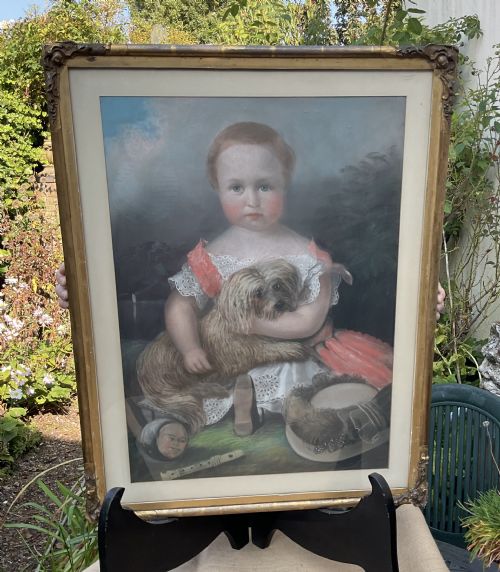
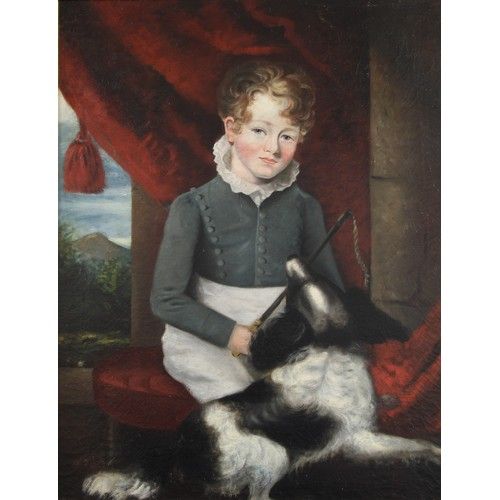
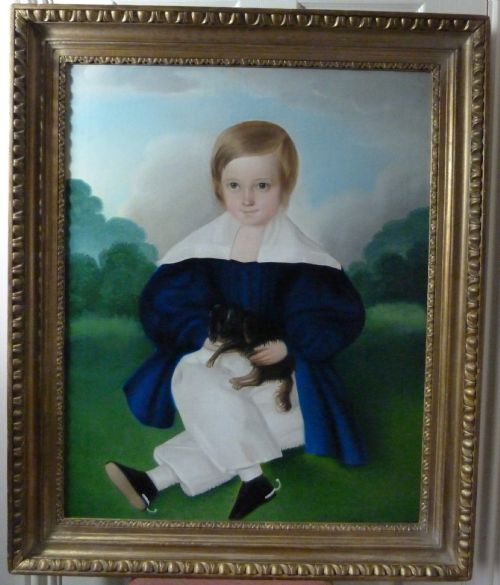
These Victorian child dog painting examples capture nineteenth-century domestic life through portraits pairing youngsters with their canine companions.
Victorian Child Dog Painting
A victorian child dog painting brings together juvenile subjects and household pets across canvas, panel, and paper mediums. You will frequently encounter nineteenth-century provincial works and formal school portraits depicting young sitters alongside faithful animals.
The selections range from naive folk art compositions to detailed equestrian scenes and cottage garden watercolours. These pieces document historical dress, portrait traditions, and the longstanding companionship between children and their dogs.
Materials and construction
Painters of the period typically worked with oil on canvas or oil on panel, utilising layered pigments to build depth in clothing and fur. Watercolour on paper also appears frequently, particularly in domestic garden settings and paired sketches.
Many surviving works retain their original frames, often constructed from giltwood or gilt wood to complement the domestic portraiture style of the era.
Several portraits quietly record the patience of young sitters forced to pose alongside remarkably static hounds.
Distinguishing quality in portraiture
Superior examples demonstrate confident handling of facial expressions, anatomical proportions in both children and animals, and realistic textures in fabrics and fur. Provincial or naive pieces display simpler draftsmanship and charm rather than academic precision.
The integration of the subject within a detailed interior or landscape setting separates ambitious fine art compositions from standard studio output. Preservation of the underlying canvas and minimal historical retouching also influence the character of each work.
John Alfred Wheeler·Arthur Claude Strachan·Richard Buckner
The Victorian Child Dog Painting Glossary
- Naive art
- Artwork created by an artist without formal academic training, often characterised by flat perspectives and direct charm. This style appears frequently in nineteenth-century provincial portraiture.
- Oil on canvas
- Pigments bound in a drying oil applied to stretched woven fabric. This medium dominates the surviving portrait works from the period.
- Giltwood
- Wood carved and coated with a thin layer of gold leaf or gilt. It frames many traditional paintings of this era.
- Watercolour
- A painting method where fine pigment is suspended in a water-based solution on paper. These pieces often capture delicate garden and domestic scenes.
Victorian Child Dog Painting: Frequently Asked Questions
What is a Victorian child dog painting?
These works are nineteenth-century portraits depicting young sitters alongside their pets, executed in oil or watercolour.
They reflect period artistic traditions ranging from naive provincial folk art to formal academic school painting.
How were these paintings created?
Artists used oil paint on canvas or wooden panels, as well as watercolour on paper, to render the subjects.
Frames were commonly built from giltwood to suit the domestic interior styles of the nineteenth century.
How do I date a portrait?
Dating relies on costume details, the style of the frame, and recorded artist signatures where available.
Provincial school works often carry estimated period markers based on painting technique and provenance.
Where were these pieces displayed?
Such portraits typically hung in family parlours and drawing rooms as central domestic decorations.
They served as lasting records of family members and cherished household animals.