
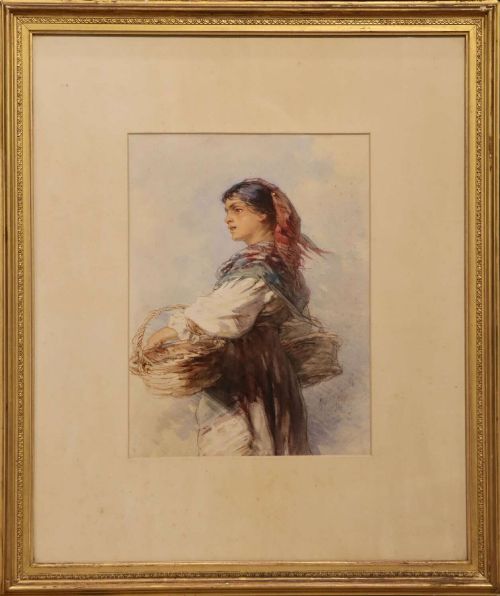
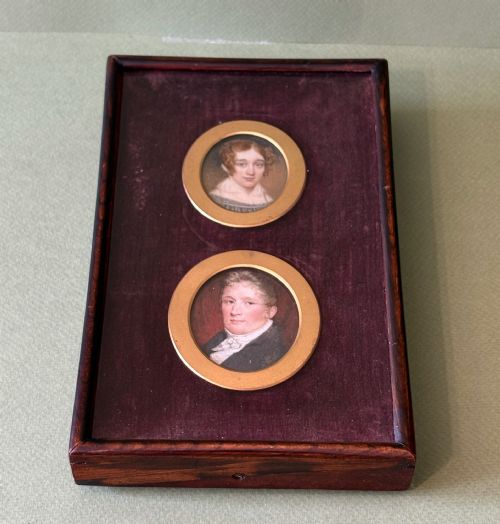

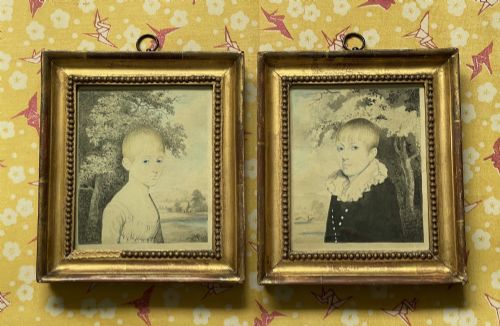
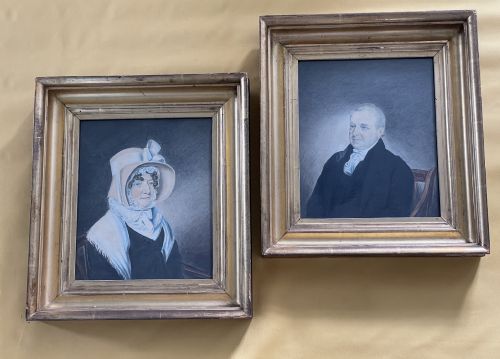


Framed Watercolour Portrait Pair
These framed watercolour portrait pair selections offer intimate glimpses of past lives through delicate brushwork and companion formats.
Framed Watercolour Portrait Pair
A framed watercolour portrait pair presents two matching likenesses, usually depicting companions such as husbands and wives or children, executed on paper and housed behind glass.
The selections span from the Georgian and Regency eras into the Victorian period, reflecting evolving domestic tastes for matched wall art.
Subjects range from elite sitters by named artists to American folk art subjects and Chinese pith paper paintings.
Materials and construction
Artists applied delicate pigment in watercolour onto paper surfaces, sometimes utilising pith or rice paper for specific regional traditions.
Finished works received protection beneath glass and were housed within timber frames, frequently incorporating gold leaf, brass, or giltwood detailing.
Listings feature works spanning the Georgian, Regency, and Victorian eras, executed on paper and pith using watercolour pigments.
Judging the work
Quality rests upon the precision of the brushwork and the psychological depth captured in the faces of the sitters.
The integrity of the original framing, including period glass and gilding, separates untouched survivals from later alterations.
Guido Bach·George Hargreaves·Thomas Woolnoth·Henry Edridge·Karl Feiertag
The Framed Watercolour Portrait Pair Glossary
- Watercolour
- A painting method where fine pigment is suspended in water-based solution, applied to paper. This medium allows for translucent washes and delicate tonal gradation.
- Miniature
- A small-scale painting executed with meticulous detail. These works were often housed in pocket cases or small frames for personal contemplation.
- Pith paper
- A delicate material prepared from plant stems, frequently used for Chinese export paintings. It yields a distinctive velvety surface texture when painted.
- Giltwood
- Timber carved and surfaced with a thin layer of gold leaf. It provides a reflective, ornate border suitable for framing important domestic art.
Framed Watercolour Portrait Pair: Frequently Asked Questions
How were portrait pairs displayed?
Companions were typically hung symmetrically on domestic walls, often flanking a fireplace or doorway to create visual balance in a room.
Their matched frames and complementary subjects reinforced notions of partnership and family lineage in historical interiors.
Why are some portraits painted on pith paper?
Pith paper was utilised in nineteenth-century Chinese export workshops because its absorbent cellular structure absorbs brilliant watercolour pigments exceptionally well.
This material imparts a luminous, velvety depth to the finished miniature compositions.
How do I date a watercolour pair?
Dating relies on stylistic clues in costume, hair styling, and the construction methods of the wooden frames and backing boards.
Inscribed notes left on the reverse by previous owners also frequently provide precise historical dates.
Are portrait miniatures always small?
Traditional miniatures were designed to be held in the hand or worn, measuring only a few inches across.
Over time, the term expanded to include smaller framed works intended purely for wall display.