


Regency Figure Painting
Regency figure painting brings classical subjects, portraits, and domestic scenes to life through period works on canvas and paper.
Regency Figure Painting
Regency figure painting encompasses fine art works depicting human subjects, ranging from military officers and ladies in blue bonnets to mythological figures and classical scenes. Buyers searching for regency figure painting encounter portraits, watercolours, and narrative oils created during the late Georgian and nineteenth-century periods.
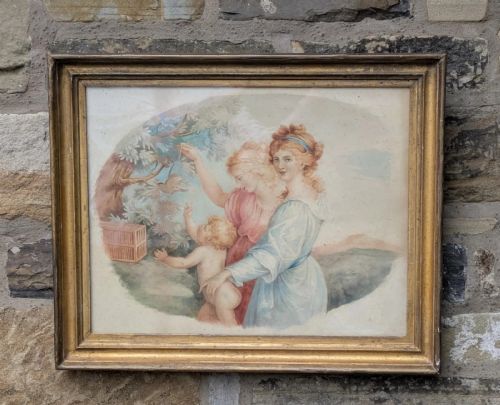
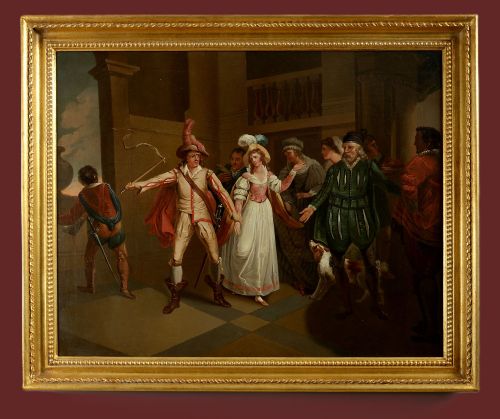
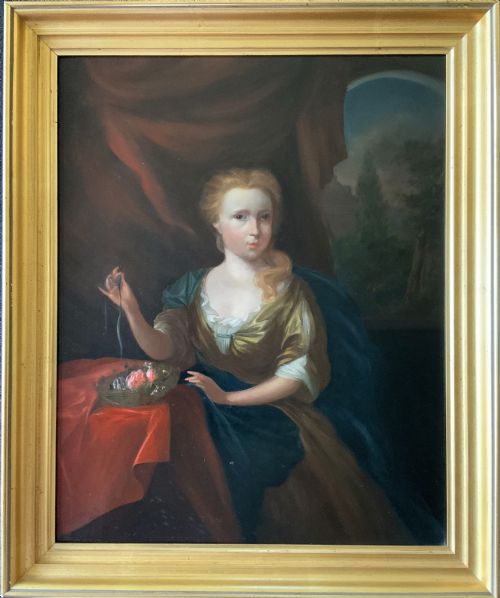
The selections on this page lean heavily towards oil on canvas portraits and delicate watercolours, often framed in giltwood. These works capture both intimate domestic interiors and formal character studies executed in distinct neoclassical and nineteenth-century British styles.
Beyond traditional paintings, the wider grouping extends to sculptural representations and decorative objects depicting human forms. This variety reflects the era's deep fascination with character, classical mythology, and social portraiture.
Materials and Technique
Artists of this period worked primarily with oil on canvas or applied watercolour to paper, utilising wooden supports and giltwood frames to finish their pieces. Gold leaf frequently enhances the decorative borders and framing elements associated with these works.
Techniques range from finely detailed oil portraiture capturing fabric textures and facial expressions to expressive watercolour washes and caricatures on paper. Materials such as plaster, spelter, and porcelain also appear in sculptural figure works tied to the period's aesthetic.
The selection includes classical scenes, domestic interiors, military portraits, and sculptural figures in plaster and porcelain.
Distinctions in Quality
Quality in these works rests upon the precision of the draughtsmanship, the handling of light and shadow, and the psychological depth of the subject's expression. Superior examples demonstrate confident brushwork and harmonious colour palettes that hold the viewer's attention.
The integrity of the original support, the condition of the paint or pigment layer, and the appropriateness of the surrounding giltwood frame heavily influence the standing of an individual piece within its genre.
Albin R Burt·Rolinda Sharples·Ramsay Richard Reinagle·John Partridge·Henry Edridge
The Regency Figure Painting Glossary
- Neoclassical
- A style rooted in the art and culture of ancient Greece and Rome that heavily influenced British painting and design during the Regency era. It prioritises balance, classical motifs, and dignified human forms.
- Giltwood
- Timber treated with a thin layer of gold leaf or powder, commonly used to frame oil paintings and mirrors of the period. This finish adds luminosity and visual weight to the presentation.
- Watercolour
- A paint medium consisting of colour pigments suspended in a water-soluble vehicle, frequently applied to paper in delicate washes during the period. It allowed artists to capture rapid sketches and finished portraits alike.
- Toleware
- Metalware, usually tinplate, painted and lacquered with decorative scenes or floral borders. Surviving panels from this tradition sometimes incorporate rustic figures within classical landscapes.
Regency Figure Painting: Frequently Asked Questions
How do I identify a genuine Regency portrait?
Look closely at the costume details, hairstyles, and framing conventions typical of the early nineteenth century. Bonnets, high-waisted dresses, and specific military uniforms offer reliable chronological markers.
Examine the materials of the support and stretcher frames, as older canvases and hand-carved giltwood mouldings display distinct ageing patterns unique to the period.
What subjects are common in these paintings?
Portraits of military officers, nobility, and society ladies dominate the output, alongside classical scenes and domestic narratives. Artists drew inspiration from literature, mythology, and daily life.
Works range from formal military and political commissions to intimate family interiors and humorous water colour caricatures.
How should I care for an oil on canvas?
Keep paintings away from direct sunlight and fluctuating humidity levels to protect the canvas and the oil pigments from cracking. Stable environmental conditions preserve the integrity of the paint layer.
Dust the surface and the giltwood frame gently with a soft, dry brush, avoiding liquid cleaners or harsh chemicals entirely.
Can I mix watercolours with oil paintings?
Watercolour paintings require protection behind glass and conservation-grade framing to prevent fading and paper degradation. They need more careful placement away from bright light sources than oil paintings do.
Oil on canvas works are more robust but still benefit from thoughtful placement within a room to maintain the stability of the wood and gesso frames.