



Pair of Regency Portraits
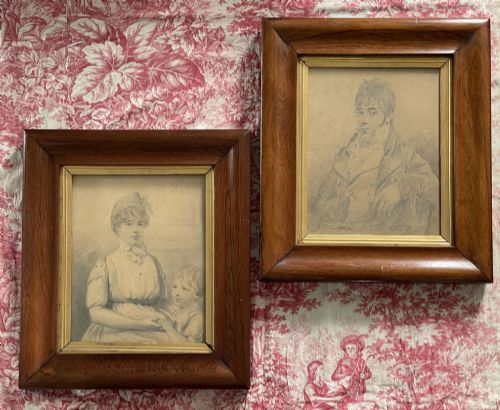
A pair of regency portraits brings balanced harmony to a wall, offering matched likenesses of sitters from the early nineteenth century.
Pair of Regency Portraits
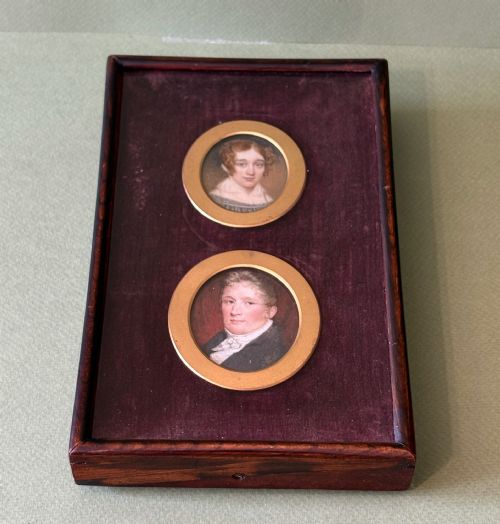
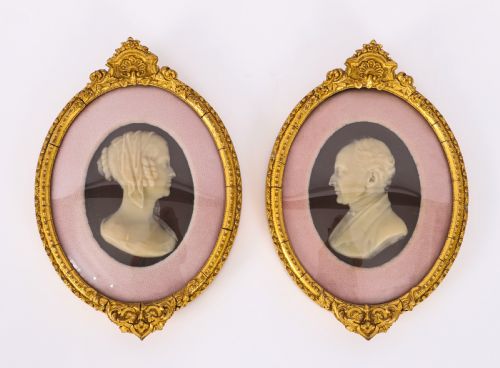
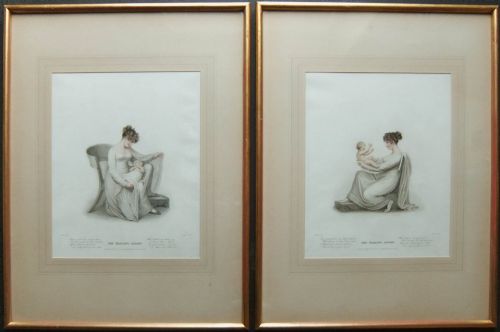
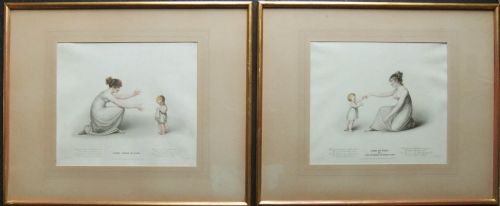
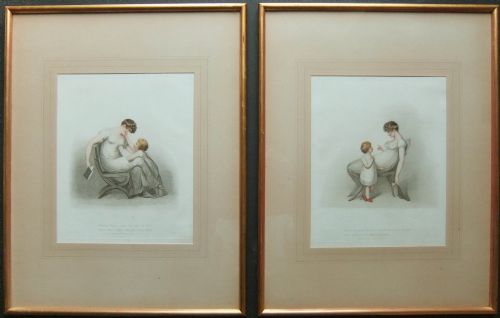
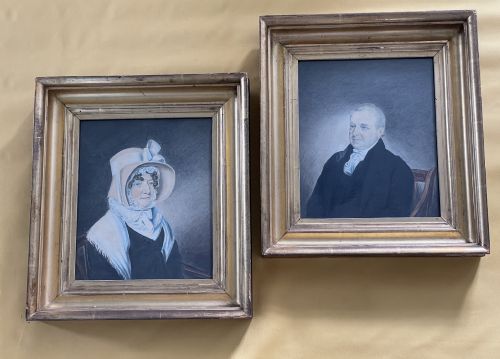
A pair of regency portraits comprises two matched artworks depicting human subjects, created primarily during the Regency period and the wider nineteenth century. These pairings frequently present companion pieces, such as a gentleman and lady, or complementary narrative scenes involving children and families.
Buyers encounter works linked to Georgian and Victorian eras alongside strict Regency examples, encompassing both formal oil paintings and intimate paper works. These pairings derive from domestic settings where symmetrical hanging was customary.
How they were made
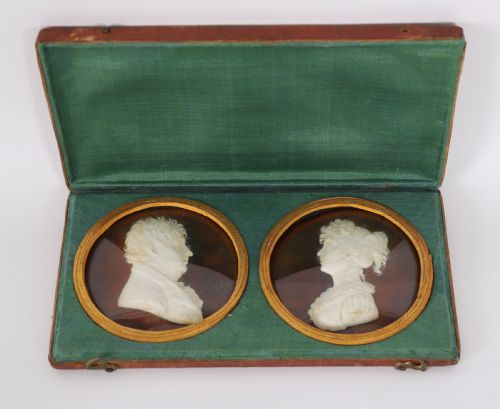
Makers utilised traditional artistic mediums, applying oil paint to canvas, watercolour and graphite to paper, and ink for silhouettes. Wax relief profiles involved detailed modelling, while silkwork pictures combined textile embroidery with drawn elements.
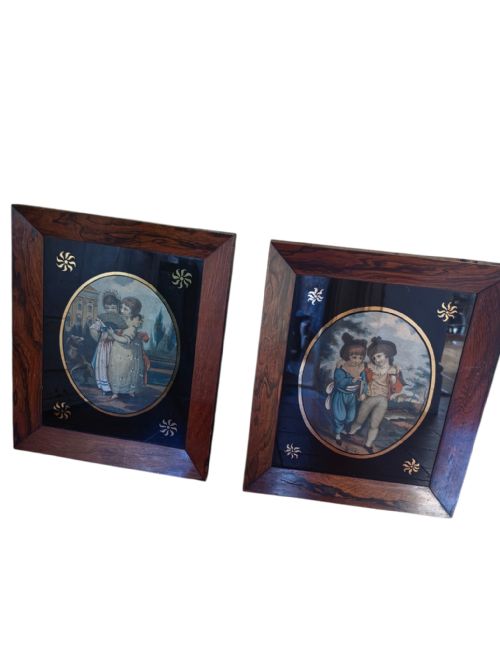
Framing played a fundamental role in the construction of these pairs, employing gilt wood, rosewood, and glass to protect fragile watercolours, prints, and miniature paintings. Metal embellishments occasionally adorned the clothing depicted within prints and textile works.
A soldier and a sailor appear proudly side by side, both equipped with wooden legs.
What varies in quality
Quality rests upon the execution of the likeness and the skill shown in the handling of the chosen medium, whether in the delicate brushwork of an oil painting or the precise cutting of a paper silhouette. Masterful draughtsmanship elevates an ordinary likeness into a compelling historical record.
The survival of original mountings and matching frames dictates much of the visual cohesion, as mismatched replacements disrupt the intended harmony of a pair. Intact glass, original backing papers, and well-preserved surface pigments preserve the integrity of the works.
James Sharples·Adam Buck·Thomas London·George Hargreaves·Thomas Woolnoth·Henry Edridge
The Pair of Regency Portraits Glossary
- Regency
- A stylistic period spanning the early nineteenth century defined by neoclassical elegance and refined portraiture. It draws inspiration from classical Greek and Roman forms.
- Silhouette
- A portrait profile cut from paper or painted in solid black, often highlighted with gold. These economical likenesses gained popularity during the Georgian and Regency eras.
- Miniature
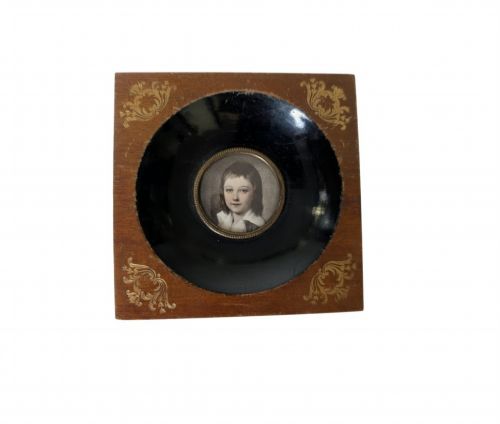
- A small-scale portrait painted on ivory, card, or vellum, requiring immense precision. These portable artworks were frequently framed in pairs for intimate display.
- Stipple engraving
- A printmaking technique using dots of varying density to create tonal gradations and lifelike flesh tones. This method was widely used for reproducing popular Regency subjects.
- Wax relief
- A sculptural profile built up in tinted or natural wax, mounted against a contrasting background. These three-dimensional portraits capture fine details of Regency costume and hair.
Pair of Regency Portraits: Frequently Asked Questions
How were these portraits displayed?
Pairs were traditionally hung symmetrically on domestic walls, often flanking a fireplace, mirror, or doorway to create visual balance.
Their matched frames and complementary subjects ensured they functioned as a unified decorative scheme within a room.
What subjects do these pairs show?
Sitters frequently include husbands and wives, military personnel, children, or characters from contemporary literature and fashion.
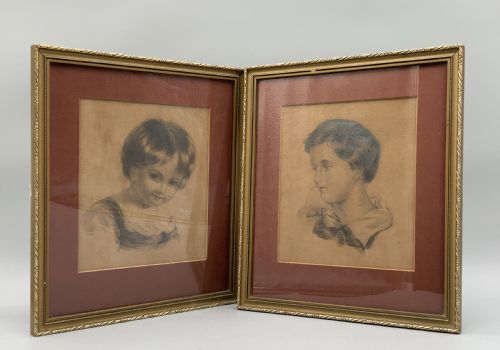
Companion pieces often depict narrative themes, such as sleeping and waking children, paired to tell a simple visual story.
Are silhouettes and miniatures the same?
Silhouettes rely on solid dark profiles against light backgrounds, while miniatures utilise full colour and detailed brushwork to render the subject.
Both formats were executed on a small scale and housed in protective frames suited for intimate domestic spaces.
How do I identify a Regency frame?
Regency frames often feature reeded moulding, neoclassical composition ornaments, or simple giltwood and rosewood construction.
They are proportioned specifically to complement the scale of the artwork without overpowering the subject.