






Cream Watercolour Portrait Painting
These cream watercolour portrait painting examples combine delicate pigments on paper with historic framing to capture individual likenesses from past centuries.
Cream Watercolour Portrait Painting
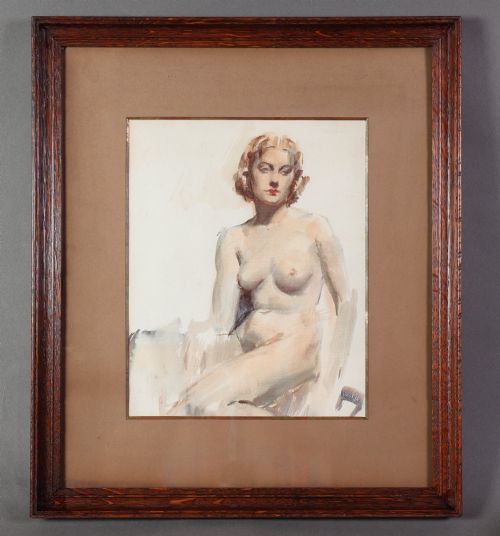
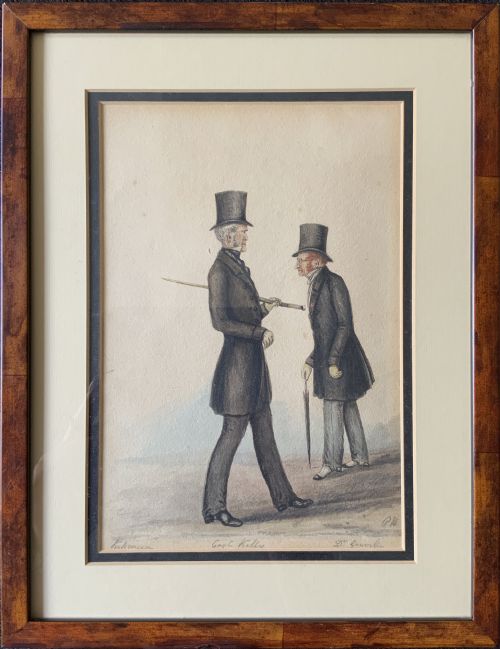
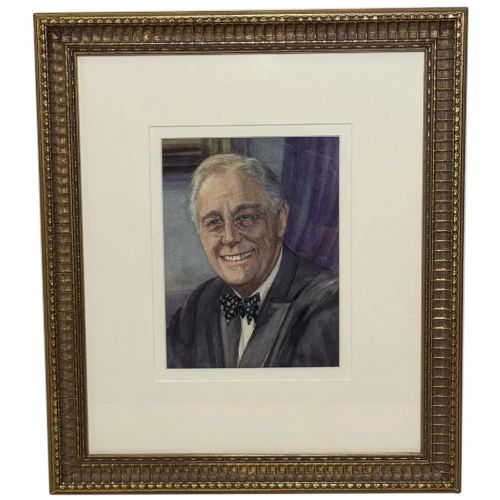
A cream watercolour portrait painting represents a likeness captured on paper using water-soluble pigments, often framed behind glass in wood or gilded surrounds. The selection spans the Georgian, Regency, Victorian, and mid-20th-century periods, showing sitters ranging from children and naval officers to royalty and named figures.
Buyers encounter intimate portrait miniatures alongside larger framed works on paper, executed in Britain, Ireland, and beyond. Some pieces adopt a naive style, while others demonstrate academic realism or the specific aesthetic of the Japanese Taisho period.
The form embraces single portraits, pairs of children, double portraits with caricature elements, and triptychs. Each piece preserves the hand of an artist working with pigment on a pale ground, frequently retaining period oak or gilded frames.
Materials and execution
Many works incorporate glass protection within wood frames, such as oak or gilded wood surrounds that date from the period of creation. The paper provides the cream background tone against which the portrait subjects are rendered.
Among the sitters is a three-month-old infant named Robert Spearman Swinburne, recorded at the ripe old age of three years in a Regency ink and watercolour.
Distinctions in execution
Quality rests upon the precision of the brushwork and the psychological depth achieved in the sitter's expression. Master works capture personality and fine details of costume with economy and confidence, whereas simpler works rely on charm or naive conventions.
The survival of the original frame and the preservation of the delicate watercolours under glass strongly influence the integrity of the piece. Works by named artists or documented schools demonstrate greater mastery in handling the medium.
Nicolas Freese·J. Hardy·Mabel Gear·Takashi Nakayama·Dame Laura Knight·John E. Bosanquet·Henry Edridge·Karl Feiertag·Leo Klin·Alexander Melville·K B Curtis
The Cream Watercolour Portrait Painting Glossary
- Watercolour
- A painting method where natural pigments are suspended in a water-based solution and applied to paper. This technique allows for translucent washes that let the cream tone of the paper ground shine through.
- Gouache
- An opaque watercolour medium containing pigment mixed with a binding agent and white filler. It provides solid, flat areas of colour and sharp highlights in portrait details.
- Portrait miniature
- A small-scale painted likeness, typically executed on paper or ivory during the Regency and Victorian eras. These intimate works were designed to be held or displayed closely.
- Naive art
- Artwork created by an artist without formal academic training, often characterised by flat perspectives and direct expression. Such pieces appear in Regency caricatures and early nineteenth-century works.
- Triptych
- A picture divided into three painted panels hinged or displayed together. The format is seen in Japanese works from the Taisho period.
Cream Watercolour Portrait Painting: Frequently Asked Questions
How should I hang watercolour portraits?
Keep these works out of direct sunlight to prevent the watercolour pigments from fading on the paper. Display them on interior walls where humidity and temperature remain stable.
Ensure the glass is secure and the original wood or gilded frame properly supports the backing board without putting pressure on the paper.
What periods do these paintings represent?
The selection spans the Georgian, Regency, and Victorian eras, extending into the early and mid-20th century. Dates range from the early nineteenth century through to the 1940s.
Stylistic shifts reflect these changing eras, moving from formal academic portraiture and naive art to mid-century realism and British twentieth-century movements.
What is the difference between watercolour and gouache?
Watercolour employs translucent washes that rely on the white or cream paper ground for luminosity. Artists use it to create soft transitions in skin tones and clothing.
Gouache adds body and opacity through added white filler, allowing the artist to paint sharp highlights and solid blocks of colour over the watercolour base.