





Antique Arita Display Charger
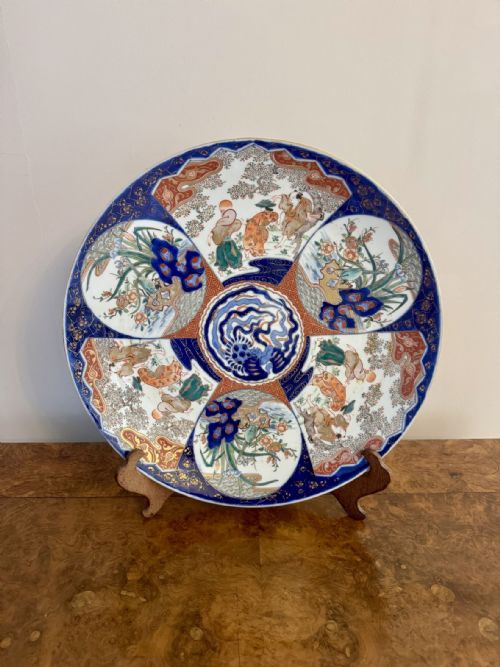
These antique arita display charger pieces are large decorative dishes that bring rich palettes and intricate hand-painted motifs to a wall or table.
Antique Arita Display Charger
When you search for an antique arita display charger, you encounter large platters, plates, and bowls created in the Japanese tradition. The selection here spans the Edo period, Meiji period, and Victorian eras, reaching into the early twentieth century.
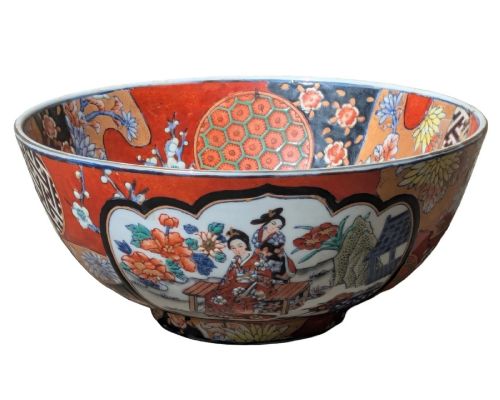
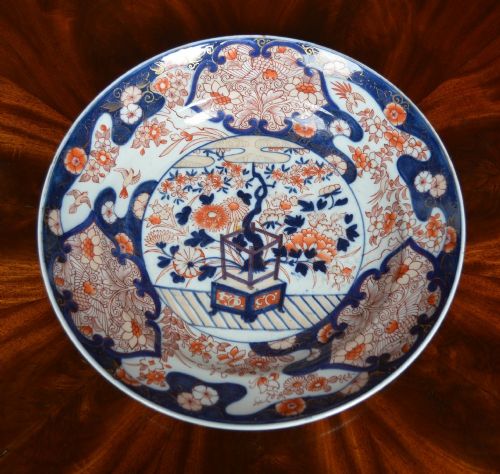
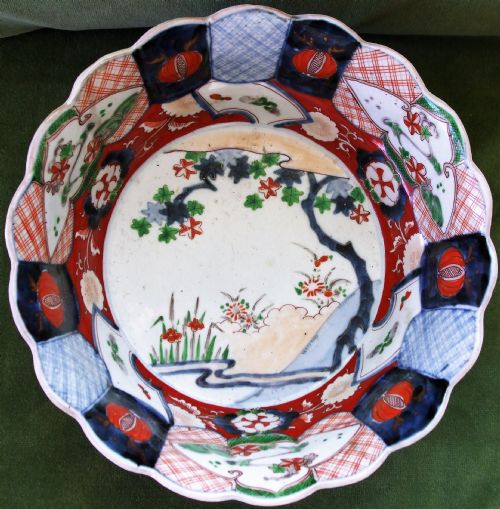
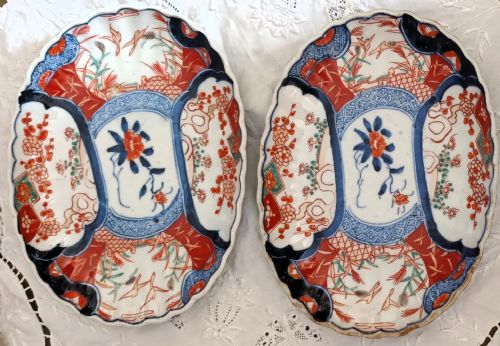
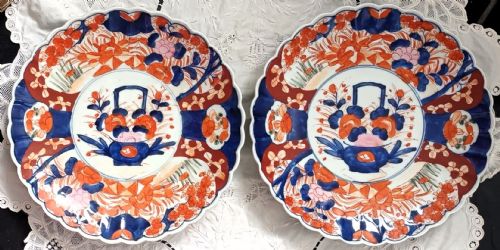
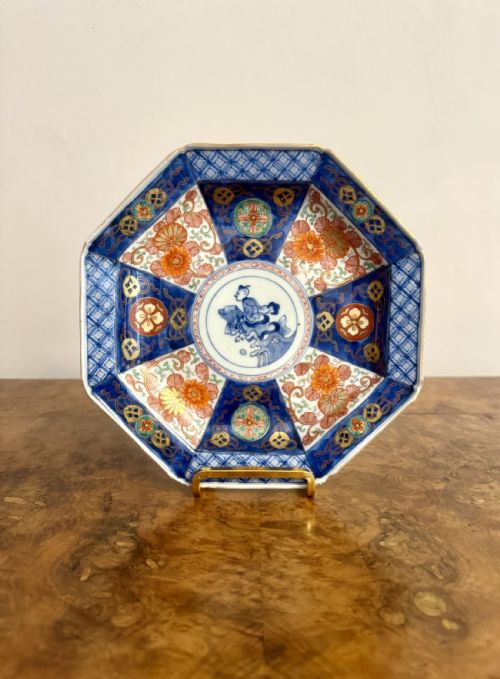
You are most likely to meet circular chargers, square plates, and scalloped dishes carrying the classic Japanese Imari aesthetic. These pieces serve as striking wall plates or table centerpieces.
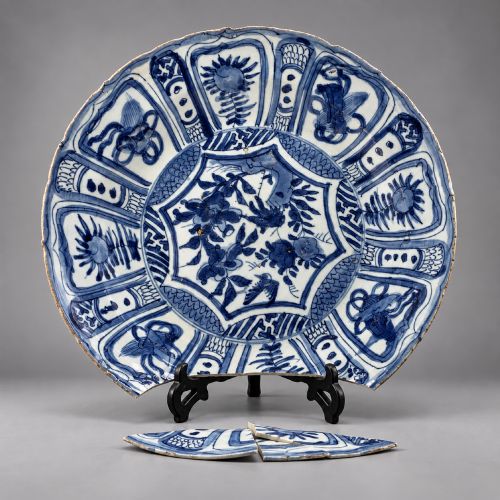
The assortment includes blue and white porcelain alongside pieces featuring the characteristic multi-coloured palette of iron red, cobalt pigment, and gold gilt.
How they were made
Potters shaped fine porcelain clay before applying cobalt glaze and cobalt pigment directly to the surface under a clear glaze. Artisans then added overglaze enamel details and gold leaf or gilding.
Kiln firing set the deep blue underglaze designs, followed by a secondary low-temperature firing to bond the enamel colours and gold gilt to the porcelain body.
Listings feature porcelain forms spanning the Edo period, Meiji period, and Victorian era, utilising cobalt glaze, enamel, and gold leaf.
What varies in quality
The refinement of the hand-painted floral, bird, and koi carp designs distinguishes standard wares from exceptional examples. Precision in the brushwork and the richness of the cobalt pigment and gold gilt determine the visual weight of the piece.
Form also dictates standing, with unusual shapes such as fan-plated edges, hexagonal outlines, and large scalloped rims commanding greater visual presence than standard round plates.
The Antique Arita Display Charger Glossary
- Imari
- A style of Japanese porcelain decorated in underglaze blue, iron red, and gold. This aesthetic originated in Arita and became widely exported during the Edo and Meiji periods.
- Charger
- A large decorative plate or platter used primarily for display on walls or sideboards rather than dining. These pieces measure larger than standard dinner plates.
- Meiji Period
- The era of Japanese history spanning from 1868 to 1912, noted for prolific porcelain production and international export. Pieces from this time often display intricate hand-painted bird and floral motifs.
- Edo Period
- The period of Japanese history lasting from 1603 to 1867, encompassing the foundational centuries of Arita porcelain manufacture. Early examples from this era feature distinct potting characteristics.
- Cobalt Pigment
- The mineral colourant used to produce deep blue underglaze decoration on porcelain. Artisans applied this pigment by hand before the final glaze and kiln firing.
Antique Arita Display Charger: Frequently Asked Questions
What is an antique arita display charger?
An antique arita display charger is a large decorative porcelain plate or platter originating from the Arita region of Japan. These vessels feature hand-painted designs meant for visual presentation rather than culinary use.
They appear in round, square, and scalloped forms, often displaying traditional Japanese Imari patterns in blue, red, and gold.
How do I hang a display charger on the wall?
Display chargers require a secure wire or spring-loaded plate hanger that grips the rim without applying excessive pressure to the porcelain body. Ensure the wall fixing supports the weight of a heavy ceramic platter.
Position the charger at eye level where the hand-painted details and gold gilt catch ambient light.
How do I tell Meiji period pieces apart?
Meiji period pieces date from 1868 to 1912 and typically exhibit bright enamel colours, meticulous bird or floral motifs, and frequent use of gold gilt. The porcelain body often feels crisp and uniformly finished.
Earlier Edo period items display looser brushwork, heavier potting, and deeper cobalt tones under the glaze.
Can I use these chargers for serving food?
These chargers function primarily as decorative art objects rather than tableware. Antique glazes and overglaze enamel decorations can wear or absorb liquids with regular culinary use.
Gentle dusting with a dry cloth keeps the surface clean without risking the historic finish.