


Antique Aperitif Glasses
These antique aperitif glasses are small vessels for pre-dinner drinks, combining Georgian sobriety with Victorian and Art Deco flair.
Antique Aperitif Glasses
Antique aperitif glasses encompass small drinking vessels designed for sherries, cordials, liqueurs, and spirits across several centuries. When searching for antique aperitif glasses, a buyer meets diverse forms ranging from eighteenth-century pedestal stems to twentieth-century sets.
The selections span distinct historical eras, including Georgian, Victorian, Edwardian, and Art Deco periods. Smaller cordial and liqueur glasses appear frequently alongside larger suites of drinking glasses.
Origins vary across English, French, Austrian, and German workshops, demonstrating regional shifts in glassmaking tastes. Collectors encounter everything from individual seventeenth-century gin glasses to large matched suites.
How they were made
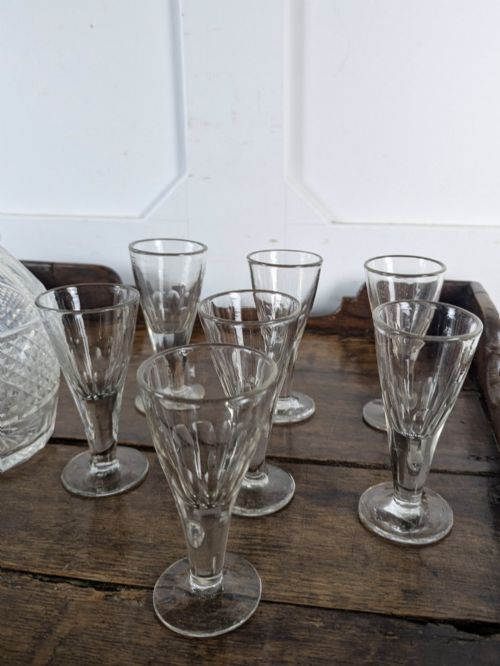
Makers utilised clear lead glass and standard glass as the primary medium for these vessels, shaping them by hand. Techniques such as thumb-cutting, facet-cutting, and basal bubbles added tactile and visual depth to the stems and bowls.
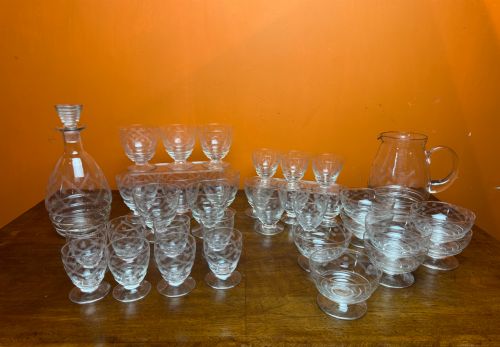
Decoration relied heavily on surface engraving and delicate etching to produce geometric or botanical motifs. Hand-enamelling and silver-plated mounts further enhanced specific services, particularly in continental pieces.
Listings feature clear glass, lead glass, and cut glass across Georgian, Victorian, and Art Deco periods.
What varies in quality
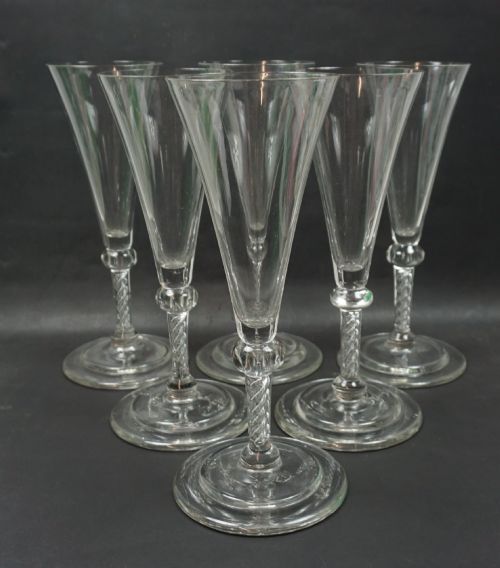
Quality rests in the crispness of the cutting, the clarity of the metal, and the precision of the engraving. Early pieces demonstrate mastery in forming folded feet and air or opaque twist stems.
The integrity of matched sets and the presence of signed factory work or silver plating distinguish standard glassware from superior examples. Consistency across a larger suite elevates the standing of a service.
Theresienthal·Moser Glass
The Antique Aperitif Glasses Glossary
- Thumb-cut
- Glassware decorated with concave, oval depressions resembling thumbprints, common on Victorian drinking vessels.
- Opaque twist
- A stem formation enclosing white or coloured enamel threads spun within the clear glass rod during eighteenth-century production.
- Folded foot
- A glass base where the outer rim is doubled under towards the underside for added strength and weight.
- Basal bubble
- An intentional air bubble trapped at the base of the bowl where it joins the stem.
- Enamel
- Opaque glass paste fused to the surface of the vessel through firing to create colourful decorative patterns.
Antique Aperitif Glasses: Frequently Asked Questions
What are antique aperitif glasses used for?
These small glasses were historically designed for serving potent spirits, dessert wines, sherries, and liqueurs before a meal. Their modest capacities suited the high alcohol content and concentrated flavours of these traditional beverages.
Today, modern collectors utilise them for contemporary digestifs, small-portion tastings, or simply as display pieces that demonstrate historical glassmaking techniques.
How can I tell eighteenth-century glasses apart?
Eighteenth-century examples often feature distinct stem formations such as opaque twists, air twists, or heavy facet cutting. Examining the pontil mark on the underside helps determine period manufacturing methods.
Older pieces frequently display folded feet and basal bubbles, physical traits that largely disappeared in later mass-produced Victorian and twentieth-century manufacturing.
Are matched sets necessary for a collection?
Matched sets remain desirable for formal dining display and historical completeness, particularly larger suites from the Victorian and Art Deco eras. Finding a complete service intact is increasingly difficult.
Individual pieces or smaller assembled groups allow collectors to appreciate diverse stem styles, cutting techniques, and engraving patterns without requiring a uniform suite.