


Cut Glass Port Glasses
Cut glass port glasses bring weight and brilliance to the table, offering short-stemmed vessels shaped for fortified wines.
Cut Glass Port Glasses
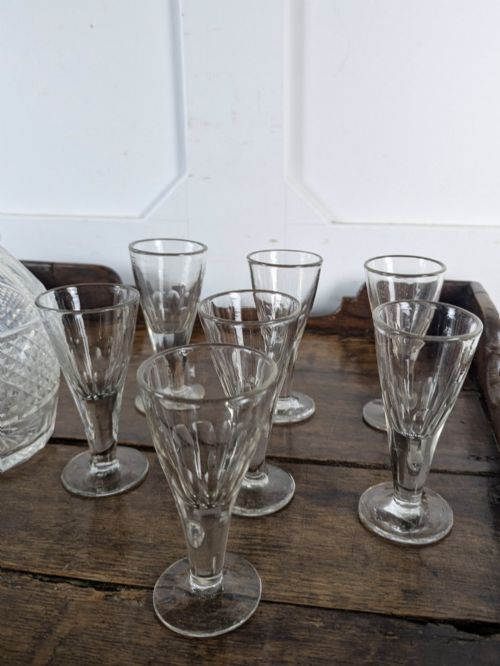
Cut glass port glasses are small drinking vessels designed specifically for serving fortified wine. They appear across the Georgian, Regency, and Victorian periods, alongside Edwardian examples.
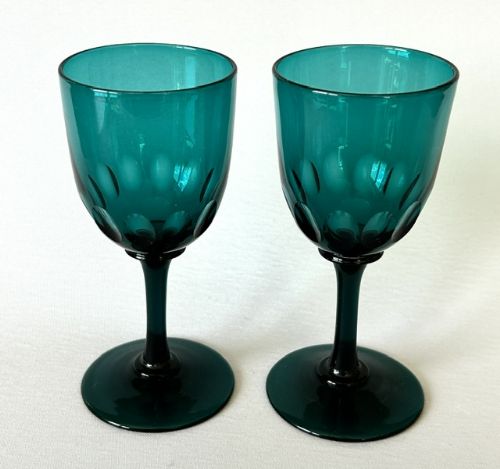
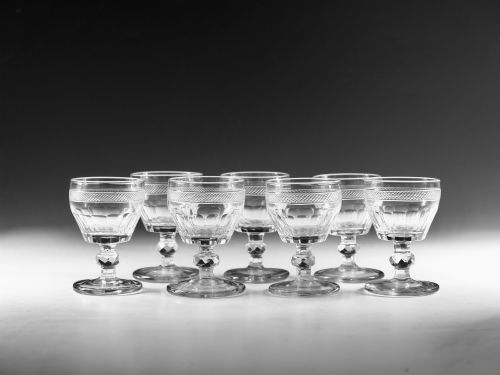
The selections on this page include matching sets and pairs of port glasses, often sharing styles with sherry, gin, and dessert wine glasses. Clear glass and crystal dominate the forms, frequently accompanied by decanters.
Buyers encounter faceted, thumb-cut, and engraved decoration applied to traditional lead crystal and clear glass. These pieces reflect the dining and drinking habits of the nineteenth and early twentieth centuries.
What varies in quality
Quality rests in the crispness of the cutting and the weight of the metal. Sharp, deep facets show a master hand, whereas shallow or rounded cutting lacks definition.
The clarity of the glass and the absence of cloudiness or heavy scratching distinguish finer examples. Uniformity across a set of glasses also dictates the desirability of the group.
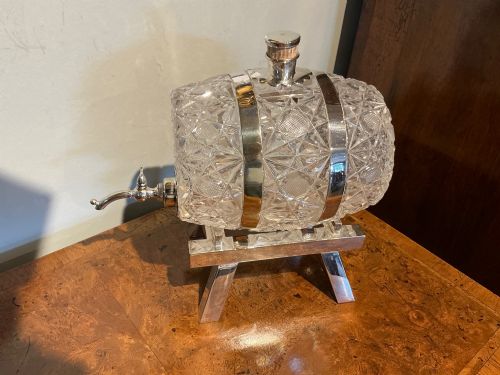
Some nineteenth-century drinkers kept spirit barrels on the sideboard alongside their port glasses for easy refills.
The Cut Glass Port Glasses Glossary
- Thumb-cut
- A shallow, concave oval depression ground into the side of a glass or decanter. These cuts provide a secure grip for the hand.
- Facet cut
- A decorative surface finish composed of multiple flat planes meeting at sharp angles. This technique maximises the refraction of light through lead crystal.
- Prussian decanter
- A form of spirit bottle characterised by a straight neck, broad tapering body, and multiple neck rings. The style originates in the late eighteenth century.
- Intaglio cut
- A method of engraving where the design is ground into the surface rather than raised. It creates a sunken, frosted motif that contrasts with polished facets.
Cut Glass Port Glasses: Frequently Asked Questions
Can I use these glasses daily?
Many people enjoy using their antique stemware for special dinners and evening drinks. Hand-washing keeps them secure between uses.
Careful handling prevents chipping on the rims and bases during regular use.
How do I date a cut glass port glass?
Examine the weight, colour, and cutting style of the vessel. Georgian and Regency pieces often show deeper hand-cutting and darker metal.
Victorian and Edwardian examples bring thinner walls and standardised shapes influenced by industrial production methods.
What is the difference between port and sherry glasses?
Historically, glassmakers shaped port and sherry glasses similarly, often listing them interchangeably. Both styles suit small pours of fortified wine.
Personal preference dictates whether you choose a faceted bowl or an engraved flute for your table.