
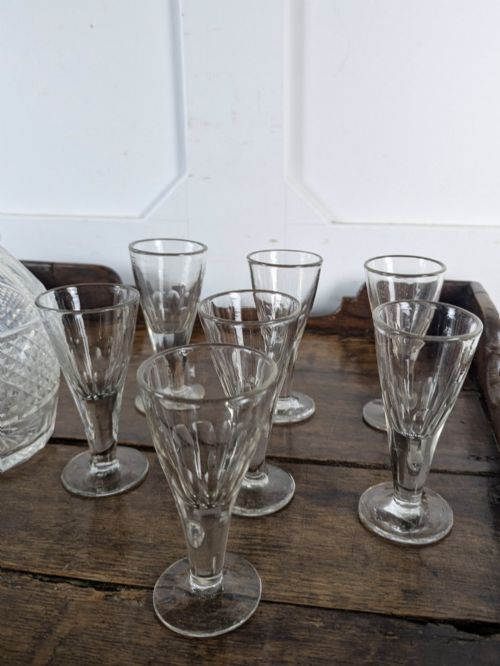
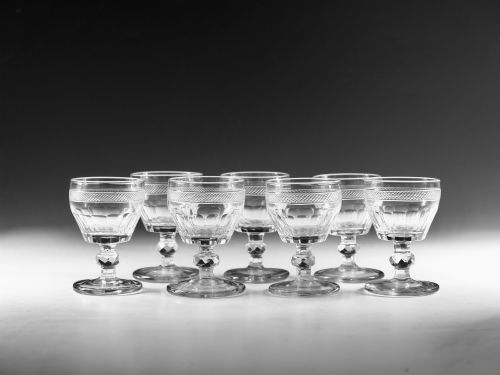


Antique Sherry Glasses
These antique sherry glasses are Victorian glassware items in amber and clear glass, offering a distinctive period touch for the table.
Antique Sherry Glasses
When you search for antique sherry glasses, you are looking at drinking vessels designed for fortified wines during the nineteenth century. These pieces appear in sets of varying sizes, commonly numbering four, five, or six items.
The version you are most likely to meet on this page is the Victorian cut glass form, spanning clear and amber coloured glass. Such glassware served port, sherry, and liqueurs in domestic dining settings.
How they were made
The listings record glass and amber glass as the primary materials used for these drinking vessels. Makers shaped the material into drinking vessels before applying decorative surface techniques.
Cut glass and slice cut techniques define the surface decoration on these items. Artisans ground facets into the material to catch the light and create tactile geometric patterns.
What varies in quality
The distinction between ordinary and superior pieces rests on the crispness and depth of the cutting. Sharp, precise facets indicate greater skill from the glasscutter than soft, shallow grinding.
Consistency across a set determines the overall standard of the glassware. Uniformity in colour saturation and wall thickness elevates matching groups above mismatched collections.
The Antique Sherry Glasses Glossary
- Victorian
- The period spanning the reign of Queen Victoria, characterised by diverse revival styles and industrial manufacturing growth. Items from this era dominate the glassware listings.
- Cut glass
- Glassware decorated by grinding facets or patterns into the surface using a rotating wheel. This technique creates reflective edges that enhance the appearance of coloured drinks.
- Slice cut
- A style of linear cutting that produces flat, parallel facets across the body of the vessel. It provides a simple yet tactile geometric texture.
- Amber glass
- Glass coloured by the addition of sulphur and carbon or iron oxides during melting. This warm brownish-yellow tone appears frequently in nineteenth-century drinkware.
Antique Sherry Glasses: Frequently Asked Questions
What are antique sherry glasses used for?
These vessels served fortified wines such as sherry and port during formal dining and social occasions in the nineteenth century.
Today, collectors utilise them for their original purpose or display them alongside other period glassware.
How do I identify Victorian glassware?
Victorian glassware typically exhibits characteristic weight, hand-finished pontil marks on the base, and specific nineteenth-century cutting styles.
Examining the manufacturing traits and material composition helps distinguish these pieces from later reproductions.
Are amber glasses genuine period pieces?
Amber coloured glass gained popularity during the Victorian era for decorative tableware and serving items.
The presence of period cutting techniques and consistent material characteristics confirms their nineteenth-century origin.
How should I care for cut glass?
Hand washing in lukewarm water with mild detergent protects the delicate cut surfaces and preserves the finish.
Avoiding sudden temperature changes prevents thermal shock and potential cracking in antique glass items.