


Victorian Port Glasses
These Victorian port glasses and related drinking vessels bring period craft to the table.
Victorian Port Glasses
When you search for Victorian port glasses, you enter a field of nineteenth-century glassware designed for fortified wine and spirits. The pieces on this page span the Victorian era, alongside related Georgian items and occasional maritime hardware.
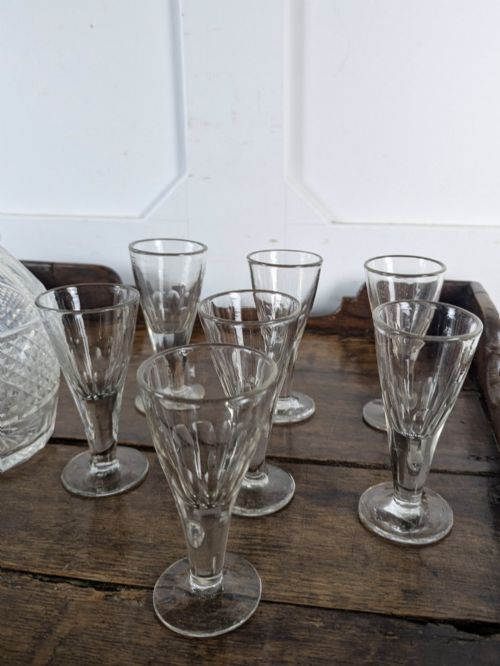
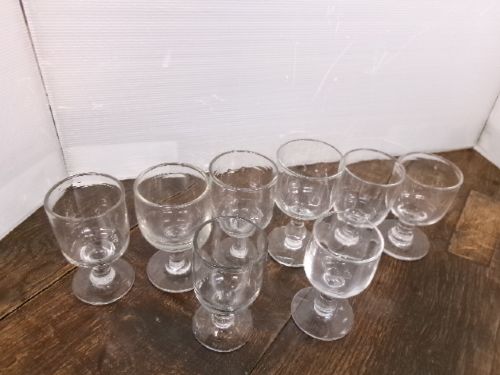
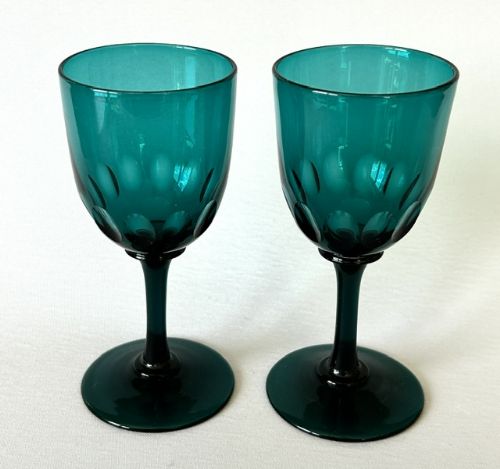
You encounter sets of thumb-cut sherry flutes, etched dessert wine glasses, and coloured liquor glasses alongside small rummers. The forms range from clear glass to green glass and aqua green tones.
The evidence shows various drinking vessels and decanters shaped by nineteenth-century glassmakers. These items served domestic dining rooms and shipboard settings alike during the period.
How they were made
Glassmakers utilised hand blown techniques to shape the molten metal into bowls, stems, and bases. Workers formed vessels by hand, resulting in subtle variations across sets of glasses.
Craftsmen decorated surfaces through cutting and engraving, applying facet cuts, thumb-cuts, and vine motifs. Clear glass and coloured glass received these decorative incisions while cooling or in a secondary workshop stage.
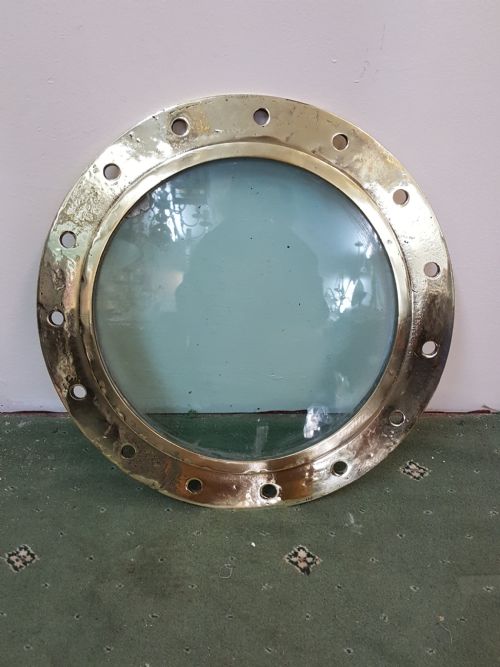
One twenty-inch brass ocean liner port hole sneaks in among the glassware.
What varies in quality
Quality rests in the crispness of the cutting and the uniformity of the glass. Sharp facets and balanced hand-blown forms separate finer service wares from simpler utilitarian output.
The clarity of the metal and the depth of surface engraving dictate the distinction between standard production and superior examples. Matching sets with consistent colour and execution command greater interest.
The Victorian Port Glasses Glossary
- Thumb-cut
- A decorative pattern of shallow, concave depressions ground into the side of glassware. This technique provides a secure grip and catches the light.
- Rummer
- A heavy, short-stemmed drinking glass popular in the eighteenth and nineteenth centuries. These sturdy vessels frequently served ale, wine, or spirits.
- Facet cut
- A series of flat, polished planes ground onto the exterior of a glass object. This method enhances the brilliance and sparkle of the material.
- Hand blown
- Formed by inflating molten glass through a blowpipe without the aid of a closed mould. This traditional method leaves individual characteristics on each piece.
Victorian Port Glasses: Frequently Asked Questions
What are Victorian port glasses?
These are nineteenth-century drinking vessels specifically sized and shaped for fortified wines like port and sherry. They appear in clear, cut, and coloured glass.
Many examples feature hand-blown bodies, facet cutting, or delicate etchings suited to formal dining.
How were port glasses used?
Victorian households utilised these small glasses after dinner during the port and Madeira course. Guests sipped fortified wine from small bowls designed to concentrate aromas.
Sets often matched decanters and barware kept on the sideboard or serving table until needed.
How do I care for antique glass?
Wash antique glassware gently by hand in warm water using mild soap. Avoid sudden temperature changes to prevent cracking the old metal.
Store glasses upright on stable surfaces and keep them away from direct sunlight and heavy vibrations.
How can I date these glasses?
Dating relies on stylistic markers, manufacturing techniques, and material composition recorded across nineteenth-century examples. Hand-blown pontil marks and specific cut patterns provide clues to the period.
Comparing piece proportions with documented Georgian and Victorian forms helps establish age.