


Antique Agate Jewellery
Antique agate jewellery brings together banded hardstones, moss agates and carnelians set in silver and gold across Georgian, Victorian and Edwardian periods.
Antique Agate Jewellery
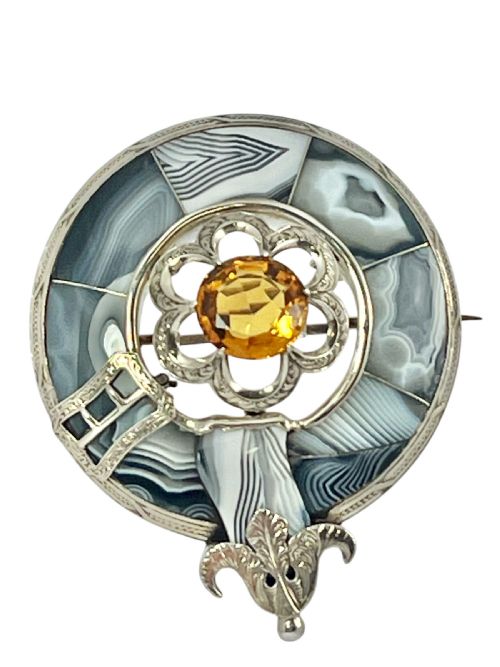
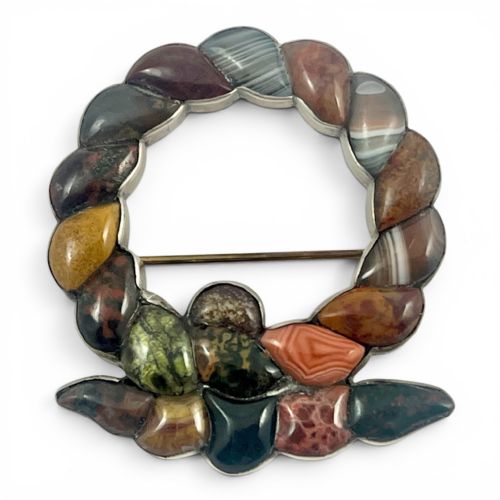
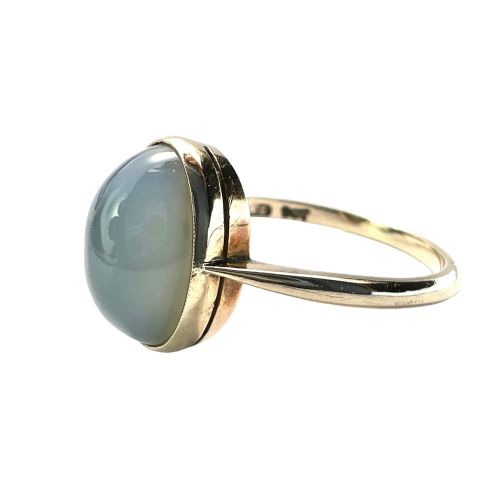
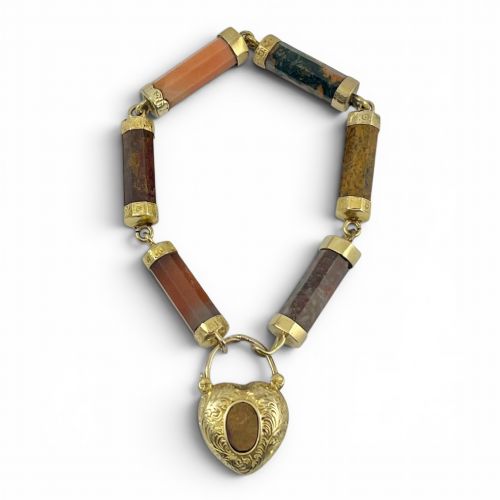
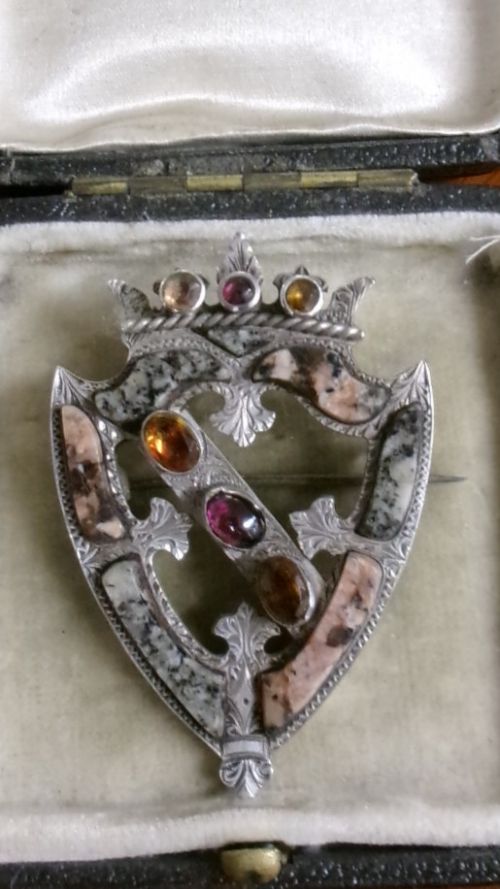
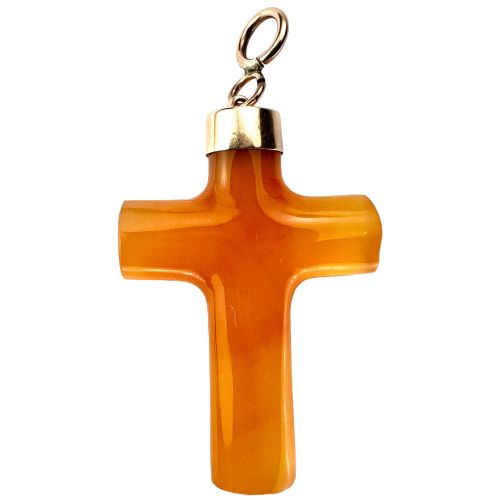
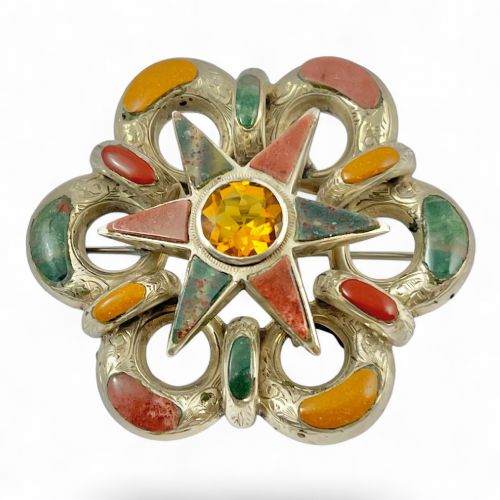
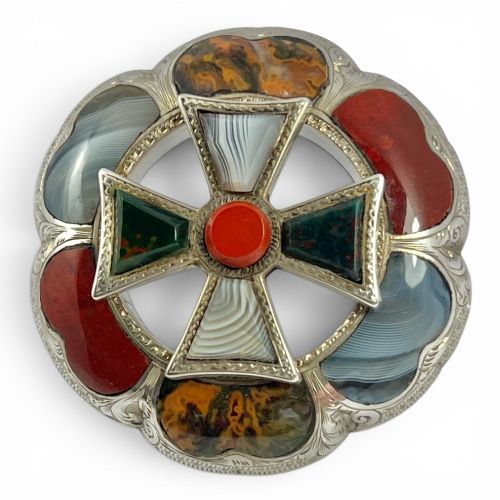
Antique agate jewellery encompasses a varied range of wearable ornaments, from brooches and kilt pins to rings, earrings, pendants and fobs. The most frequently encountered pieces on this page are Victorian Scottish pebble brooches, often fashioned in silver with multi-coloured stones.
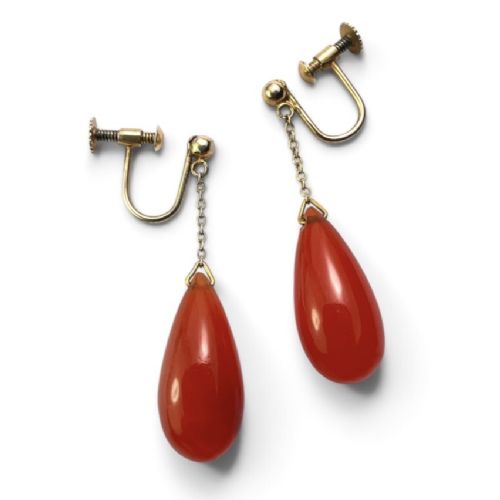
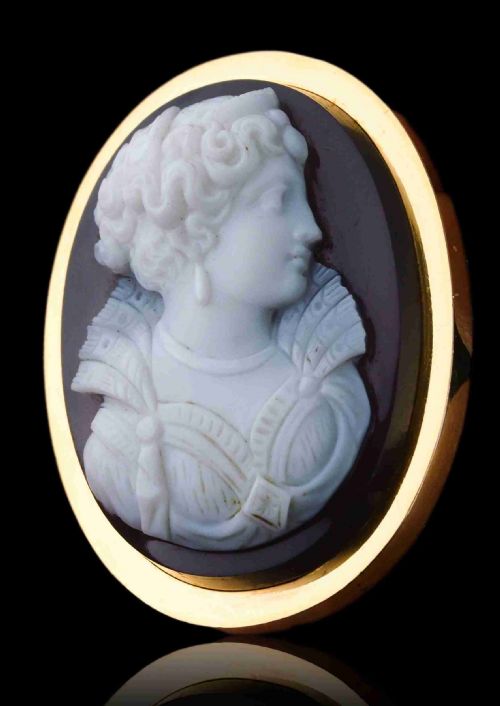
Beyond personal ornaments, the selection includes functional items such as fob watch keys, seals and desk accessories like boxes. These pieces span multiple eras, including Georgian intaglios, Victorian Scottish Revival designs and Edwardian drop earrings.
Materials and Construction
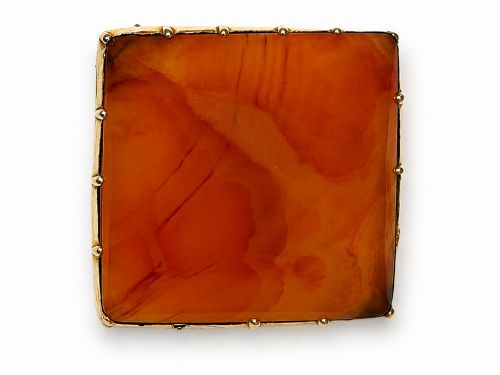
Lapidaries shaped natural chalcedony, bloodstone, jasper and carnelian into smooth cabochons, flat geometric panels or detailed intaglios. These hardstones were selected for their natural banding and rich hues.
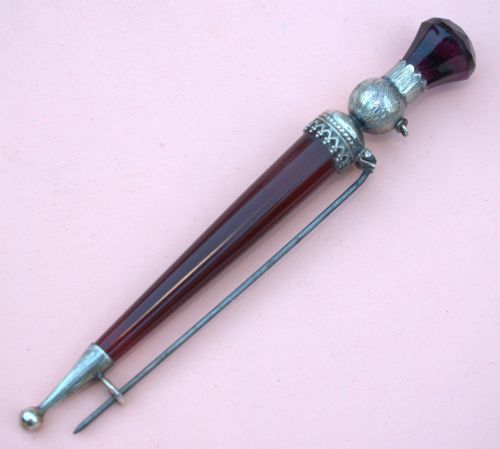
Goldsmiths and silversmiths mounted these polished stones in settings of sterling silver, 9ct gold, 14ct gold, 15ct gold and 18ct gold. Metalwork ranged from simple solitaire claws to elaborate engraved mounts and dirk-shaped kilt pins.
Materials documented across the pieces include silver, 9ct gold, 14ct gold, 15ct gold, 18ct gold, carnelian, jasper, citrine and hardstone.
Quality and Craftsmanship
Quality rests upon the stonecutter's skill in revealing the natural pattern of the agate, alongside the precision of the stone-setting within the metal mount. Well-matched colour palettes and crisp, symmetrical facets elevate a piece.
The sophistication of the metalwork, whether hand-engraved scrollwork on a silver brooch or substantial gold links on a bracelet, distinguishes standard workshop output from finer artisan production.
The Antique Agate Jewellery Glossary
- Cabochon
- A gemstone shaped and polished with a smooth, rounded domed surface rather than faceted. This style highlights the natural banding and colour variations within chalcedony and hardstones.
- Fob
- A small medallion or seal attached to a pocket watch ribbon or chain. In hardstone pieces, these frequently incorporate rotating bezels set with bloodstone or carnelian.
- Intaglio
- A gem or stone carved into the surface so that the design creates a negative relief impression when pressed into wax. Roman and classical motifs were frequently reproduced in Georgian rings.
- Scottish Revival
- A design movement popularised during the nineteenth century, drawing on Highland traditions and geology. Pieces typically utilise silver mounts shaped as dirks, broadswords or shields inset with local pebbles.
- Moss Agate
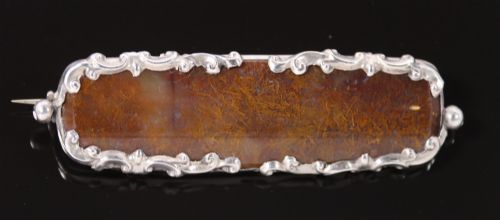
- A chalcedony variety containing dendritic inclusions of manganese or iron that resemble natural foliage. Georgian and Victorian jewellers prized these stones for their organic patterns.
Antique Agate Jewellery: Frequently Asked Questions
How do I date antique agate jewellery?
Dating relies on combining the metal purity marks, the gemstone cuts and the prevailing artistic style of the mounting. Georgian pieces often feature closed-back foil settings and hand-carved intaglios, while Victorian items frequently display robust silver pebble work or mourning motifs.
Later Edwardian and Art Deco examples tend towards lighter gold mounts, geometric chalcedony cuts and streamlined drops. Comparing the construction methods against known periods helps narrow down the decade of production.
How should I care for antique agate jewellery?
Agate and chalcedony are durable quartz varieties, but their metal settings and historic adhesives require gentle handling. Cleaning should be done with a soft, dry cloth rather than harsh chemical dips or ultrasonic machines, which can damage softer stones or historical foils.
Storage should involve separate compartments or soft pouches to prevent scratching between harder gemstones and precious metal mounts. Avoiding prolonged exposure to moisture preserves the integrity of antique joins.
What is the difference between carnelian and agate?
Carnelian is a brownish-red variety of chalcedony quartz coloured by iron oxide impurities, whereas agate typically exhibits distinct bands of multiple colours. Both materials belong to the same mineral family and share similar hardness ratings.
Jewellers frequently combined solid carnelian stones with banded agates within the same piece, particularly in nineteenth-century fobs and Scottish Revival brooches. This pairing created contrasting tones of opaque red against variegated grey and white stones.