



Victorian Gemstone Earrings
Victorian gemstone earrings bring unmistakable period character to the ear, combining deep-hued stones with rich gold work.
Victorian Gemstone Earrings
Victorian gemstone earrings encompass a range of drop, cluster and dangle designs set with stones like garnet, amethyst and agate. The examples found here span authentic 19th-century pieces alongside later revivals, offering distinct historical character.
Drop earrings and cluster configurations dominate the selection, often featuring rich yellow or rose gold settings. These items reflect the diverse stylistic phases of the period, from classic Victorian ornamentation to Etruscan Revival motifs.
How they were made
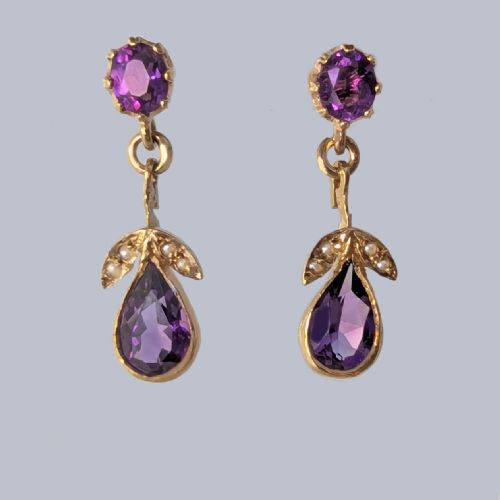
Craftsmen utilised various grades of gold, including 9ct and 15ct, to mount vibrant natural gems such as garnets, amethysts and seed pearls. Stones were typically hand-cut and secured in closed or open-backed settings designed to catch the light.
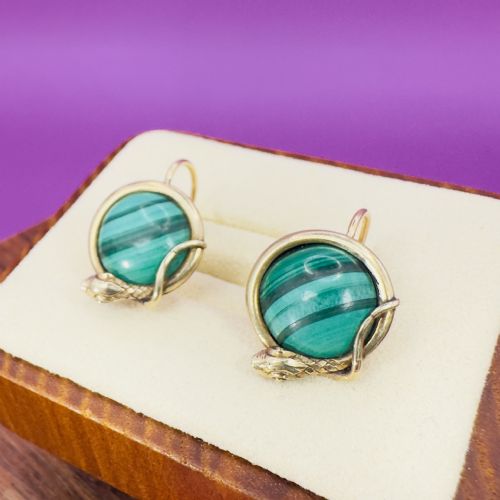
Intricate detailing such as granulation, wirework and cluster arrangements defined the construction, particularly in revival styles. The pairing of stones like turquoise, malachite and banded agate with gold wirework demonstrates traditional period craftsmanship.
Listings feature periods spanning the Victorian era, Edwardian years, and mid-20th century, alongside revival styles.
What varies in quality
Quality rests in the depth of stone colour and the precision of the metalwork, distinguishing standard production from finer artisan pieces. The choice of higher carat gold and well-matched natural gemstones elevates an item's overall presence.
The integrity of the setting and the subtlety of decorative details such as seed pearl alignment separate standard examples from superior survivals. Well-preserved mountings that retain their original stones indicate superior original manufacture.
The Victorian Gemstone Earrings Glossary
- Drop earrings
- Earrings that hang below the earlobe, often incorporating articulated sections or swinging pendants. They introduce movement and draw the eye downwards.
- Cluster earrings
- A central gemstone surrounded by a border of smaller stones, such as pearls or diamonds. This arrangement maximises visual impact and sparkle.
- Etruscan Revival
- A 19th-century design movement inspired by ancient archaeological discoveries, characterised by granulation and applied wirework. It brings classical antiquity to Victorian jewellery.
- Seed pearl
- A very small, naturally occurring pearl used to outline gemstones or create delicate floral motifs. They lend a soft, luminous contrast to darker gems.
- Demi parure
- A matched set of jewellery, typically comprising earrings and a brooch or pendant. These sets offer a coordinated appearance popular in the period.
Victorian Gemstone Earrings: Frequently Asked Questions
How do I date Victorian gemstone earrings?
Dating relies on examining the metal purity marks, stone cuts, and the mechanical fastenings like hook wires or screw-backs. Stylistic clues such as Etruscan revival motifs also help place pieces within the broader nineteenth century.
Comparing the construction methods to known historical periods clarifies whether an item is an authentic nineteenth-century survival or a later revival piece.
Are these earrings comfortable for daily wear?
Many drop and cluster designs have substantial weight due to the solid gold and genuine gemstones used. Considering the fastening type helps determine suitability for prolonged wear.
Lighter stud or chain variations offer easier everyday comfort, whereas larger cabochon garnet drops suit special occasions better.
What metals were commonly used?
Nineteenth-century makers frequently employed 9ct and 15ct yellow and rose gold to mount their stones. Silver was also utilised, sometimes in combination with gold for specific gemstone settings.
The warmer tone of historical gold alloys provides a distinct backdrop that differs from modern bright gold finishes.
How should I care for antique gemstone earrings?
Gentle cleaning with a soft cloth preserves the delicate seed pearls and softer stones like amber or turquoise. Harsh chemical dips should be avoided to protect antique settings and foil-backed gems.
Storing each pair separately prevents the stones from scratching the gold or damaging delicate drop components.